
- Home
- Ai Appointment Setters
AI Appointment Setter Built for Revenue Teams
DigiWeta develops AI appointment setter workflows for lead qualification, availability checks, booking, and CRM updates. We define routing, calendar rules, communication channels, permissions, and review requirements around your sales process and existing systems before implementation.
- Qualified meetings on autopilot
- Omnichannel voice and chat








What We Build (Solutions & Use Cases)
Our appointment setter AI services connect defined qualification questions, calendar availability, booking rules, and CRM fields. We plan confirmations, rescheduling, error handling, and human handoff, then test the workflow against agreed scenarios.
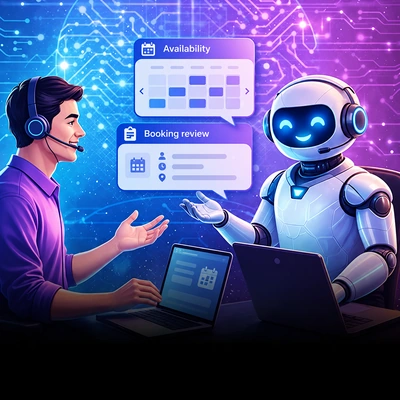
Inbound Booking
Collect booking details, check availability, and confirm chosen appointments.

Outbound Calling
Contact permitted leads, offer available slots, confirm selections, and record outcomes.

After Hours
Offer after-hours booking and FAQs, with defined handoff for unresolved requests.

Support Triage
Identify the request, answer approved FAQs, and pass unresolved issues to staff with context.

Patient Scheduling
Check provider availability, book visits, and send approved appointment reminders.

Reschedule
Offer available replacement times and record confirmed appointment changes.
How We Build and Secure AI Appointment Schedulers
DigiWeta plans appointment setter systems around qualification, calendar availability, routing, and CRM requirements. We define permitted actions, review steps, and evaluation criteria before implementation and deployment planning.
Qualification Logic and Dialog Design
Define booking questions, missing-answer prompts, and confirmation steps.
- Define qualification fields, required answers, and routing rules, with prompts for missing information and an agreed handoff for unresolved requests.
- Use approved FAQs and product information for answers; test retrieval and define fallbacks when sources are missing or unclear.
- Check availability, offer valid times, and request confirmation before creating, changing, or cancelling calendar entries.
- Agree channel wording for confirmations and reminders; review communication permissions before activation.
TECH STACK :
Socket.io
Redis Pub/Sub
Node.js Cluster
Nginx
PostgreSQL
Bull MQ
Omnichannel Voice and Messaging
Plan supported channels, identity checks, and staff handoff.
- Plan permitted inbound and outbound call workflows, recording notices, summaries, and transfer procedures with appropriate review.
- Define identity matching and context sharing across supported channels, including permissions, retention, and integration limits.
- Provide a clear alternative when speech recognition fails or a user requests staff assistance; test the handoff path.
- Measure response time, booking completion, handoff rates, and failures across the channels included in scope.
TECH STACK :
Socket.io
Redis Pub/Sub
Node.js Cluster
Nginx
PostgreSQL
Bull MQ
Calendars, CRM, and Marketing Automation
Define calendar rules, data mappings, and error handling.
- Define availability, time zones, working hours, buffers, and routing rules before offering appointments across staff calendars.
- Map contact and activity fields, restrict connector permissions, and test duplicate or repeated update requests.
- Define which booking events can trigger permitted follow-up workflows and how opt-outs reach connected systems.
- Test failed connections, retry limits, and incomplete updates; document recovery through Chatbot to CRM Integration and API development and integration workflows.
TECH STACK :
Socket.io
Redis Pub/Sub
Node.js Cluster
Nginx
PostgreSQL
Bull MQ
Security, Consent, and Compliance
Review access, consent needs, storage, and operating duties.
- Define user roles, connector access, and data limits; review sensitive information before sending it to model providers.
- Review recording and messaging rules with specialists, then configure approved notices, permissions, and opt-outs.
- Document storage, encryption, access logs, and retention requirements for booking data and conversation records.
- Review hosting options alongside provider terms, data flows, retention settings, and applicable obligations.
TECH STACK :
Socket.io
Redis Pub/Sub
Node.js Cluster
Nginx
PostgreSQL
Bull MQ
Model Strategy and Guardrail
Evaluate responses and restrict booking actions.
- Test retrieval against approved sources and access rules; use clarification or handoff when evidence is missing.
- Compare models using representative booking tasks, data handling requirements, latency, cost, and provider limitations.
- Validate structured outputs and permitted actions before calendar or CRM writes; route unresolved cases for review.
- Test malicious instructions, inappropriate requests, and unauthorized actions, with documented fallback and escalation behavior.
TECH STACK :
Socket.io
Redis Pub/Sub
Node.js Cluster
Nginx
PostgreSQL
Bull MQ
LLMOps, Evals, and Cost Controls
Measure task quality, latency, and usage.
- Monitor response time, tool failures, usage costs, and booking outcomes with identifiers that support investigation.
- Use representative test conversations to assess answers, qualification, routing, and calendar actions before approving changes.
- Test caching and prompt changes for freshness, access, and response quality before reducing usage.
- Define usage limits, operational alerts, incident ownership, and recovery procedures for the agreed deployment.
TECH STACK :
Socket.io
Redis Pub/Sub
Node.js Cluster
Nginx
PostgreSQL
Bull MQ
Why Basic Appointment Setters Fail (And How DigiWeta Solves It)
Appointment automation can create extra work when qualification criteria, calendar rules, and CRM mappings are unclear. Teams need a way to handle unavailable times, incomplete answers, duplicate requests, and failed integrations. The workflow should also define when a person takes over and how recording or messaging requirements are reviewed.
DigiWeta plans AI appointment scheduling around those requirements. We define qualification fields, availability rules, routing, confirmation steps, and permitted data updates before implementation. Representative testing covers booking, changes, cancellations, and failure handling. Monitoring and operational responsibilities are documented so your team can review results and prioritize improvements.
Qualification Gaps
Start with the information your sales team needs before offering a meeting. Define required fields, routing criteria, missing-answer prompts, and escalation rules. Approved source material can support product questions, but unsupported answers need a fallback. Test representative conversations and check CRM fields before relying on the workflow for lead qualification.
Missed Appointments
Review how invitations, time zones, reminders, and changes reach the prospect. Define supported confirmation channels and clear rescheduling steps. Test unavailable slots, cancelled meetings, and failed notifications. Compare attendance and cancellation patterns after release; reminders can support coordination but cannot guarantee that a person attends.
Booking Data Conflicts
Agree which system owns contact details, availability, and appointment status. Map CRM fields, routing rules, and calendar permissions before connecting tools. Test duplicate requests, competing bookings, cancelled events, and interrupted updates. Record enough context to investigate failures and define how staff correct incomplete or inconsistent records.
Response and Routing Delays
An AI call appointment setter needs clear limits on what it can answer or change. Define how it checks availability, confirms selected times, and handles incomplete requests. Measure response time under representative conditions. When someone requests a person or the workflow cannot resolve the request, pass relevant context to the agreed staff queue.
Voice Workflow Errors
Evaluate an AI voice appointment setter with realistic accents, background noise, interruptions, and incorrect details. Confirm important booking information before writing it to connected systems. Define recording notices, communication permissions, retention, and transfer procedures with appropriate review. Low-confidence or unresolved conversations should follow an agreed fallback rather than proceed with an uncertain booking.
Vendor Limits
Document which model, voice, messaging, and calendar services each workflow relies on. Review their data handling, limits, costs, and failure behavior. Keep interfaces and configuration understandable so alternatives can be assessed. Changing providers still requires compatibility checks and regression tests; separating components does not guarantee a seamless switch.
Handoff Gaps
Agree when staff take over, where the request is routed, and which details they receive. Include relevant qualification answers, proposed times, and unresolved questions within the permitted data scope. Test whether staff can complete or correct the booking. Define responsibility for follow-up so automation and people do not issue conflicting updates.
Data Gaps
Map personal data across conversations, calendars, CRM records, logs, and model providers. Define access, retention, recording, and messaging requirements with the responsible reviewers. Test the configured controls and document limitations. Hosting location alone does not establish compliance; provider terms, data flows, configuration, and the applicable obligations all need review.
Our Case Studies


Flexible Engagement Models for Appointment Setter Delivery
Every organization adopts AI differently. Choose the path that fits your motion and compliance posture. If you need upstream planning first, align the program through Generative AI Consulting.

End-to-End Implementation
A complete AI appointment setter built from discovery to production.
Best For
- New inbound or outbound motions
- Regulated industries and private hosting
- Global routing and complex calendars
Advantages
- Single accountable partner
- Governance and safety by default
- Measurable time to value

Optimization and Scale Up
Improve an existing appointment setter AI with better accuracy, faster p95, and lower cost.
Best For
- High no-show rates
- CRM data quality issues
- Token spend and latency spikes
Advantages
- Cleaner pipeline data
- Predictable monthly costs
- Higher meeting conversion

Prebuilt Integration Package
Fast track deployment using proven playbooks and connectors.
Best For
- Standard CRM and calendar stacks
- Agencies and B2B teams on deadlines
- Pilots that must show impact quickly
Advantages
- Rapid time to market
- Lower initial investment
- Reliable, tested connectors
WE SERVE
Industries We Empower with AI Appointment Scheduling
Our AI appointment scheduler work is scoped around industry workflows, existing systems, booking rules, and data handling requirements, with evaluation criteria and review responsibilities defined upfront.
An AI appointment setter for SaaS can collect demo requirements, check team availability, and record confirmed bookings with defined routing and handoff rules.
Agencies and Services
An AI appointment setter for agencies can collect service needs and timing, then route consultation requests to the appropriate team calendar.
AI patient appointment scheduling supports booking. An AI appointment setter for healthcare needs data controls, booking rules, and staff escalation.
Dental Practices
An appointment setter AI dentist workflow can handle booking requests, changes, and approved reminders using practice-defined scheduling rules.
Mortgage and Lending
An AI appointment setter for mortgage can collect consultation details and route booking requests to the appropriate licensed staff.
An AI appointment setter for real estate can gather property interests, propose available viewing times, and record confirmed bookings for agent review.
OUR PROCESS
Our Appointment Setter Delivery Process
Our appointment setter process connects discovery, workflow design, implementation, testing, and deployment review. We document qualification fields, routing, calendar rules, integrations, and failure handling so your team can assess booking behavior and plan ongoing maintenance.
Step 01
Discovery and Routing Design
Discovery and Routing Design
Map lead fields, available hours, routing, and handoff rules. Review consent needs and agree test scenarios before building.
Step 02
Architecture and Pilot
Architecture and Pilot
We implement retrieval, model routing, CRM, or calendar integrations, and safety guardrails. A production-ready pilot launches in weeks.
Step 03
Scale and Automate
Scale and Automate
Review channels and workflows before expansion. Test reminders, routing, and approvals against agreed criteria.
Step 04
Operate and Optimize
Operate and Optimize
Review bookings, no-shows, response time, and costs. Use test findings to prioritize changes. For related workflows, see AI Chatbot Development Services.


ABOUT COMPANY
Your AI Appointment Setter Partner
DigiWeta develops AI appointment scheduling systems around your qualification process, calendar rules, and CRM. We define booking flows, confirmations, rescheduling, and handoff requirements, then implement and test the agreed scope with operating responsibilities documented.
- Supported voice and messaging workflows
- Calendar rules and routing
- CRM mappings and update checks
- Data access and consent review
- Evaluation and usage monitoring
Success Rate
0
%
Satisfied clients
0
%
Frequently Asked Questions
An appointment setter AI agent helps collect qualification details, check availability, and record confirmed bookings through connected channels. Its scope should define permitted updates, reminders, rescheduling, and when staff take over.
An AI call appointment setter supports scoped phone workflows. An AI voice appointment setter needs tested recognition, booking checks, reviewed consent needs, and staff transfer.
AI CRM integration services connect booking workflows to supported systems. Review API access, field mappings, calendar permissions, and failed-update handling before implementation.
Define confirmations, time zones, reminder channels, and rescheduling links around the booking process. Track delivery failures and attendance; reminders do not guarantee fewer no-shows.
Healthcare scheduling can be assessed around provider systems, permissions, data handling, and appointment rules. Applicable healthcare obligations need defined controls and specialist review.
An AI appointment setter for mortgage or an AI appointment setter for real estate should use approved intake questions, staff routing, and sector-specific review requirements.
An AI appointment scheduler can support smaller teams when booking volume and integration access justify it. Start with a defined workflow and assess results.
Review booking errors, integrations, latency, and usage costs. Test prioritized changes against agreed scenarios before release.
You do. We deploy in your tenant, deliver code to your repos, and retain no proprietary meeting data outside your environment.
Plan Your Meeting Booking With Us
Discuss your AI appointment setter requirements with DigiWeta. We can review qualification questions, calendar routing, CRM fields, communication channels, and review needs to define a practical scope.