- Home
- Computer Vision Solutions
Computer Vision Solutions for Real Workflows
Turn images into reviewable findings and connected tasks. DigiWeta’s computer vision services cover inspection, document extraction, and asset tracking, with evaluation built around your data, cameras, and operating conditions.
- Image and access scope
- Deployment choices
Scope a Computer Vision Project
Which vision task is first?








Vision Uses Across Business Tasks
Start with what the system needs to detect and what happens when it is wrong. Our computer vision development services connect data preparation, model testing, application integration, and operating review around that task.

Visual Inspection and Defect Review
Flag candidate defects from approved images. Review missed detections and false alerts before connecting findings to quality workflows.
OCR and Document Extraction
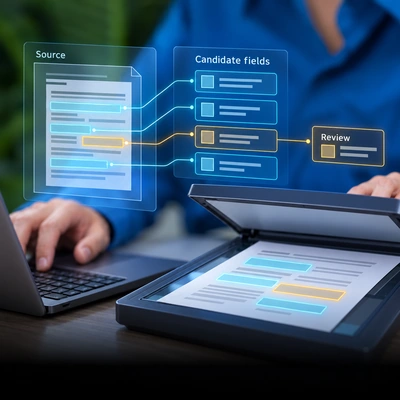
Extract candidate document fields, validate critical values, and route uncertain records for review before updating connected systems.
Shelf and Planogram Review
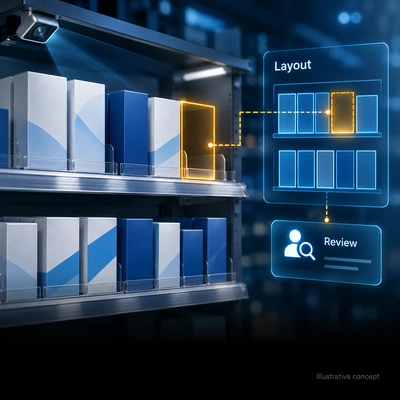
Compare shelf images with approved product and layout records. Route candidate gaps or mismatches to store staff with supporting evidence.

PPE and Zone Review Support
Flag defined visual conditions for qualified review. Assess missed events and false alarms; vision alerts do not replace safety procedures.

Inventory and Asset Tracking
Estimate counts and track approved assets across defined scenes. Reconcile results with source records and review occlusion or duplicate-count errors.
Medical Imaging Assistance
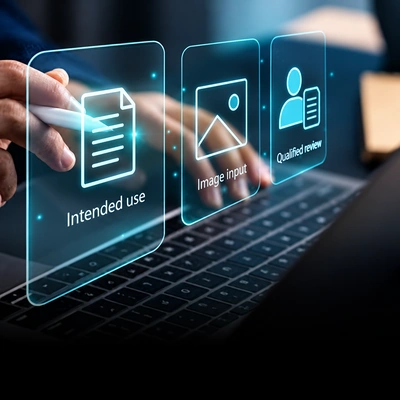
Assess defined imaging support tasks with qualified specialists. Establish intended use, privacy, evaluation, and clinical review before implementation.
Computer Vision Architecture
Data, Models, Devices, and Review
Define the visual task, labels, cameras, and consequences of incorrect output before selecting models. Use representative images and separate evaluation data to assess performance. Scope data preparation, inference, integrations, and MLOps and Model Monitoring, with readiness reviewed before wider use.
Map image capture, recipients, access, retention, and review. Define how findings become proposed tasks or system updates, including uncertain results and failed actions. Reassess performance when cameras or environments change. Explore related Data Engineering Services.
Vision Model and Inference Stack
Select detection, segmentation, OCR, or tracking methods against the defined task and hardware. Measure errors, processing time, and resource use together. Test any optimization on representative images rather than assuming faster inference preserves accuracy.
- Evaluate models using relevant lighting, motion, occlusion, camera variation, and task labels.
- Test supported hardware optimization against both error rates and processing targets before deployment.
- Review multi-camera and tracking behavior for duplicate counts, identity switches, and missed objects.
- Define review or abstention for uncertain findings, with qualified oversight for consequential decisions.
TECH STACK :
Socket.io
Redis Pub/Sub
Node.js Cluster
Nginx
PostgreSQL
Bull MQ
Data and Labeling Operations
Agree labels and review standards before annotation. Check coverage of relevant classes and operating conditions. Keep training and evaluation data appropriately separated, inspect disagreements, and document gaps that could affect deployment decisions.
- Agree class definitions, labeling rules, and acceptance criteria with the people using the findings.
- Prioritize useful additional examples through error review, including rare cases and difficult negatives.
- Check annotation consistency and inspect disagreements before treating labels as reliable evaluation evidence.
- Assess synthetic examples for coverage, then test performance on representative real images. They do not replace validation.
TECH STACK :
Socket.io
Redis Pub/Sub
Node.js Cluster
Nginx
PostgreSQL
Bull MQ
Edge, Cloud, and Hybrid Deployment
Choose edge, cloud, or hybrid processing around response needs, data handling, connectivity, and operating costs. Test device limits, interruptions, and updates. Local inference does not by itself establish privacy, compliance, or reliable control.
- Test local queues, storage, and recovery under interrupted connectivity and device constraints.
- Define checkpoints, retention, and operating costs for cloud processing of approved images or video.
- Select processing locations against data requirements, response targets, and supported device features.
- Review staged model and configuration updates with device inventories and documented recovery procedures.
TECH STACK :
Socket.io
Redis Pub/Sub
Node.js Cluster
Nginx
PostgreSQL
Bull MQ
Integrations and Data Contracts
Define the data contract between model findings and business systems. Validate units, labels, permissions, and proposed actions. Check update results before retries and keep uncertain findings assigned to responsible reviewers.
- Define labels, units, timestamps, and source references for findings. Validate them before downstream use.
- Handle duplicate events and partial updates explicitly. Check actual results before repeating an action.
- Restrict APIs and tools with verified identities and permissions. Keep consequential actions subject to appropriate review.
- Test mappings, units, tolerances, and failures end to end using approved representative data.
TECH STACK :
Socket.io
Redis Pub/Sub
Node.js Cluster
Nginx
PostgreSQL
Bull MQ
Security, Governance, and Compliance
Map capture, recipients, access, storage, and retention for the intended use. Test appropriate safeguards and define review duties. Qualified stakeholders should assess relevant privacy, safety, and sector requirements.
- Define image recipients, storage, and retention with appropriate access and review.
- Assess masking or blurring where needed and test residual exposure rather than assuming privacy is guaranteed.
- Test relevant tampering, misleading inputs, and device failures against the intended task.
- Provide useful test evidence and procedures for qualified assessment; documentation does not guarantee audit approval.
TECH STACK :
Socket.io
Redis Pub/Sub
Node.js Cluster
Nginx
PostgreSQL
Bull MQ
Observability, Evaluation, and Cost
Monitor errors, processing speed, device health, and costs against the baseline. Review changes in inputs and outcomes before updating models. Keep operators responsible for unresolved issues and assess business value using evidence rather than assumed gains.
- Track task-relevant error rates, processing time, device health, and costs alongside operating outcomes.
- Test model changes through controlled releases with clear acceptance and recovery criteria.
- Investigate input or output changes before deciding to relabel, retune, or retrain. Review and retest updates.
- Set operating limits and cost visibility, then assess changes against measured quality and throughput.
- Review deployment requirements through Cloud Solutions.
TECH STACK :
Socket.io
Redis Pub/Sub
Node.js Cluster
Nginx
PostgreSQL
Bull MQ
Move Beyond CV Pilots with Real-World Tests
A model tested on one camera or lighting setup may not perform the same way elsewhere. Define the relevant scenes, labels, and error consequences before rollout. Include difficult examples and realistic device conditions in evaluation, with a clear process for reviewing uncertain findings.
DigiWeta builds the project around those operating requirements. Assess data readiness, test a bounded approach, and inspect failure cases before connecting actions. Document the limits, review duties, and monitoring needed to maintain the system as equipment, materials, or environments change.
Packaging Review Agent
Review seals, labels, and barcodes against defined criteria. Present candidate defects with source images for appropriate review. Test false alerts and missed defects across materials and conditions before connecting rejection or quality actions. Model confidence does not eliminate incorrect decisions.
Shelf Review Agent
Compare approved shelf images with product and layout records. Flag potential gaps or mismatches for store review. Check new packaging, glare, occlusion, and outdated reference data. Evaluate task results before expanding automated replenishment or pricing actions.
Safety Review Aid
Flag defined visual conditions with supporting images for qualified staff. Test missed events and false alarms under real conditions. Assess privacy and permitted use before capture. Do not treat the model as a replacement for safety procedures or responsible human judgment.
OCR Review Agent
Extract candidate fields from approved documents and validate required formats or rules. Give reviewers the source image for uncertain or consequential details. Check permitted updates before retries. Restrict sensitive records and assess data handling for the intended workflow.
Inventory Review Aid
Estimate counts from defined camera scenes and compare them with approved inventory records. Test overlap, occlusion, and duplicate counting. Route discrepancies to staff with relevant images and timestamps. Reassess performance when cameras, packaging, or operating conditions change.
Imaging Review Aid
Scope intended imaging use with qualified clinical and regulatory specialists. Evaluate findings on appropriate data and retain professional review. Assess privacy, error consequences, and applicable requirements before deployment; model output is not an independent diagnosis.
Hardware Dependencies
Assess supported cameras, accelerators, and runtimes against the task. Document dependencies and migration effort. Hardware changes can affect performance and require testing; portability should not be assumed.
Pilot Readiness and Scale
Define devices, integrations, review, and operating ownership early. Test representative conditions before adding sites. Use results and limitations to assess expansion readiness.

Choose Delivery Support for
Computer Vision Delivery
Match support to the task, data, and team capacity. Agree tests, costs, and handover for full delivery, focused improvements, or embedded expertise.

Full Vision Delivery
Plan, build, test, and hand over computer vision workflows.
Best For
- New vision workflows
- Governed settings
- Site expansion
Advantages
- Clear delivery ownership
- Defined controls and review
- Measured task outcomes

Vision System Review
Review model errors, processing time, and operating needs.
Best For
- Errors and alerts
- Slow processing
- Integration failures
Advantages
- Measured detection quality
- Tested latency
- Visible operating costs
Embedded Vision Team
Add data, vision, and deployment expertise alongside your team.
Best For
- Team capacity gaps
- Internal vision platforms
- Ongoing development
Advantages
- Flexible support
- Practical handover
- Agreed delivery milestones
SECTORS
Industry Workflows with
Computer Vision
Computer vision requirements depend on the environment and consequences of errors. Define images, devices, access, integrations, and qualified review for each workflow. Test representative conditions and agree acceptance criteria before wider deployment.
Review candidate defects and inspection findings with approved images. Validate processing targets and error consequences before connecting quality or safety actions.
Compare shelf and product images with approved references. Give store staff evidence for potential gaps or mismatches and review uncertain findings.
Support approved property documentation, asset records, and condition reviews. Validate candidate findings and data updates with responsible staff. Assess privacy, intended use, and access before capturing or sharing property images.
Assess intended imaging support with qualified specialists. Define data access, clinical review, evaluation, and applicable requirements before use.
Extract candidate document fields with appropriate access and review. Keep consequential financial or eligibility decisions with qualified authorized staff.
Review product images and candidate quality issues against defined criteria. Validate findings and proposed updates before downstream action, with staff ownership of exceptions and source evidence.
OUR PROCESS
Our Computer Vision Delivery Stages
Start with the task, data, and evaluation criteria. Test a bounded pilot, review failures, and decide which findings can support the workflow. Agree monitoring and maintenance duties before expansion. Explore AI Strategy Consulting for project planning.
Step 01
Scope and Image Review
Scope and Image Review
Review cameras, images, labels, and intended actions. Establish a baseline and agree privacy, review, and pilot acceptance criteria.
Step 02
Build and Test
Build and Test
Build and test the chosen data and inference approach. Scope how to integrate actions and dashboards, then review pilot results before rollout.
Step 03
Connect and Expand
Connect and Expand
Validate added sites, devices, and scenes before expansion. Recheck data, performance, permissions, and operating ownership.
Step 04
Review and Maintain
Review and Maintain
Review errors, throughput, latency, and device changes. Test updates before release and maintain recovery procedures. Related pipelines include Data Warehousing.

ABOUT US
Your Computer Vision Partner
DigiWeta helps teams design image-based workflows with defined data, evaluation, and operating boundaries. Scope models, integrations, devices, and review with your team. Use measured results to assess readiness, then document maintenance and handover responsibilities.
- Tested edge and cloud options
- Defined privacy and review controls
- Scoped MES, ERP, WMS connections
- Monitoring and evaluation
- Assessed hardware and runtimes
Success Rate
0
%
Satisfied clients
0
%
Frequently Asked Questions
A defined project may cover image preparation, labels, model evaluation, device deployment, integrations, and review. Agree the intended task and error consequences first, then test representative conditions before using findings in business workflows.
Compare suitable models on representative data and intended hardware. Measure relevant errors, latency, and throughput together. Retest optimizations rather than assuming faster inference preserves quality.
They may help explore coverage gaps, but require review and testing on representative real images. Do not assume they fix imbalance or improve performance. Related capabilities include image and video generation.
Monitor camera and input changes, inspect errors, and reassess representative examples. Review and test proposed updates before release; retraining does not automatically restore performance.
Assess hosting, access, recipients, and retention with qualified specialists. Private deployment alone does not establish compliance.
Define permitted tasks, validation, and review before turning predictions into updates. Verify outcomes and handle exceptions. Explore API Development and Integration support.
Define data readiness, labels, models, hardware, integrations, evaluation, and ongoing duties. Specify included stages and acceptance criteria before work begins, with clear ownership of review and maintenance.
Agree responsibilities with your technical and operations teams. Define tests, documentation, and handover before delivery, including ongoing maintenance ownership.
Plan a Computer Vision Workflow
Discuss your images, cameras, operating conditions, and target workflow with DigiWeta. Define a practical computer vision pilot and clear evaluation criteria.