Vetting the Experts: How to Hire a Specialized AI Chatbot Development Company
Choosing an AI chatbot development company starts with evidence, not a polished
DigiWeta helps you decide where generative AI fits, what to build first, and how to evaluate a practical business application.
What needs to change first?






Generative AI consulting starts with the work, not a model shortlist. We assess your sources, users, systems, and risks to prioritize suitable applications and define the evidence needed before moving from an idea into development.

Assess whether approved knowledge can support useful answers. Plan source access, citations, updates, and escalation before choosing a RAG architecture.

Identify sales tasks suited to assistance, from summaries to response drafts. Define CRM permissions and review steps before proposing automated updates.

Review the questions, metrics, and permissions behind analytics Q&A. Plan query validation and source context before giving generated SQL access to data.

Map multi-step tasks to permitted tools and approval rules. Compare an agent with simpler automation, and define limits, failure handling, and accountable owners.

Evaluate coding assistants against your repositories and process. Define access boundaries, review requirements, and tests for proposed changes.

Plan drafting and localization around approved material, templates, and review. Test existing models before assuming your brand needs fine-tuning or automated publishing.
Choosing an AI chatbot development company starts with evidence, not a polished
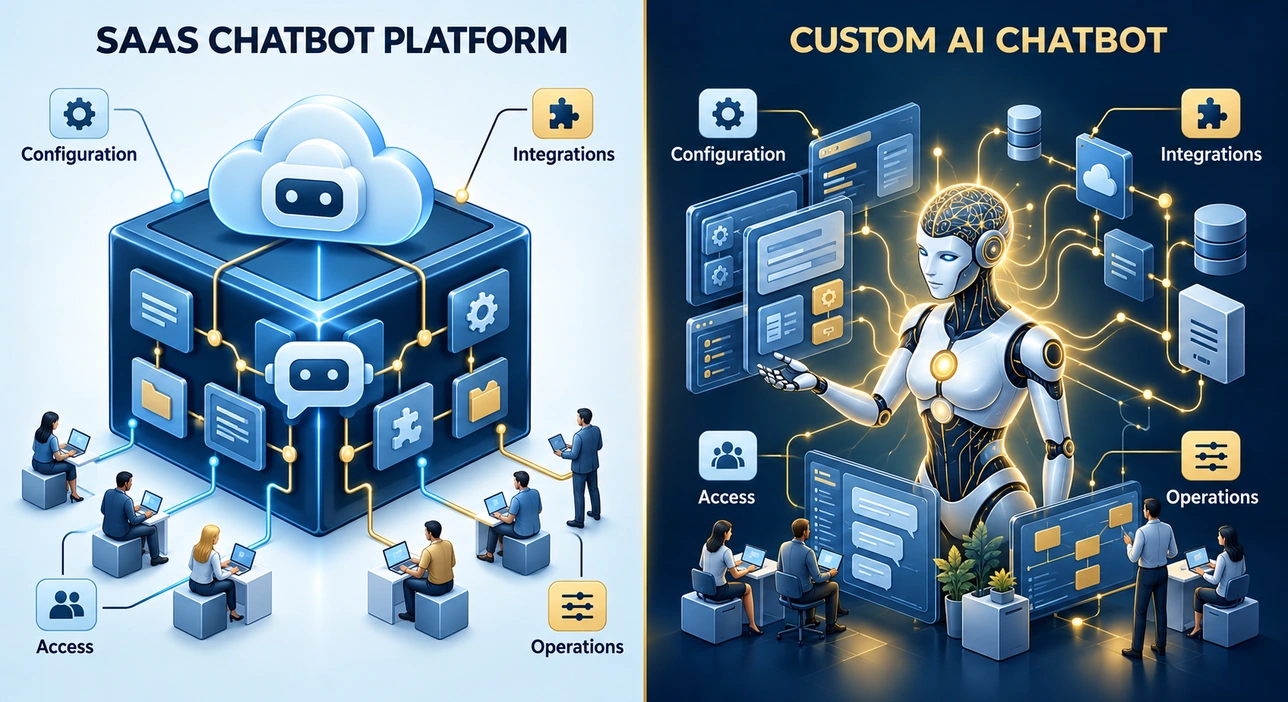
Choosing between a SaaS chatbot and custom development is a fit decision,
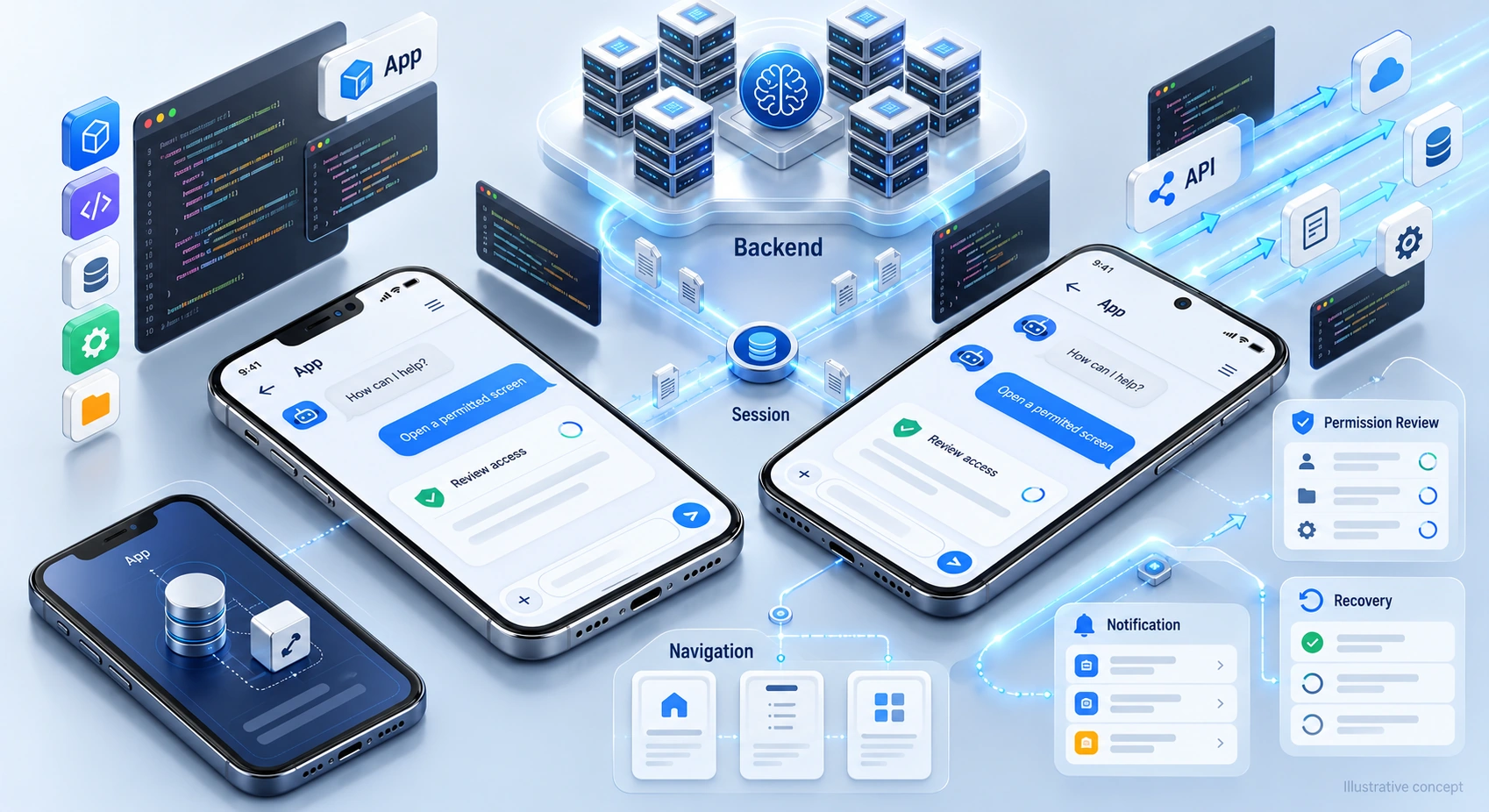
Adding chat to an app involves more than moving a website widget

A customer service chatbot needs a business case as well as a

Travel and property teams answer detailed questions while availability changes. A useful
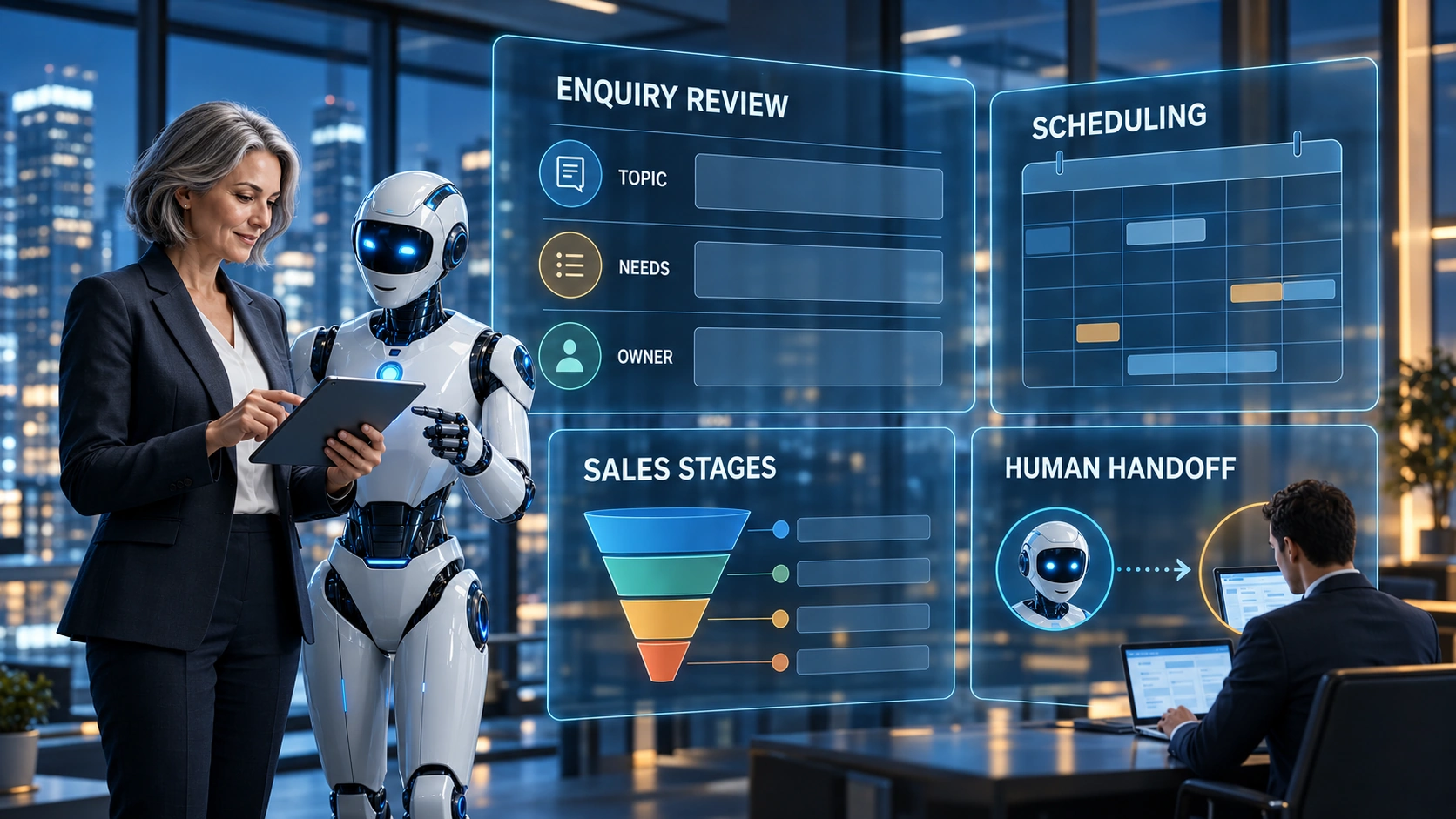
B2B enquiries often involve several people, technical requirements, and a decision process
A consulting engagement should explain how the proposed application will work and how the team will judge it. We connect the user journey to data preparation, retrieval, models, and business systems. The design identifies permissions, failure paths, review responsibilities, usage costs, and operating ownership. Compare alternatives and test uncertain assumptions before committing to a larger implementation.
Review source quality, ownership, permissions, and update needs. Plan the preparation work required for a useful application rather than treating raw documents as ready-to-use knowledge.
Compare models and retrieval on real tasks. Define acceptance criteria, escalation behavior, and operating constraints before choosing the implementation.
Select the systems and channels where users need help. Define allowed actions, approvals, and recovery before connecting AI outputs.
Measure task completion, response quality, latency, and cost. Set baseline tests and review criteria before expanding the pilot.
Define access, data handling, review duties, and audit evidence around the workflow and its requirements.
A model demonstration cannot answer every delivery question. Identify the workflow, available records, user permissions, and cost of errors first. Our generative AI consulting services turn these requirements into testable options for retrieval, model use, and integration. We define pilot acceptance criteria, human review points, and operating responsibilities so stakeholders can make an informed decision about the next investment.
For a new initiative or a stalled pilot, the next step should resolve a specific uncertainty. Agree the evidence, owner, and decision it needs to support.
Prioritize applications by the problem they address, data availability, and consequences of error. Workshops and stakeholder interviews clarify users, dependencies, and decision ownership. Compare model approaches on representative tasks instead of selecting by brand or version alone. A 3–4 week pilot scope should define the assumptions to test, success measures, and decisions needed before a larger build.
Define where responses need source support, when the application should decline, and who reviews consequential outputs. Assess retrieval quality, sensitive-data handling, and misuse scenarios together. Document controls and limitations for the relevant security and governance review. Evaluation can reveal failure patterns and support release decisions; it cannot guarantee factual answers or establish regulatory compliance by itself.
Review the gap between a working demonstration and an application people can rely on. Plan deployment, evaluation, monitoring, incident ownership, and change control. Document dependencies and failure recovery before rollout. Hosting and model choices should follow the workflow, data requirements, and measured behavior rather than assumptions about predictable performance.
Measure the full request path before choosing an optimization. Compare model processing, retrieval, and integration delays alongside usage costs. Test shorter context, caching, or routing against quality requirements. Set operating limits and review responsibilities so speed and cost decisions remain tied to useful task completion.
Determine which sources contain the answers people need and whether those records can be used. Plan ownership, permissions, updates, and source references before choosing a retrieval stack. Compare methods on realistic questions, including missing or contradictory information. A RAG design should specify how the application handles insufficient evidence, not assume that connecting a vector database guarantees factual responses.
Start with the way people already work. Choose useful entry points, explain system limits, and provide a simple route to review or correct an answer. Plan training and feedback collection with data controls. Measure completed tasks and user effort, not just message volume. Use pilot evidence to decide what to improve, expand, or stop.
Compare providers against task quality, data requirements, availability, and total operating effort. Document what would justify a switch and which parts of the application depend on a specific model. Test alternatives before replacing production services. Portability is a design goal that requires evaluation, not a promise that every model can be swapped without work.
Clarify ownership of prompts, data, code, and integrations in the engagement terms. Document deliverables, repository access, and environment responsibilities. Your organization retains ownership of deliverables under the agreed terms, while any accelerators and third-party components need clear treatment.
Choose planning, a focused pilot, or integration support based on the decision your team needs next.

Compare use cases, data needs, and realistic delivery options.
Best For
Advantages

Test a chosen workflow before planning a larger release.
Best For
Advantages

Plan system connections, reviews, and staged adoption.
Best For
Advantages
SECTORS
Assess industry-specific sources, workflows, and risks before choosing an AI solution.
KYC, contract review, and risk reporting with private deployments, redaction, and explainable outputs. Integrations with core banking, CRM, and archives reduce cycle time and audit overhead.
HIPAA aligned assistants for triage, prior auth, and clinical documentation. FHIR and HL7 integration, PHI masking, and human review provide safe, efficient care coordination.
Personalized merchandising, conversational shopping, and service deflection. Product knowledge RAG, inventory checks, and pricing guidance increase conversion while lowering support cost.
Work instruction copilots, quality inspection triage, and vendor document processing. Integrations with MES, SCADA, and ERP improve OEE and reduce downtime.
Developer copilots, support deflection, and analytics Q&A. Secure repository boundaries, RBAC, and observability accelerate delivery and reduce toil.
Integrations with ServiceNow, CRM, and monitoring tools enable ticket automation, knowledge search with citations, and compliant customer communications at scale.
OUR PROCESS
Our process turns business questions into documented decisions and clear delivery plans.
Define the workflow, available data, baseline, and success measures. Identify risks, decision owners, and the evidence required from a pilot.
Compare retrieval and model approaches with real tasks. Test user access, output handling, and integration assumptions before finalizing the architecture.
Specify approved tools, action limits, and review steps. Plan staged access for additional teams once the pilot meets its criteria.
Review quality, latency, costs, and feedback. Test changes before release and document support and improvement responsibilities.


OUR APPROACH
DigiWeta connects generative AI strategy with the practical decisions behind delivery. We review users, sources, architecture, and system dependencies together. A clear scope, evaluation plan, and assigned responsibilities help your team judge feasibility and move into development with fewer unresolved assumptions.
An engagement defines the business task, data requirements, architecture options, and evaluation criteria. It may include a focused pilot, integration planning, or operating review. Agree deliverables, assumptions, responsibilities, and decision points so the work answers a concrete business question before development expands.
Strategy and pilot planning takes 1 to 3 weeks. A production ready pilot commonly ships in 6 to 10 weeks, depending on data access and integrations. Scale out phases follow in sprints.
Review data flows, retention, access, and provider terms. Private hosting may suit your requirements, but does not guarantee zero third-party retention.
No. Retrieval and testing reduce risk, not eliminate it. Check source support and define when the application should abstain or request human review.
Yes, where interfaces and permissions support the task. Define actions, validation, and failure handling first. Assess compatibility rather than assume every tool can connect.
Compare models on real tasks, data needs, latency, and cost. Assess hosted and private options where relevant; selection should follow evidence, not a fixed brand preference.
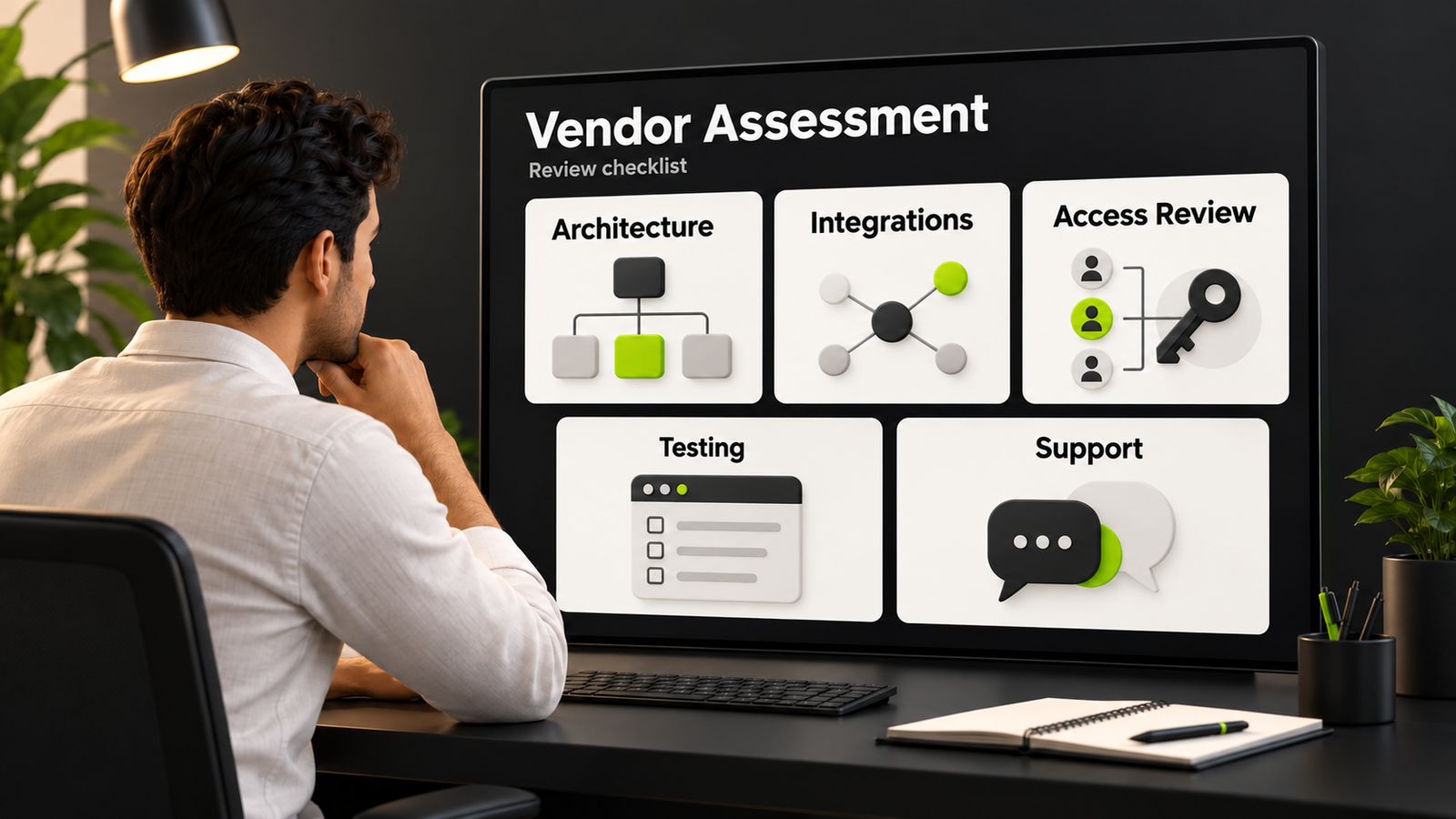
Ask each company to explain how it will evaluate your use case, data readiness, integration needs, and risks. Request relevant work examples and a clear scope rather than rely on ranking claims. Compare proposed deliverables, acceptance criteria, operating ownership, and assumptions. DigiWeta focuses on connecting those decisions to a practical plan for your workflow.
Discuss one workflow, its data, and the decision your next AI investment needs to support.