
- Home
- Retail and eCommerce
AI in eCommerce: Personalize, Automate, Grow Profitably
DigiWeta builds AI solutions for retail and eCommerce teams working with product catalogs, demand forecasts, customer support, and store operations. We connect the agreed workflow to your commerce systems and evaluate results against defined criteria.
- Revenue focused AI
- Audit ready delivery








What We Build (Solutions & Use Cases)
Our retail AI development covers product discovery, inventory planning, catalog workflows, and support tools. We review how your catalog, order, customer, and supply data can support a scoped application before implementation.

Personalization & Recommendations
Tailor rankings, banners, and emails to behavior, catalog data, and context while accounting for privacy, latency, fairness, and explainability.

Inventory Management AI
Plan purchases, transfers, and stock rebalancing with demand forecasts, model constraints, alerts, variable lead times, service levels, and dashboards.

Pricing & Promotion Optimization
Evaluate prices and promotions using segment elasticity, stock limits, competitor signals, policy checks, approvals, audits, and campaign performance reviews.
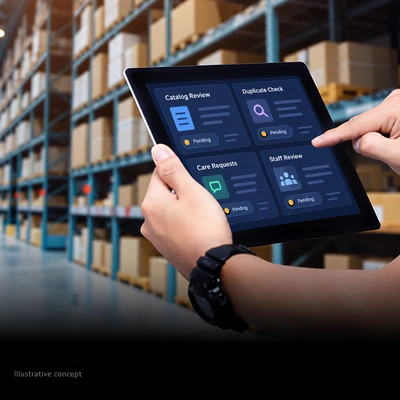
Retail Automation Solutions
Streamline catalog enrichment, duplicate detection, moderation, fraud screening, and purchase care with human review, SLAs, reason codes, and audit trails.

Handle verified order, return, billing, and product queries using RAG, policy rules, fallbacks, transcripts, analytics, and handoffs to support agents.

Customer Lifetime Value and Churn
Estimate CLV and churn, explain key drivers, recommend offers, test uplift with holdouts, and measure revenue across segments and channels.
AI Architecture, Controls, & Evidence for Retail
Retail AI needs consistent product information, useful evaluation data, and clear connections to commerce workflows. DigiWeta defines source data, model behavior, access rules, and integration contracts before development. We test relevant scenarios and document limitations, with release planning that considers merchandising schedules, expected traffic, and operational ownership.
Strategy, Guardrails, and KPI Alignment
We turn conversion, AOV, margin, and CX goals into measurable targets and tolerances. Eligibility, fairness, and safety rules inform model thresholds, experiments, and SLOs, keeping changes reversible and performance reviews useful for leadership and finance.
- Set decision thresholds for retail KPIs, including personalization uplift, order margin, and acceptable false declines during fraud screening.
- Define eligibility and exclusion lists, disclosure, and fairness standards by category and jurisdiction; document exceptions and signoffs.
- Plan experiments with holdouts, sample-ratio checks, and guardrails; review results after events and record required reason codes.
- Plan governance reviews for merchandising campaigns and digital releases, allowing testing and decisions before peak periods.
TECH STACK :
Socket.io
Redis Pub/Sub
Node.js Cluster
Nginx
PostgreSQL
Bull MQ
Data Contracts and Feature Governance
Reliable retail AI starts with governed data. We define versioned contracts for catalog, clickstream, order, and supply signals; check features for leakage and timestamp errors; and record lineage and ownership to investigate drift, schema changes, and undocumented transformations.
- Contracts capture schemas, semantics, privacy classes, SLAs, and retention; automated checks run pre training and pre inference.
- Version feature pipelines and check time boundaries for leakage. Assign owners to review lineage, freshness, and drift regularly.
- Separate training, validation, and inference workflows. Track reusable definitions and mismatches in shared feature stores.
- Privacy by design: minimize fields, mask PII, encrypt at rest and transport, and audit access continuously.
TECH STACK :
Socket.io
Redis Pub/Sub
Node.js Cluster
Nginx
PostgreSQL
Bull MQ
Modeling, Explainability, and Fairness
We select models that balance performance and interpretability, then evaluate them at business thresholds. Reason codes explain decisions to stakeholders. Fairness testing covers cohorts, categories, and geographies, with mitigations and release approvals recorded in model cards for regulatory review.
- Choose calibrated methods per use case: interpretable models for policy sensitive areas, advanced methods for lift where oversight is strong.
- Document decision explanations, assumptions, and tradeoffs in model cards; assign owners and review dates so teams can assess changes.
- Run fairness checks across segments and regions; quantify and mitigate disparities; secure approvals from compliance and leadership.
- Track dataset, model, and evaluation versions in accessible documentation.
TECH STACK :
Socket.io
Redis Pub/Sub
Node.js Cluster
Nginx
PostgreSQL
Bull MQ
MLOps, CI/CD, and Release Safety
We automate data checks, evaluation thresholds, and approvals to support safe releases. Champion–challenger, shadow, and canary rollouts help compare behavior before wider deployment. Signed artifacts, audit packs, drift detection, and policy-based retraining connect model updates to the business health signals reviewed each week.
- Check data contracts, evaluations, and explainability in release pipelines; record approvals before promoting model updates.
- Champion–challenger and shadow tests run continuously; canaries gate promotion to SLOs and KPIs with defined rollback triggers.
- SBOMs and signing secure the supply chain; artifact traces link requirements to releases with immutable records.
- Use ai application development to define shared contracts and telemetry across retail decision services.
TECH STACK :
Socket.io
Redis Pub/Sub
Node.js Cluster
Nginx
PostgreSQL
Bull MQ
Real Time Decisioning and Latency Budgets
Fast personalization and fraud screening depend on reliable context. Feature services use SLAs, fallbacks, and backpressure, with batching, caching, and compute sizing to manage tail latency, request costs, and accuracy during campaigns, seasonal peaks, and dependency throttling.
- Plan feature APIs with caching, timeouts, retries, and fallback behavior; test response times and user journeys under traffic spikes.
- Define idempotent states for authorization, fraud, and returns; track confirmation and settlement separately, with recovery steps.
- Measure model workloads and busy paths; assess batching and capacity against regional and channel budgets.
- Use ai integration services to document partner interfaces, monitor changes, and plan recovery.
TECH STACK :
Socket.io
Redis Pub/Sub
Node.js Cluster
Nginx
PostgreSQL
Bull MQ
Controls, Evidence, and Continuous Compliance
We define permissions, data handling, change approvals, and operational records around the retail workflow. Product and customer data requirements are reviewed with your team, while applicable privacy or payment obligations need appropriate specialist assessment and defined controls.
- Map controls to frameworks and store evidence with defined retention
- Maintain audit packs per model: model cards, explainability, fairness, evaluation snapshots, and promotion signoffs linked to artifacts.
- Surface control health and trigger remediation with owners and SLAs.
- Tie AI outcomes to finance credible forecasts using predictive modeling for planning and buy-in.
TECH STACK :
Socket.io
Redis Pub/Sub
Node.js Cluster
Nginx
PostgreSQL
Bull MQ
Why Basic AI in eCommerce Fails (And How DigiWeta Solves It)
Retail AI can disappoint when product data is incomplete, evaluation ignores seasonal changes, or recommendations are disconnected from inventory and category rules. Teams need a defined use case and a way to compare results with an existing process before expanding the application.
DigiWeta connects data preparation, model evaluation, integrations, and monitoring around the agreed retail workflow. We test relevant catalog, order, and customer scenarios, define error handling, and review findings with your team. Release and recovery requirements are documented so improvements can be planned around your trading calendar.
No Data Contracts Across Clickstream and Catalog
Define data contracts for catalog and clickstream inputs, with freshness checks, visible lineage, and named owners. Track schema changes and drift before releases so teams can investigate inconsistent features and duplicated logic across commerce systems.
Testing Only Aggregate Metrics, Not Thresholds
Evaluate slotting, pricing, and fraud models at agreed decision thresholds, not AUC or CTR alone. Record reason codes and compare outcomes against merchandising and finance KPIs using consistent definitions and documented review criteria.
Manual Releases and Fragile Rollback
Plan model updates around campaigns using staged rollouts, evaluation checks, and rollback criteria. Document conversion, latency, and error thresholds before deployment, then review retraining and canary results.
GenAI Without Content Controls
Ground retail assistants in approved sources through RAG, policy filters, and human review. Test representative questions and review logs for unsupported answers, sensitive data exposure, and off brand responses before wider release.
Personalization That Breaches Fairness or Policy
Unbounded ranking harms trust and compliance. We build eligibility, coverage, novelty, and fairness constraints. Sensitive categories respect policy and law. Dashboards show outcomes across segments to catch regressions.
Inventory Blind Optimization
Personalization without inventory awareness hurts margins. We feed stock and lead times into models, add caps by availability, and recommend transfers or buys. Margins and SLAs stay protected.
Latency and Cost Spikes Under Load
Test models under campaign traffic, then plan batching, backpressure, fallback behavior, and compute capacity. Monitor response times and costs against agreed budgets before expanding usage.
Thin Evidence During Reviews
Missing lineage and approvals stall reviews. We generate model cards, fairness analyses, evaluation snapshots, and signed artifacts per release. Evidence packs make audits fast and predictable.

Flexible Engagement Models for Retail AI Delivery
Choose collaboration that fits your risk appetite, compliance posture, and roadmap tempo. Whether you need a governed pilot uplift, a dedicated pod for multi-quarter outcomes, or specialists for audits and incidents, you retain IP and control while we supply SLOs, governance, and transparent reporting.

Fixed Scope AI Uplift
Blueprint to governed pilots with rapid handover
Best For
- Data and features
- MLOps and gates
- Personalization pilot
Advantages
- Fast time to value
- Evidence and approvals
- Safer small releases

Dedicated Retail AI Squad
Cross functional pod delivering compliant velocity.
Best For
- Roadmap execution
- Scale and resilience
- Peak preparedness
Advantages
- Continuous improvement
- SLO stewardship
- Margin optimization

Advisory and Augmentation
Specialists for audits, incidents, and surges.
Best For
- Audit preparation
- Incident response
- Team enablement
Advantages
- Rapid onboarding
- Flexible capacity
- Reduced risk
WE SERVE
AI Accelerators for Retail and eCommerce
Our retail technology work connects the agreed AI capability to your catalog, commerce, and operational systems. We define category rules, source requirements, review steps, and release checks around your trading calendar and team responsibilities.
Use retrieval augmented generation with approved product information for sizing, product Q&A, and policy queries. Define prompt rules, redaction, and human review steps, then test representative questions and document unsupported responses for improvement.
Build assistants for order status, returns, billing, sizing, and product discovery. Define identity checks, transcript access, and agent handoffs. Review CSAT, unresolved requests, and escalation patterns to guide improvements and prepare for campaign traffic.
Connect AI workflows with commerce, PIM, OMS, WMS, CDP, and marketing tools. Define versioned contracts, signed webhooks, retries, and DLQs. Monitor failed requests and partner changes, with documented ownership and recovery steps for coordinated updates.
Automate catalog enrichment and quality with image-based classification, attributes, and compliance checks. Human review gates maintain accuracy. Audit logs preserve evidence of changes, improving speed and consistency for large assortments without compromising brand or policy guidelines.
Estimate demand, returns, and repeat purchases with monitored models and scenario tests. Record assumptions, uncertainty, and limitations in model cards. Compare forecasts against actual results using agreed definitions so inventory and fulfillment teams can review planning options.
Transform support calls into structured data with domain vocab, redaction, and speaker separation. Summaries accelerate agent wrap-up and feed analytics. Privacy and retention controls maintain compliance while freeing capacity for higher value interactions
HOW IT WORK
Our Retail AI Delivery Process
Retail delivery starts with the workflow and source data, then moves through implementation, evaluation, integration, and release review. We document findings, limitations, and operating steps so your team can plan improvements around trading priorities.
Step 01
Discovery and Blueprint
Discovery and Blueprint
We map conversion, AOV, margin, and CX goals to retail KPIs and peak calendars. Discovery defines fairness, privacy, and latency budgets, then establishes data contracts, feature governance, model requirements, approvals, change cadence, and SLOs.
Step 02
Architecture and Implementation
Architecture and Implementation
We build feature pipelines, training/evaluation workflows, and real-time decision services. CI/CD applies data checks, thresholds, and approvals. Supervised shadow and canary tests evaluate behavior, with reason codes and model cards per build.
Step 03
Hardening and Readiness
Hardening and Readiness
We test fairness, drift, latency, and cost, rehearse rollback, and complete performance and control dashboards. Evidence packs support PCI and privacy reviews. Runbooks identify incident owners, escalation routes, and safeguards for peak trading periods.
Step 04
Launch and Optimization
Launch and Optimization
We launch through canary releases, monitoring conversion, latency, margin, and fairness. Drift alerts and rollback triggers remain active. Tests and telemetry inform threshold, feature, and UX changes, while SLO, DORA, and P&L reviews guide priorities.


ABOUT DIGIWETA
Your Trusted AI Partner for Retail and eCommerce
DigiWeta develops AI for eCommerce and retail workflows. We connect product, order, and operational data to scoped applications, then evaluate behavior, integrations, and performance before release and handover.
- Architecture first, KPI aligned delivery
- Data contracts and feature governance
- Explainable, fair, monitored models
- MLOps with canary and rollback
- Evidence packs auditors accept
Process Automation Efficiency
0
%
Intelligent Decision Support
0
/7
Frequently Asked Questions
The scope can cover discovery, catalog and data assessment, model development, workflow tools, integrations, and deployment planning. We agree evaluation criteria, document findings and limitations, and define operating responsibilities. Applicable privacy, payment, and sector requirements need appropriate review before the application is used.
Category rules define which products qualify and which are excluded. We assess fairness and disclosure at business thresholds, using reason codes to explain outcomes and model cards to record limitations. Segment and regional dashboards support review, while named owners document approvals and exceptions for auditable, brand-aligned changes.
Start with personalized ranking, search re-ranking, and cart/checkout next-best-action, paired with ecommerce chatbot solutions for repetitive requests. Add inventory management AI for forecast-driven buys and transfers. These use cases produce measurable conversion and margin gains quickly while laying the foundation for broader automation and optimization.
Integration contracts, signed webhooks, retries, and dead-letter queues define how systems exchange data and handle failures. Sandboxes and monitoring help identify partner changes and uptime issues before launch. API governance supports coordinated updates around promotions and customer-facing workflows.
Inventory and policy signals inform model rankings, alongside coverage, novelty, and category rules. Availability and margin determine exposure limits. We test these guardrails in CI and monitor them after release so recommendations account for changing stock, assortments, and trading conditions.
Holdouts and sample-ratio checks support controlled experiments. We report incremental revenue by cohort and channel, connecting results to margin and returns rather than clicks alone. Shared dashboard definitions help finance and delivery teams assess findings consistently during planning and vendor reviews.
Near major promotions, we freeze risky changes and extend canary observation. Conversion, latency, and error budgets guide rollback triggers. Release pipelines require approvals and supporting evidence, while champion–challenger swaps and threshold updates follow controlled procedures to protect CX and P&L.
We set baselines for conversion, AOV, returns, stockouts, and containment, then set targets and measure incremental lift through validated experiments. Reporting combines business results with DORA, SLOs, and drift alerts, helping leadership assess delivery health and decide where retail automation should expand.
Ready to Operationalize AI in eCommerce
Discuss your retail AI requirements with DigiWeta. We can review product data, inventory workflows, customer journeys, and commerce integrations to define a practical development scope.