
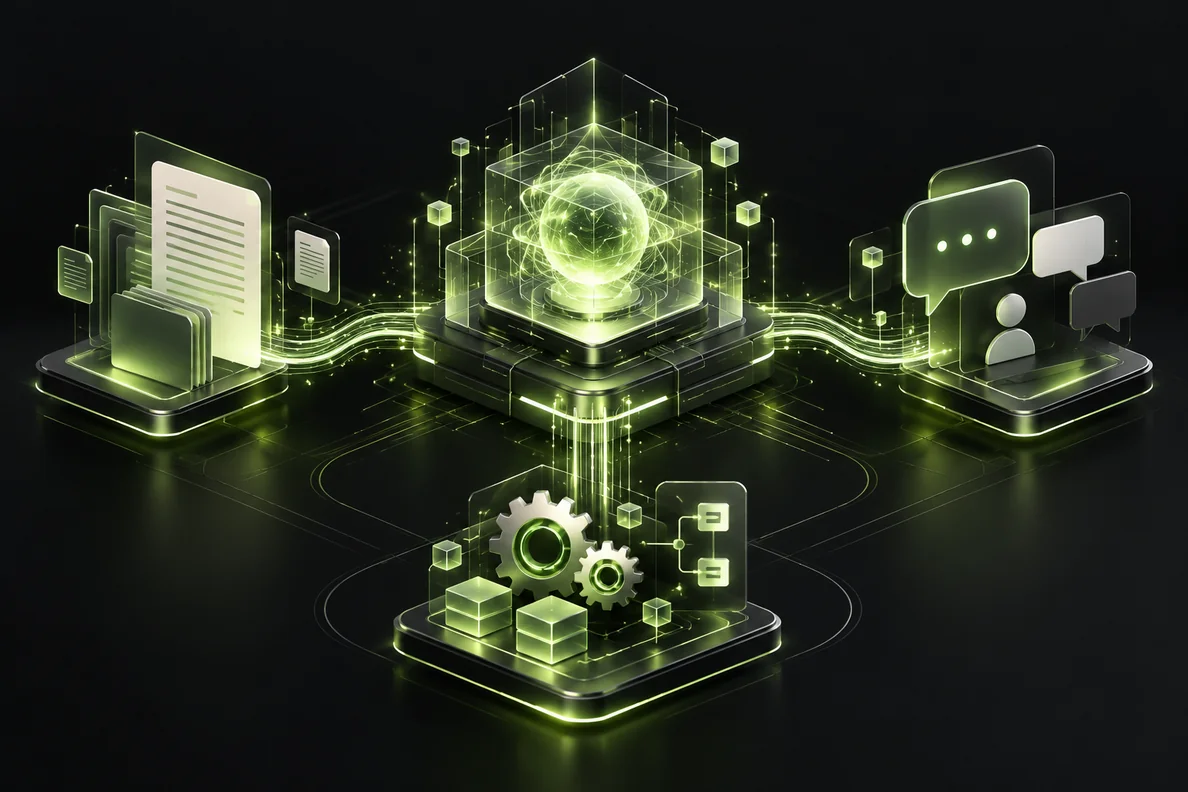
At DigiWeta, we provide turnkey AI application development services for businesses that wish to go beyond disjointed AI experiments. We develop production-grade applications for web, mobile, cloud and enterprise environments.
How our AI services help businesses:
- Process automation
- Data analytics and transformation
- Intelligent functionality of existing applications
- Improved customer and employee experience
- Avoidance of inefficiencies and associated costs
- Scalability of AI capabilities according to long-term objectives
Regardless of whether you require an analytics platform, a document management solution, an enterprise assistant, or any other AI application, DigiWeta will assist you in defining the potential and developing the right solution.
Why Businesses Need Custom AI Applications
Today’s organizations have their own software systems to handle their customers, sales, financials, operations, people management, and reporting. Yet, these software solutions just record information without analyzing and providing recommendations regarding the necessary actions.
Thus, employees continue to search through documents, review reports, transfer data from one system to another, and make repetitive decisions. The role of custom AI solutions is to tie these processes together and bring some intelligence into the operations.
The idea is not to put AI wherever you can. It is about using it when faster analysis, intelligent automation, or additional information can lead to a valuable business outcome.
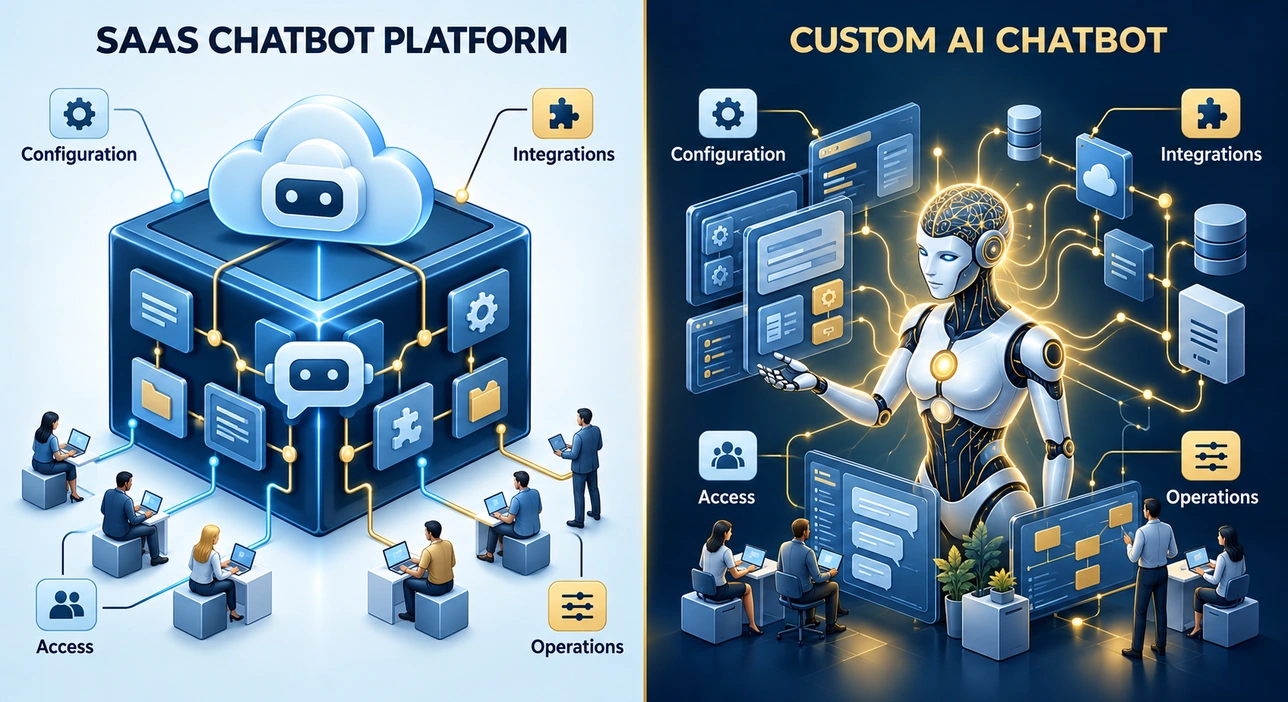
Benefits Over Off-the-Shelf Software
Off-the-shelf AI software is good for standard applications and quick prototyping. But it was made for general audiences and may lack understanding of the way you run things, your jargon, customer journey, data model, and approvals.
Tailored AI software is created based on your unique needs. It can operate on your business-approved data, apply the logic of your business, and integrate with the tools your teams rely on.
Some key benefits are:
- Business-specific functionality: The features are built around an identified business process or client need.
- Custom workflows: The application adheres to your workflow, approval, responsibility, and escalation process.
- Better data control: You control which data the application has access to and uses.
- Seamless integration: The AI capabilities can be integrated into any website, application, database, or enterprise platform.
- Flexible architecture: It allows the application to grow and change along with your needs.
- Strong differentiation: Your competitors cannot replicate the capability that is specifically built on your business process and knowledge.
- Improved user adoption: Your staff will get a product built specifically for their job, rather than yet another unrelated software.
Off-the-shelf software requires you to conform to its features. Custom AI software conforms to your business while allowing you to maintain your processes and controls.
Enhancing Operational Efficiency
Operational inefficiency is usually the result of hundreds of minor inefficiencies. People repeat data entry, read similar documents, get routine approvals, generate standard reports, and look for the same data in multiple systems.
The right custom AI application will be able to handle all these tasks within one intelligent workflow. For instance, it will be able to accept the document, get the necessary information from it, check it according to the business rules, find any missing information, update the corporate system and send any exceptions to the appropriate employee.
There is another way AI can make people more efficient at work. Rather than handling each sales lead, support request, transaction or operational alert equally, ML models can assess their importance, value, intention or risk.
Employees will be able to concentrate on decision-making, creativity, negotiation and customer relations while the application handles predictable and data-heavy tasks.
Key Features of a Custom AI Application
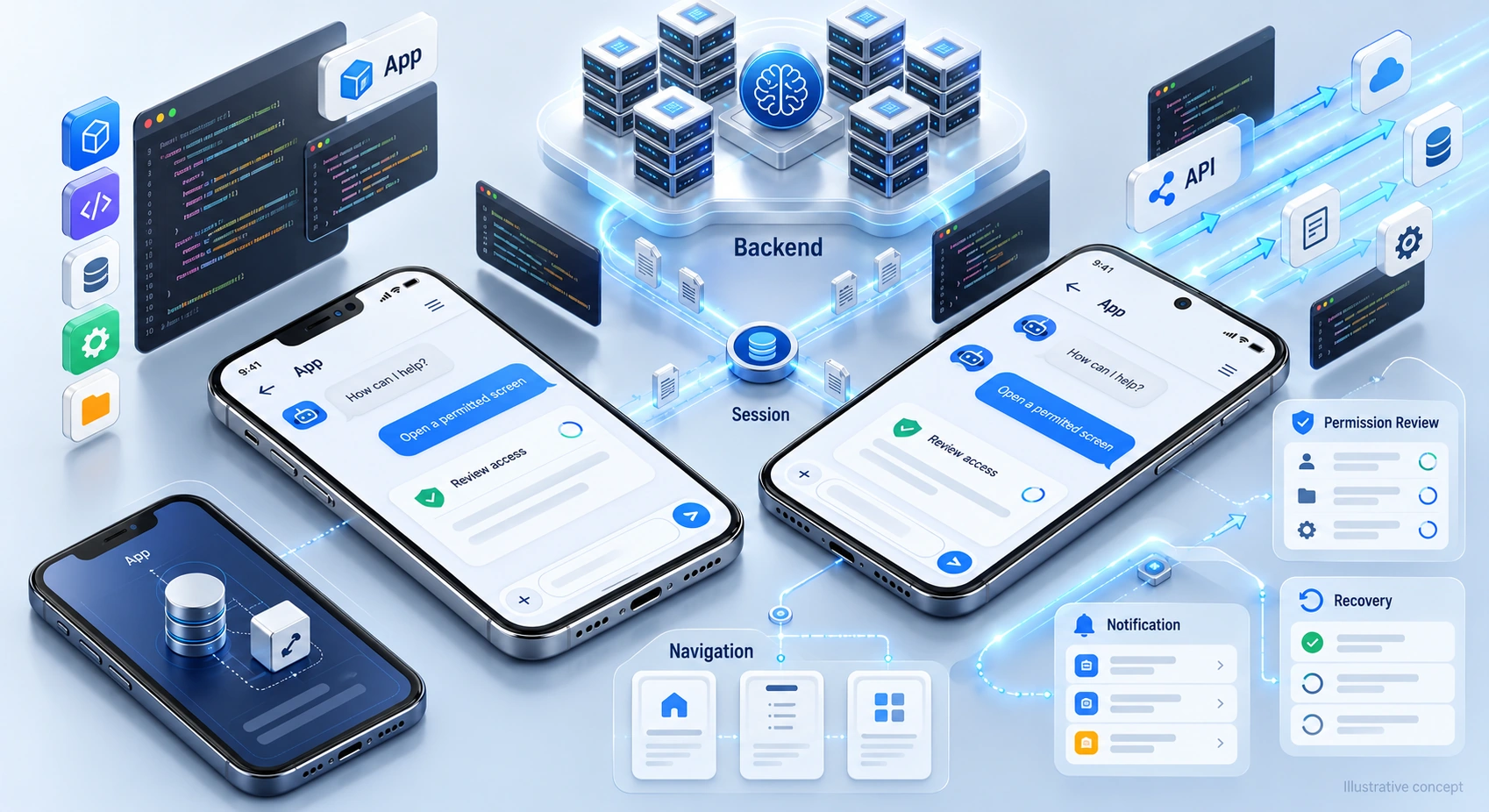
AI model is just a part of a complete business application. A robust solution also needs reliable data, secure architecture, integration, monitoring, permissions, and experience for users of the system.
Custom AI application development at DigiWeta is performed based on the concept of Enterprise software development. This means we develop all the elements of the application – from AI features to data pipelines and user experience.
Scalability & Flexibility
The AI application might start with just one team, process flow, or user experience journey. But it must have the ability to handle an increasing number of users, transactions, departments, and data sources over time as it is adopted.
A scalable application could leverage things like modular services, cloud computing architecture, workload queues, caching, database optimization, and automatic resource allocation to achieve that objective.
Flexibility is important because business requirements and AI technologies continue to evolve. A well-designed application can support:
- Supporting new workflows and approval processes
- Handling more users, teams, and locations
- Incorporating different kinds of AI models or vendors
- Handling new languages or regions
- Handling more documents and business information
- Creating additional dashboards and reports
- Meeting evolving security and compliance requirements
- Integrating with additional web/mobile/enterprise systems
It would help protect the initial investment by growing without having to rewrite the entire application whenever requirements change.
Integration with Existing Systems
An AI solution should enhance the technology ecosystem without adding information silos. The application should interact with the systems where your employees and clients operate.
DigiWeta integrates enterprise AI solutions with:
- Customer relationship management systems
- ERP systems
- Accounting and finance systems
- E-commerce systems
- Customer support systems
- Document storage systems
- Websites and mobile applications
- Collaboration and communication systems
- Analytics systems
- Internal databases and APIs
Let’s take the example of an AI sales solution that is connected to CRM. This system can analyze a newly generated lead, review all previous interactions, identify the level of purchasing intention, propose the next step, compose a personalized reply, and record all activities for future follow-up.
Your sales representatives get prompt assistance without constant platform switching. Meanwhile, management gets better tracking and more consistent information.
Security & Compliance
Custom AI applications might process personal details, finances, operational information, internal documents, or proprietary information of a company. Thus, security considerations should be an inherent part of the architecture.
Depending on the specific application, some of the key security controls might include:
- Encryption of data at rest and in transit
- Secure authentication and authorization
- Access control based on roles
- Data masking or anonymization
- Validation of input and output
- Logging and auditing
- Controls to prevent data leakage
- Human approval of sensitive operations
- Secure API and infrastructure configuration
- Data archiving and deletion policies
- Monitoring of applications and models
- Backup and recovery strategy
The specific compliance requirements will depend on the industry, geographical location, and nature of data being processed. The AI consulting services of DigiWeta can assist you in identifying the relevant compliance requirements to influence the design of the application, data strategies, and deployment environment.
Security should not stifle innovation. On the contrary, when managed properly, it provides a solid basis for AI implementation.
Industries Benefiting from Custom AI Solutions
AI can add value to different industries; however, a successful use of AI solutions has to match the peculiarities of the industry environment.
The Use Cases below demonstrate how companies can utilize customized AI to their advantage.
Healthcare
The healthcare industry handles a considerable amount of information related to patients, administration, finance, and operations. Custom AI can assist authorized individuals in making use of such information more effectively without compromising privacy and human oversight.
Some potential uses of AI in healthcare may be:
- Classification and summarization of medical documents
- Communicators for patients
- Scheduling and reminders
- Automation of claims and billing processes
- Knowledge platforms for healthcare
- Forecasting of staffing and resource requirements
- Support applications for telemedicine
- Analytics and reporting for operational efficiency
For instance, a knowledge platform within an organization could help employees to find relevant information from policies, procedures, and resources of healthcare.
Decision-making in the sensitive field of healthcare must always remain under the purview of competent human beings. As such, there must be defined limitations in any application of AI in this domain.
Finance
Financial organizations function within a realm where accuracy, speed, security, and accountability are crucial elements. Organizations need to process large amounts of information along with risk analysis and reliable records of their decision-making process.
Custom AI solutions in finance can be used for:
- Detection of fraud and anomalies
- Credit and operational risk assessment
- Forecasting cash flow
- Financial document processing
- Monitoring compliance
- Automated customer service
- Expense categorization
- Transaction analysis
- Financial reporting
- Supporting loan applications
For instance, the risk monitoring system can compare transactions to historical data and company’s own policy and then rank unusual activities for further analysis without making any spontaneous decisions.
Custom solutions provide more control over data access, behavior of models, risk levels, approval procedures, and audit trail.
Retail & E-commerce
For companies in the retail and e-commerce sectors, a rapid response to changes in demand, stock, prices, and buying habits of customers is necessary. Such custom AI will link these factors and enable teams to make decisions faster in their commercial work.
Some of the common applications are:
- Product recommendations based on the personal tastes of customers
- Demand and stock forecasting
- Segmentation of customers
- Prediction of churns
- Analysis of reviews and sentiments of customers
- Shopping assistants
- Automated customer support
- Marketing campaign optimisation
- Dynamic merchandising
- Improving search for products
The difference between the recommendation system and the custom AI software would be the number of aspects considered when making recommendations by the latter, such as stock availability and product margins.
Manufacturing
Manufacturing happens in an environment where there could be costly occurrences like equipment malfunctions, production lags, wastage, and quality control. AI technology can analyze the production information and recognize patterns that would otherwise cause more serious issues.
Some of the manufacturing applications may include:
- Predictive maintenance
- Visual quality assurance
- Product defect detection
- Production planning
- Monitoring equipment performance
- Forecasting supply chain operations
- Energy consumption optimization
- Analysis of safety and compliance
- Inventory planning
- Maintenance knowledge assistants
Python and TensorFlow technologies are some of the computer vision technologies that can analyze visual information from images to identify defects. Predictive models of AI can review equipment information to identify changes that could indicate maintenance requirements.
Custom AI App Development Process
Effective AI development requires a process that integrates technical considerations with business considerations. The DigiWeta App Development Process begins with requirements analysis and data analysis, followed by development, testing, implementation, and refinement.
It limits uncertainty before making a major commitment. It also guarantees that the application solves a worthwhile business problem, rather than just being a showcase.
Requirement Analysis
The requirement analysis starts with a comprehensive understanding of the problem, users, process, data, and desired output. DigiWeta collaborates with business and technology partners to articulate what the application needs to achieve and how AI can deliver quantifiable benefits.
Some of the key questions are:
- What business challenge does the application need to address?
- Who will be the users of the application?
- What tasks can be automated by AI or supported through AI?
- What data will the application need?
- What systems will it need to integrate with?
- Where are human decisions required?
- What are the security/compliance considerations?
- How will success be measured?
Success metrics could include faster processing, fewer errors, lower costs, better forecasting, quicker responses, or increased customer satisfaction.
This step provides a pragmatic scope, feasibility, architectural direction, and development strategy.
Data Collection & Model Development
The effectiveness of the AI system will rely on the type and quality of the available data used by the application. The development team must find, collect, clean, structure, and assess the necessary data prior to making decisions on the model strategy.
The data can be sourced from internal databases, documents, customer interactions, transactions, images, sensors, reports, or third-party platforms.
The appropriate technical solution would vary depending on the case. The forecasting application could have predictive machine learning models, while a company assistant would have a large language model with information retrieval.
Python has a solid framework for data processing, machine learning, automation, and API development. TensorFlow can be used for more specific tasks like classification, prediction, deep learning, or computer vision.
Yet not all applications require training a new model. For many applications, the most feasible approach is combining the existing model with company data, information retrieval, business rules, security measures, and custom application logic.
Testing & Deployment
A model that works well during a demo can act in a completely different way when exposed to real users, unusual input, incomplete information, and production workloads. That is why DigiWeta tests the whole application and not the model alone.
Tests can include:
- Accuracy and relevance of model predictions
- Performance and stability of application
- Integration
- Privacy of data and user permissions
- Bias and inconsistencies of model output
- Security vulnerabilities
- Uncommon user input
- Failover scenarios
- Cost and latency of operation
- User experience and accessibility
Deployment starts with a restricted pilot for selected users. It enables the company to test the application in a real-world setting and polish it before further deployment.
Once deployed, the system needs constant monitoring because models, data, user interaction, and operational needs may evolve, and AI applications in production should be maintained and improved continuously.
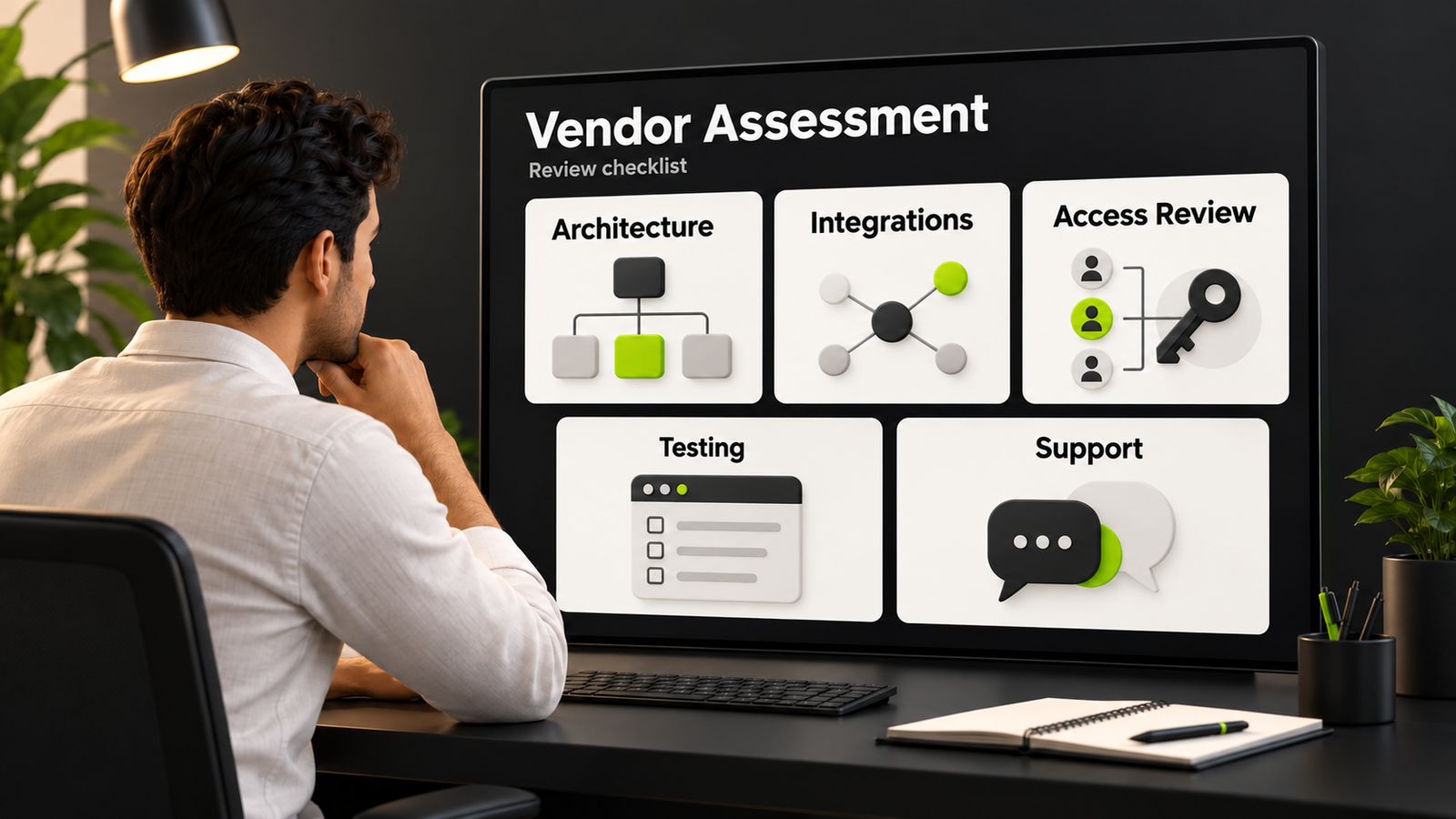
Selecting the Right Partner for Custom Development
A successful custom AI project hinges critically on the developers who build and design it. A competent partner needs to have knowledge in AI, software engineering, data architecture, integrations, security, user interface, and business strategy.
However, technical competence is not enough; a development firm must be able to highlight possible risks, question faulty assumptions, assess feasibility, and make a link between technology and outcomes.
Questions to Ask
When choosing an AI app development partner, ask:
- How will you know that your AI will solve our problem?
- How will you estimate the business value of the app?
- Do you have relevant technological expertise?
- How will you integrate it into our systems?
- How will you ensure confidentiality of the data?
- What specific models and platforms will you use?
- Will the AI rely on one vendor?
- How will you check its precision and quality?
- How will you handle uncertainty of your AI?
- What decisions will you entrust to humans?
- Who will own the application, data and code?
- How will you ensure smooth operation after deployment?
- How will you cover costs related to hardware and algorithms?
- What support will you offer after launch?
Your reliable partner should give clear answers to these questions and reveal the associated trade-offs. Additionally, your partner should reveal limitations of their technology, data requirements, cost factors, and risks.
DigiWeta offers both AI consulting services and application engineering and integration services.
Consideration Costs
The cost of custom AI application development is dictated by its scope, data needs, integration, security needs, and technical complexity of the project. The development of an AI application tailored for a specific internal team would have entirely different considerations compared to that of a multi-user enterprise solution that handles sensitive information on various platforms.
The major elements of cost consideration are:
- No of features needed and their complexity
- Data availability and quality
- Requirement of custom models
- Third-party integrations
- Access control
- Security considerations and compliance requirements
- Web/mobile interfaces
- Cloud Infrastructure and use of AI
- Testing and deployment considerations
- Monitoring and maintenance considerations
Developing a simple proof of concept or minimum viable product could be used to validate the application before a full-scale implementation. It allows the organization to test feasibility, evaluate performance, and collect user feedback while controlling the initial investment.
The business should, however, consider the long-term value of the project and not just its cost. The best business justification is when there is a clear connection between the investment made and the tangible benefits gained.
Frequently Asked Questions
What is custom AI application development?
Custom AI application development includes creating and implementing intelligent software applications. This process consists of the integration of AI models with business data, custom logic, connectivity, security, and a tailored user interface.
How does a custom AI application differ from off-the-shelf software?
Off-the-shelf software is a standard piece of software that is developed to serve a wide audience. A custom AI application is built specifically for the company’s processes, terms, integrations, data sources, access, and approvals.
Which AI applications can be built by DigiWeta?
DigiWeta can implement a predictive analytics platform, document intelligence system, enterprise knowledge assistant, recommendation engine, workflow automation app, AI agent, computer vision system, and any other AI product for customers.
Is it possible for DigiWeta to incorporate AI into existing Enterprise software?
Yes, DigiWeta can add AI capabilities to existing web applications, mobile applications, CRM, ERP solutions, support tools, documentation systems, and internal databases. Such an approach will enable companies to add automation, predictions, smart search, or generation without completely changing the whole infrastructure.
Does every AI application require a custom machine learning model?
No, many AI implementations work fine with the help of existing AI models along with data from the company, retrieval system, APIs, business logic, etc. However, a custom model can be required if there is a unique problem, a suitable training set, or special demands.
What data should be used to implement a custom AI solution?
It depends on what solution you need; it may be documents, customer communication history, transactions, product data, images, operational reporting, technical equipment, or business history. During the discovery phase, DigiWeta analyzes all these aspects of your data.
How long does it take to develop a custom AI app?
It varies depending on project scope, availability of data, integration needs, testing needs, and target platform for deployment. A limited proof of concept can be done in less time than a complete enterprise product. DigiWeta employs a step-by-step process that allows clients to approve the solution first before embarking on full-scale deployment.
How does DigiWeta ensure business data privacy and security?
DigiWeta can employ various methods to ensure data privacy and security, such as encryption, secure authentication, role-based access, data masking, auditing, and API management with human intervention. The security architecture depends on the nature of the data, the client’s industry, and relevant laws and compliance policies of the business.
What comes after application deployment?
After deployment, DigiWeta can provide services for monitoring, maintenance, performance tuning, evaluation of machine learning models, security, and adding features. This ongoing process ensures the application stays dependable amid changes in business data, client requests, machine learning models, and technology platforms.