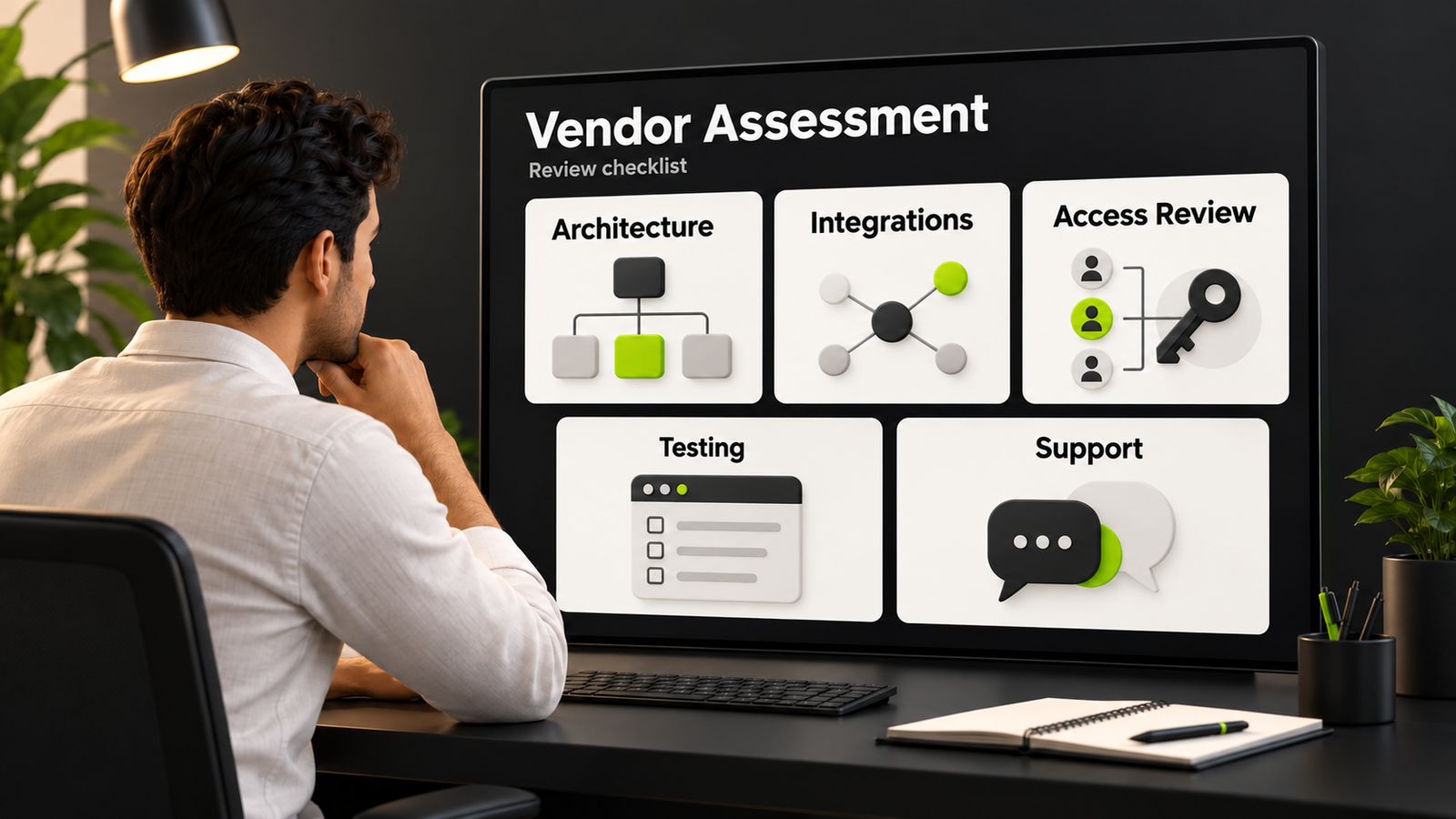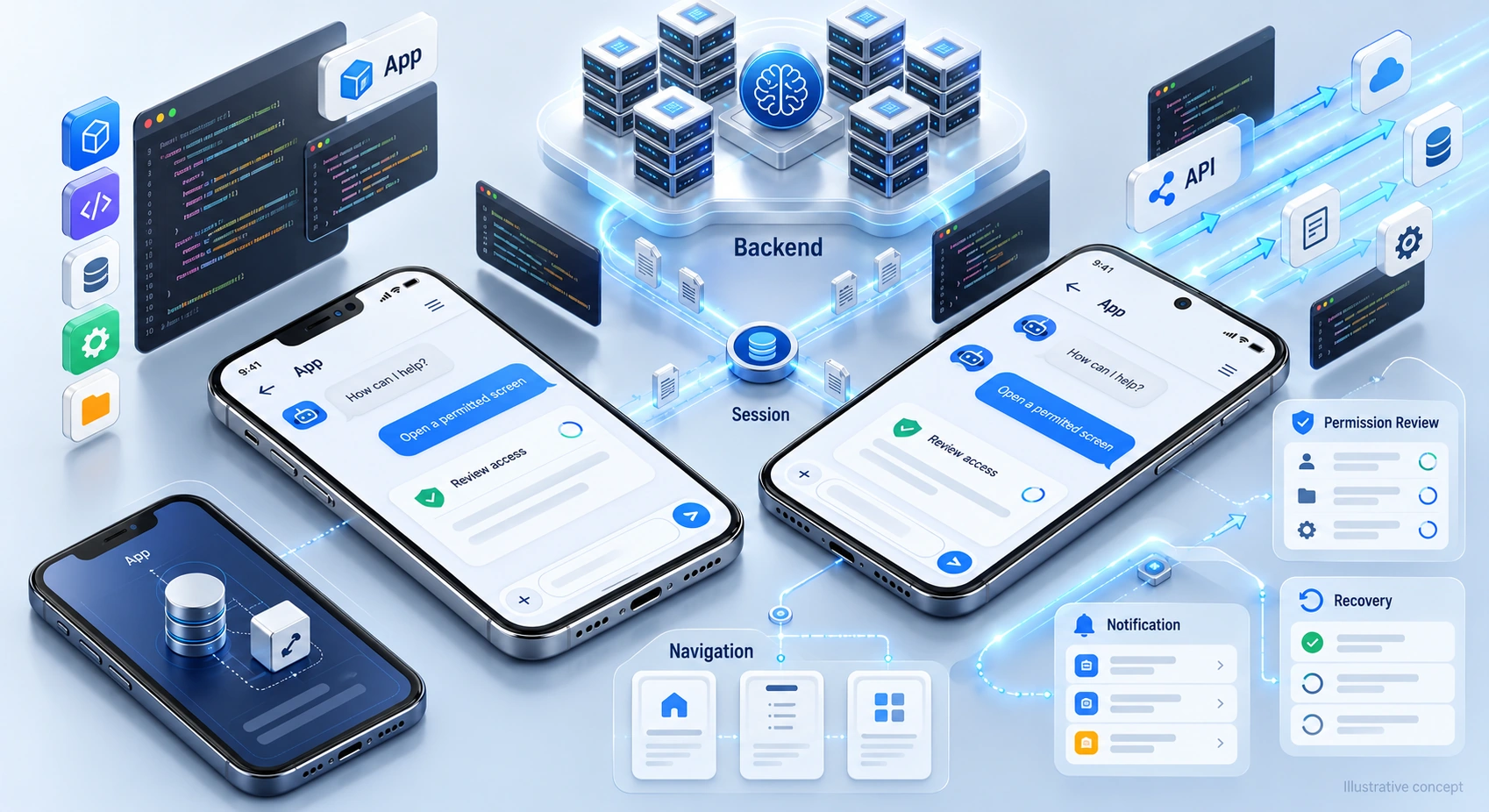

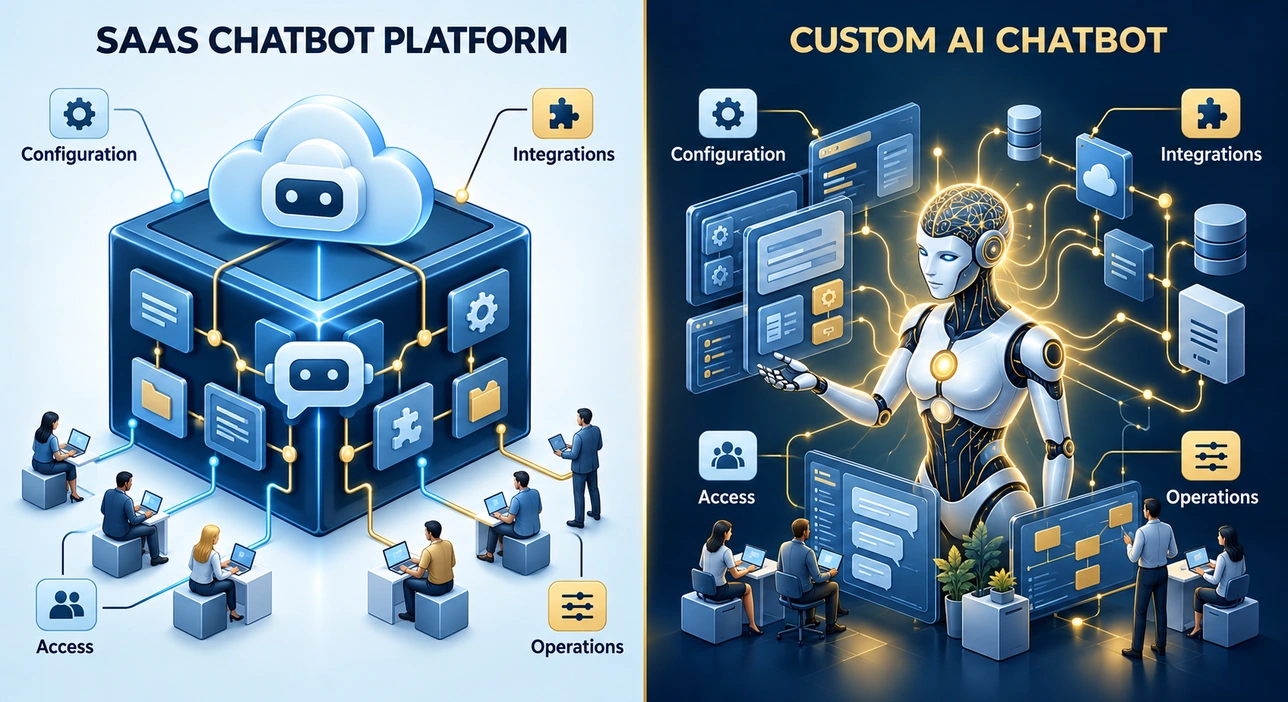
Choosing between a SaaS chatbot and custom development is a fit decision, not a contest with one universal winner. Start with the tasks you need to support, the systems involved, and the people who will maintain the solution. Then compare how each option handles those requirements, including the work and costs that continue after launch.
A SaaS platform can provide a useful starting point: a hosted product, configuration tools, and supported integrations. For teams whose requirements fit those capabilities, buying may reduce the amount of software they need to build and maintain.
The question is whether the chosen platform fits your enterprise’s workflows, controls, and operating model.
Custom ai chatbot development services become worth considering when important requirements fall outside a product’s supported capabilities. That does not make custom delivery automatically safer or cheaper. It means your team needs to compare the additional control against engineering, security, and maintenance responsibilities.
This guide compares the practical trade-offs in build versus buy: conversation design, integrations, data controls, cost, and ongoing ownership. Use it alongside the broader planning guidance in our conversational AI chatbot playbook.
If your workflow needs a tailored approach, discuss the scope of an ai chatbot development service with DigiWeta before deciding what to build or buy.
Chapter 1: Test Beyond the Visual Builder
No-code and low-code tools can simplify configuration, but a quick setup is not the same as a tested production workflow. Ask what happens when users leave the expected path.
Test the exceptions.
Where Fixed Flows Fit
A decision tree can suit a predictable task, while other products combine flows with language models and retrieval. Neither approach should be judged from the builder alone. Test a request such as, “Cancel my Pro plan, but keep basic access until the 15th.” Check whether the chatbot separates the requests, confirms the account, applies the right rules, and asks for clarification when needed. Compare observed behavior rather than assuming every SaaS product has the same limits.
When Custom Logic Helps
Custom development lets a team shape conversation handling around specific business rules. It may use hosted models, retrieval, fixed flows, or other components; fine-tuning is not always required. Ask which approach fits your tasks and how the team will test complex requests, refusals, and failed actions before release.
Chapter 2: Check Integration Requirements
Some chatbots only need approved information; others need controlled access to records or actions. Define the workflow and required permissions before choosing a platform.
Inspect the Supported Connectors
Check a connector’s exact fields, actions, permissions, and sync behavior. It may cover your needs, or only part of them. Request a demonstration of your workflow rather than relying on a logo.
- For legacy systems, investigate supported APIs, network access, and data formats early. Some products allow extensions or middleware; others impose constraints. Document the gap before deciding that a platform cannot work or that a custom integration will be straightforward.
Plan Middleware and Handoffs
Custom middleware can bridge systems, depending on available interfaces, permissions, and maintenance resources. Define how requests are validated, how failures are retried, and when a human takes over. Include this work in the estimate rather than treating integrations as unlimited.
For a sales-focused example of these decisions, review enterprise AI chatbots for B2B lead generation.
Chapter 3: Compare Data and Security Controls
Make data requirements clear for SaaS and custom options. Involve security and compliance reviewers before selecting an architecture.
Shared Hosting
Shared infrastructure is not, by itself, evidence that a product is unsuitable. Review how the provider separates customer data, manages access, handles incidents, and documents subprocessors. Confirm what conversation data is stored, where it is processed, and whether contractual controls meet your requirements. Do not assume a provider uses prompts for training without checking the applicable terms and settings.
For regulated workflows, assess the specific product, configuration, agreements, and intended use. Custom software also needs review. Explore the planning considerations for chatbot development for the healthcare industry with your compliance stakeholders.
Assess Custom Deployment Controls
Custom delivery can offer more deployment choices, while leaving your team responsible for operating them.
- Private Cloud Deployment: A private cloud may fit some requirements, but map external dependencies first. Model calls, monitoring, backups, and support tools can still transfer data. Check the design rather than assuming a deployment label defines every boundary.
- Data Protection: Redaction and masking can reduce exposure, but they need testing and clear limits. Decide which information should never be collected, which systems may receive it, and how errors are handled. These controls alone do not establish compliance.
Chapter 4: Compare Costs and Exit Options
Assess switching costs early. Platforms and custom systems can both create dependencies that make migration difficult.
Model Usage and License Costs
Read the pricing model against your expected use. Depending on the product and plan, costs may include seats, interactions, resolutions, channels, or integrations. Check allowances, overages, support, and renewal terms rather than projecting from a headline subscription price.
Build low, expected, and high-usage scenarios. Include setup and migration costs, and check what can be exported if you leave. Treat forecasts as assumptions until they match your workload and contract.
Budget for Custom Ownership
Custom development typically adds engineering work upfront and continuing responsibilities after launch. Budget for hosting, model usage, monitoring, security, testing, maintenance, and staff time. Third-party licenses may still apply. Compare costs over the same period and service scope as the SaaS option; a custom codebase does not automatically make long-term operation cheaper.
Use consistent assumptions when estimating the ROI of an AI chatbot for customer service for each delivery option.
Chapter 5: Choose a Delivery Model
If custom work is justified, decide who will own delivery and operations. An internal team, external agency, or mixed team can be appropriate. Compare available skills, capacity, handover requirements, and support needs rather than assuming one model is always faster.
An agency can add relevant delivery capacity, but assess the actual team and proposed scope. Ask who handles architecture, integrations, testing, security review, and maintenance. Confirm availability and dependencies before treating a proposal as a reliable delivery plan.
Use evidence from comparable work when evaluating an AI chatbot development company and check what is custom-built, licensed, or dependent on another platform before signing.
Plan Your Chatbot Approach with DigiWeta
The right decision should fit your workflow and resources. Separate essential requirements from preferences, compare realistic options, and agree who owns the solution after launch.
Discuss ai chatbot development services with DigiWeta using a clear brief: users, data sources, business systems, and permitted actions. Use that conversation to identify where configuration may be enough and where custom work needs a defined scope, test plan, and support arrangement.
Need help defining the scope? Contact DigiWeta to discuss the requirements behind your build-or-buy decision.
Frequently Asked Questions
SaaS offers a hosted product with configuration and extension options. Custom development tailors software to requirements and adds delivery and maintenance duties. Compare capabilities, contracts, and the operating model. Custom code ownership depends on agreed terms and third-party licenses, not simply on choosing to build.
Some can; capability varies by product, setup, and task. Test realistic requests with multiple intents, missing information, and exceptions. Apply the same tests to a custom prototype. Neither a visual builder nor a custom label proves that a chatbot will handle your workflow reliably.
Lock-in arises when switching requires substantial rework, data migration, or process changes. Check export formats, integration dependencies, contract terms, and access to configuration. Custom systems can also depend heavily on a provider or developer, so include documentation and handover in either option.
Review product controls, data flows, access rules, retention, and contracts against your requirements. Shared hosting alone does not establish insecurity. Involve qualified reviewers for regulated uses, and apply the same scrutiny to custom systems rather than assuming private deployment guarantees protection.
Legacy systems may have limited APIs, restricted network access, or unusual data formats. Check whether a platform’s connectors or extension options cover the workflow. If middleware is needed, estimate its testing, security, and maintenance work before committing to either approach.
There is no universal answer. Compare setup, integration, licenses, hosting, model usage, maintenance, support, and internal staff time over the same period. Model several usage scenarios. SaaS may reduce development work, while custom delivery may offer control worth its cost; neither guarantees a lower total.
Check the contract rather than inferring ownership from the delivery model. SaaS commonly licenses software access; data rights and export options are separate terms. For custom work, define ownership, third-party components, repository access, and handover explicitly, with legal review where needed.
No. You can use an agency, an internal team, or a mixed model. Choose based on your skills, capacity, and support needs. Keep an accountable owner within the business, and agree delivery responsibilities, documentation, access, and handover so the solution remains maintainable after the initial project.