
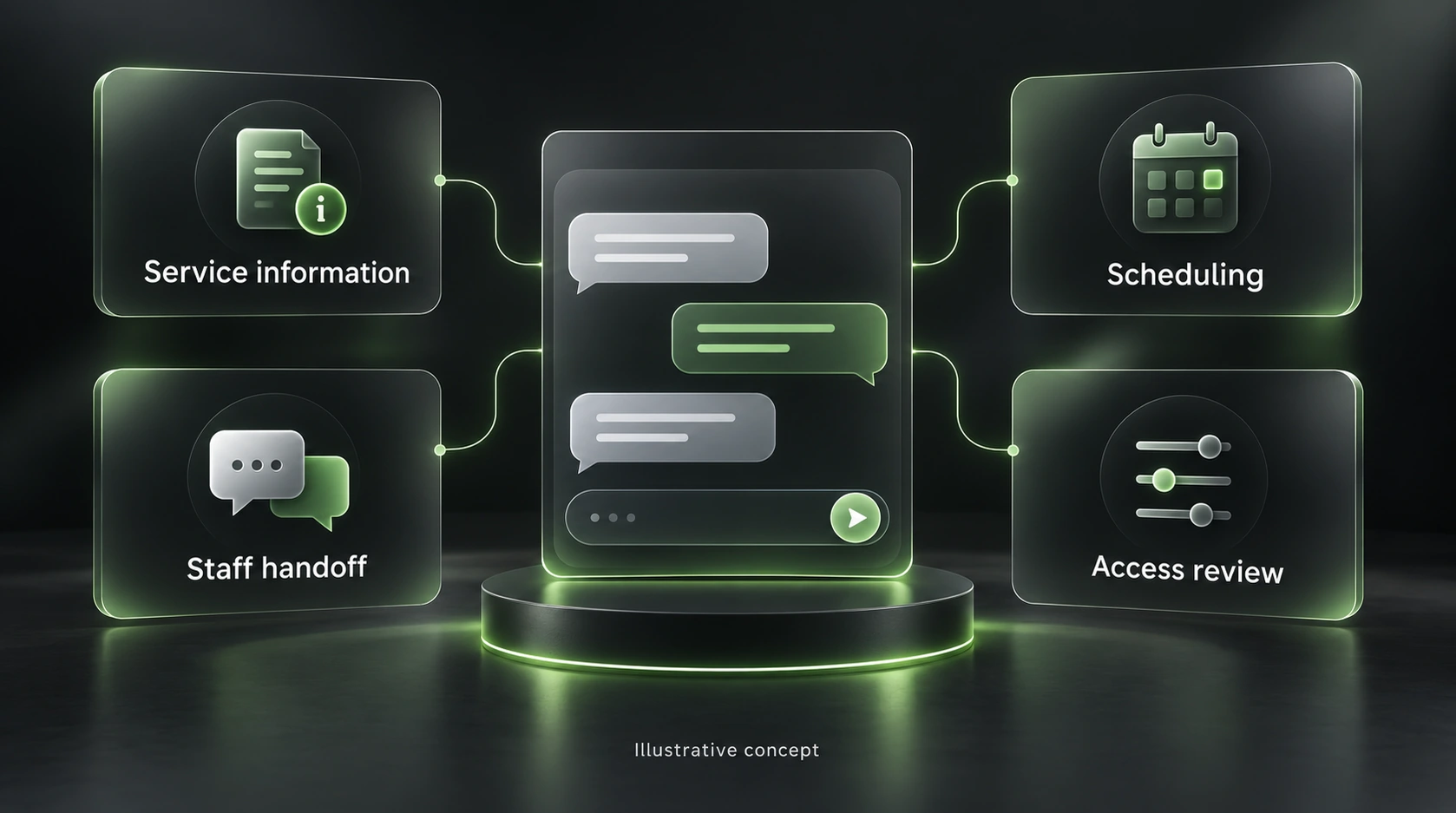
Healthcare chatbot projects need to separate administrative help from clinical decisions. Service information may be a suitable starting point, while symptom assessment, treatment advice, and record access need additional governance. Define the intended use, responsible teams, and escalation routes before selecting a model or integration.
Start healthcare chatbot development with the workflow and its risks. Evaluate automation rather than assuming it will remove administrative backlogs.
Incorrect health information or unauthorized disclosure can cause serious harm. Test the assistant’s limits and failure behavior, and involve clinical, privacy, security, and legal reviewers where relevant. Do not treat a general-purpose language model as a clinician or assume a convincing response is safe.
No architecture guarantees error-free medical output. Set narrow permissions, approved content, human oversight, and a documented evaluation process matched to the intended use.
This guide covers planning and governance considerations, not medical or legal advice. Connect these requirements to the broader approach in our intelligent virtual assistant playbook.
To discuss a scoped project for ai chatbot development for healthcare, contact DigiWeta with your requirements.
Chapter 1: Separate Administration from Clinical Use
Define what the assistant may do. Service information and scheduling differ from assessing symptoms or urgency. Clinical functions need validation, oversight, and regulatory review; do not add them simply to open-ended chat.
Do not improvise diagnoses or treatment. Define when the assistant must stop answering and direct users to a professional or approved urgent-help route.
Define Clinical Boundaries
Clinical leaders must define symptom-related workflows, validation, and escalation. A prompt or retrieval layer does not make a model safe for triage.
- Input Handling: Collect only information suited to the approved task. Explain limits and avoid keeping patients in chat when urgent help may be needed. Test unclear messages and extraction errors; do not assume symptoms are recognized perfectly.
- Approved Information: Apply access controls and source governance to retrieval. Test whether evidence supports the response. RAG supplies context but does not guarantee clinical accuracy or authorize medical decisions.
- Escalation Rules: Use clinically approved escalation rules and clear help routes. Never claim emergency services were contacted unless an authorized process confirms it. An automated warning does not replace professional assessment or emergency response.
Routine scheduling should follow the approved service workflow. Do not infer that symptoms are mild or that waiting until tomorrow is safe solely from a chatbot exchange.
Chapter 2: Review HIPAA Requirements
For US projects involving ePHI, identify organizational roles, obligations, and data flows. Review risks, safeguards, policies, agreements, and operations with qualified specialists. A feature or hosting label alone does not establish HIPAA compliance.
When assessing a SaaS chatbot platform, review the actual service, configuration, agreements, and permitted use. Cloud services can support compliant workflows when applicable requirements are met; shared hosting alone is not proof of a violation. Custom software needs the same scrutiny.
Data Minimization and Redaction
Decide which data is necessary, where it will be processed, and how exposure can be reduced.
- Review Step: Map information sent to models, storage, monitoring, and support systems. Test masking or redaction against realistic inputs and document what it can miss. Removing names alone does not necessarily de-identify a record, and clinical details may remain sensitive. Use approved safeguards and review rather than treating a filter as a complete privacy solution.
Review Deployment Boundaries
Compare hosting against intended use, access controls, and maintenance needs. A private cloud is not automatically air-gapped; external model calls, logs, backups, or support tools may still transfer data. Verify dependencies and agreements instead of promising that a deployment choice prevents every disclosure.
Data-flow review and controlled access also matter in other regulated settings, including secure banking and fintech chatbots.
Chapter 3: Limit and Verify EHR Access
Define the exact record or scheduling functions needed. Reading, writing, and clinical interpretation are separate duties. Use approved interfaces, authentication, and limited permissions. Confirm rules for displaying results and changing records before connecting chat.
Understand the Supported Interfaces
Check the EHR’s APIs, authorization, and supported workflows. FHIR is a healthcare interoperability standard, not a security guarantee or the only possible interface.
Where FHIR is supported, match the relevant version and profiles. Add appropriate access controls, auditability, validation, and error handling around the integration.
- Example Task: For a request about result availability, verify the patient’s access and use the approved system workflow. Return only information the organization permits, and do not add unsupported clinical interpretation. Handle missing records, delayed results, and mismatched identity checks by routing to the appropriate service.
Test the whole interaction, including failures and staff handoffs, rather than assuming an API connection improves the patient experience.
Chapter 4: Review Clinician-Facing Use Cases
Clinician-facing tools may support documentation or information retrieval, but their outputs still require appropriate review and governance.
Assess the documentation workload before adding an assistant. Define how accuracy, review time, privacy, and usability will be tested. A generated draft does not automatically save time or reduce burnout.
Clinical Documentation Assistance
A documentation tool may draft structured notes for clinicians to review, correct, and approve.
- Recording Controls: Establish required permissions and policy before recording. Explain processing and retention, provide controls, and secure recordings and transcripts. Limit collection to the approved purpose.
- Drafting Controls: Treat generated notes as drafts. Test omitted facts, invented details, attribution errors, and formatting. A plausible SOAP structure does not establish clinical accuracy or compliance; the responsible clinician must assess the content.
- Approval: Keep drafts distinct from approved records. Require review before finalizing clinical notes, and use authorized EHR workflows with an audit trail. Do not promise fixed time savings.
Chapter 5: Evaluate Expertise and Accountability
Healthcare software needs coordinated clinical, technical, privacy, and operational ownership. Confirm who is responsible for each part of the project.
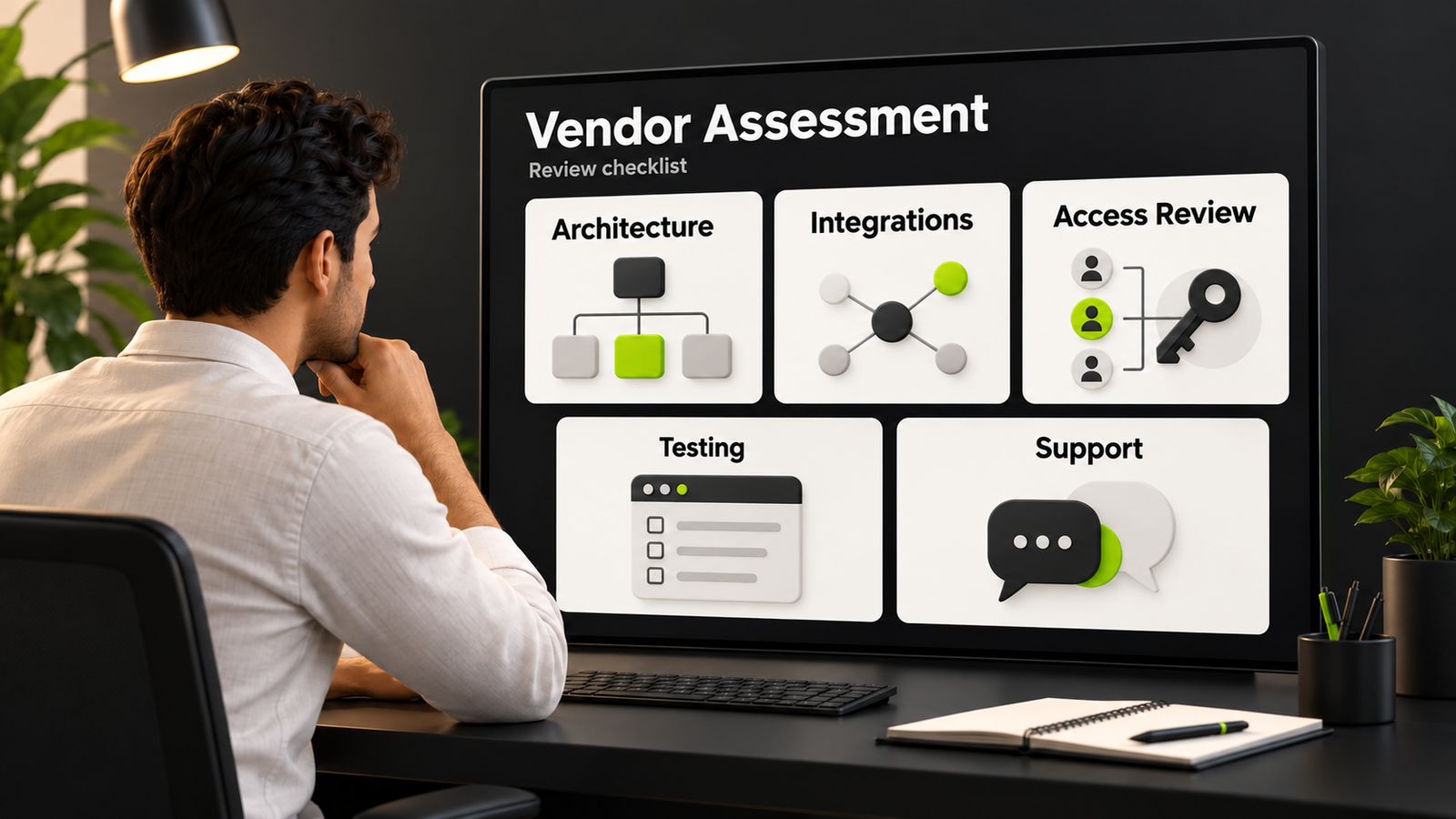
Assess relevant experience, evidence of testing, and the proposed governance process. Ask how incidents, model changes, access reviews, and handover will be managed. An agency label or template does not establish compliance, and security should be considered throughout delivery rather than added at the end.
When reviewing suppliers, ask for specific evidence and agreed responsibilities. Use the relevant questions in our guide to what technical questions to ask when hiring a specialized AI chatbot development company.
Scope Healthcare AI with DigiWeta
Start with a narrow use case and clear limits. Identify data recipients, reviewers, and escalation paths before selecting an implementation. Test it before extending access to more sensitive tasks.
Discuss ai chatbot development for healthcare with DigiWeta around the intended administrative or clinical context, existing systems, and review requirements. Agree scope, access limits, evaluation criteria, and ongoing ownership. Clinical safety and compliance need qualified assessment; no model, integration, or deployment label guarantees them.
Ready to define the requirements? Contact DigiWeta to discuss scope, safeguards, and review responsibilities.
Frequently Asked Questions
Administrative chat may help with approved service information or scheduling. Clinical triage assesses symptoms or urgency and needs appropriate validation, oversight, and regulatory review. Do not assume a language model can safely perform triage because it retrieves protocols or produces confident answers.
That depends on intended use, applicable regulation, validation, and professional oversight. Obtain qualified clinical and legal review before deploying such functions. A general-purpose assistant should not improvise diagnoses or treatment, and RAG alone does not make clinical advice safe or compliant.
Assess applicability, organizational roles, data flows, risk management, safeguards, and required agreements, including BAAs where appropriate. Review operation as well as design. Encryption, masking, or private hosting alone does not establish compliance; involve qualified privacy and security reviewers for the actual arrangement.
FHIR is a standard for exchanging healthcare information. Where supported, it can help structure EHR integrations, but it is not itself a security protocol. Check the system’s interfaces, versions, authorization rules, and permitted workflows rather than assuming every chatbot must use the same connection.
Potentially, depending on the intended use and applicable requirements. Review data handling, safeguards, contracts, required agreements, and integrations. Shared hosting alone is not a violation; custom development alone does not establish compliance. Have qualified specialists assess the setup.
Masking may reduce exposure of selected identifiers, but it can miss information and does not automatically de-identify a record. Clinical details may remain sensitive. Test the controls, limit data collection, and review all recipients and retention rather than treating redaction as a complete safeguard.
They may draft notes for review, with appropriate recording permissions, privacy controls, and validation. Clinicians must check omissions, inaccuracies, and attribution before approval. Measure review effort and quality rather than assuming a structured draft is accurate or saves time.
Include accountable clinical, privacy, security, technical, and operational stakeholders as appropriate to the intended use. Delivery may involve internal staff, an agency, or both. Confirm evidence, review responsibilities, support, and handover rather than assuming a vendor’s template or team structure guarantees safe deployment.