

A chatbot is useful when it helps someone complete a task, not simply when it sounds conversational. Fixed flows, language models, and human support can each play a role. The challenge is choosing how they work together so users receive accurate information, understand the next step, and can get help when automation falls short.
Conversational AI adds more flexible language handling, but it does not remove the need for business rules, testing, or accessible support. Plan the customer journey before selecting technology.
An assistant may identify requests, retrieve information, or initiate permitted workflows. Each capability needs controls. Generated text must not replace verified records, authorize sensitive actions, or imply that an unconfirmed task is complete.
This playbook brings together the key decisions: conversation handling, channels, data connections, escalation, measurement, and delivery ownership. Use it to define a focused first release rather than a promise to automate every interaction. To discuss that scope with DigiWeta, explore ai chatbot development services around your workflows, systems, and review requirements.

Chapter 1: Define How the Conversation Works
Assistants may combine fixed rules, intent classification, retrieval, and generative models. Select components for the task and its constraints rather than assuming every newer approach replaces older ones.
Interpret Requests Carefully
Language processing can identify requests and relevant details, but it can misunderstand. Define supported tasks, test varied wording, and clarify missing or ambiguous information instead of treating every plausible interpretation as correct.
- Intent: Is the user asking for information, requesting a change, or trying to reach a person? These can require different controls.
- Details: Identify relevant references, dates, and selections, then verify them before taking action.
Different wording may describe the same task, but context can change its meaning. Test common and difficult cases, and let users correct a mistaken interpretation.
Manage Conversation State
The dialogue flow decides what information is needed next and which actions are permitted. For a return request, it may need identity checks, order details, policy validation, and confirmation. Keep these requirements in controlled logic, not only in a prompt. Distinguish a draft request from a submitted or completed action.
Compare supported tools against your conversation and integration needs. If essential capabilities are missing, consider custom AI chatbot development services alongside suitable platforms.
Chapter 2: Choose Channels Deliberately
Start where customers seek help. One supported channel may be more useful than several inconsistent ones. Add channels only when identity, permissions, operations, and maintenance are clear.
Separate Channel Logic
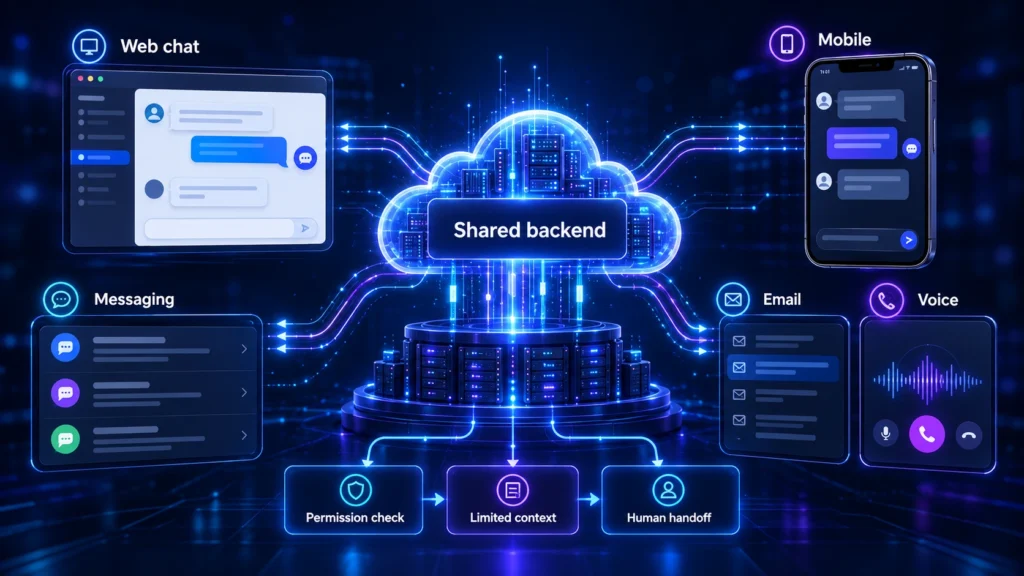
A shared backend can serve different interfaces, but channels have different capabilities and rules. Define supported functions, authentication, formats, and escalation for each one rather than assuming an experience transfers unchanged:
- Your website chat interface.
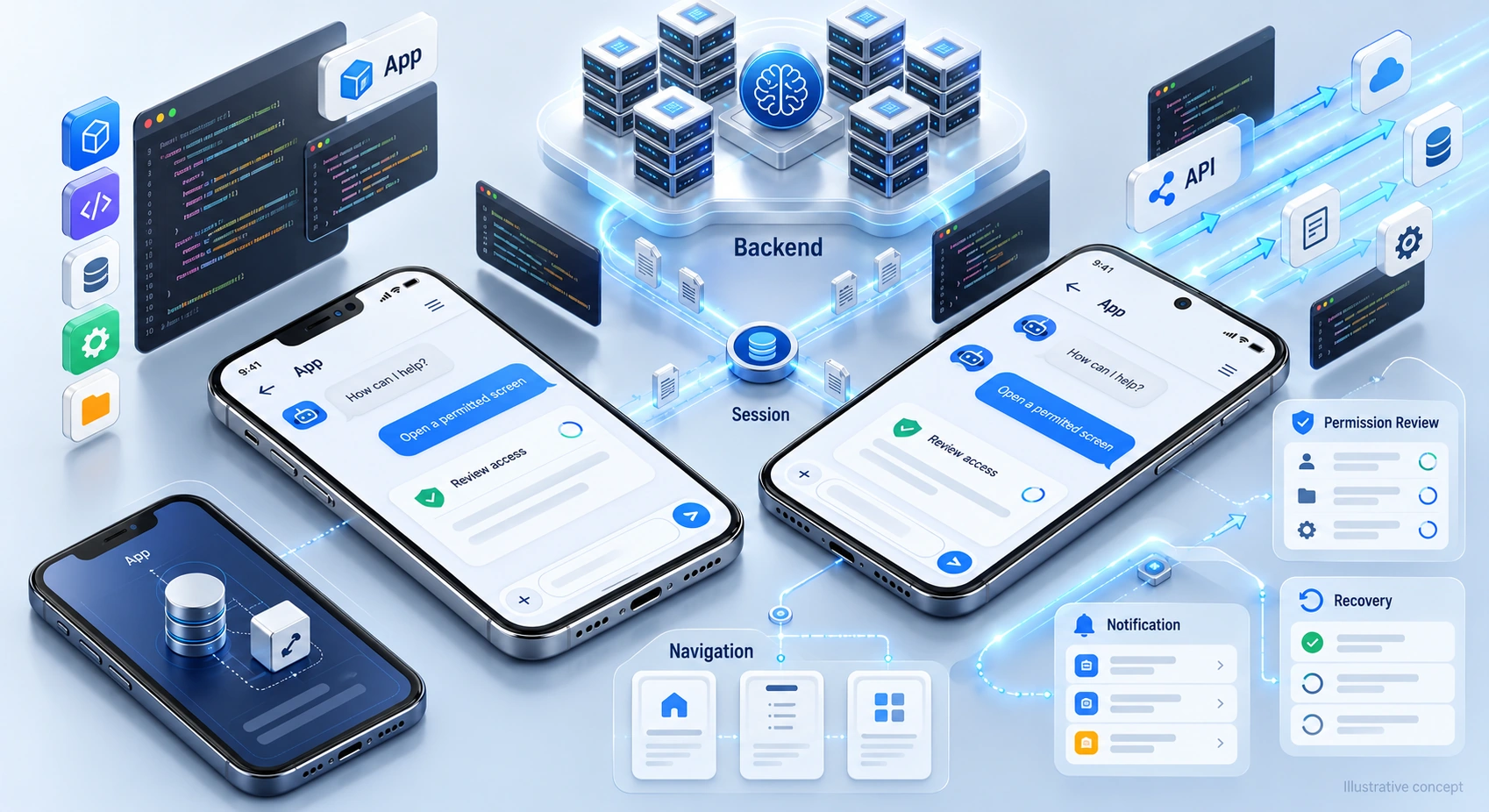
- Mobile applications, where session recovery, accessibility, and notifications need testing. Review the options for integrating chatbots into mobile apps safely.
- Messaging channels that meet relevant platform and consent requirements.
Reconnect Context with Permission
If a conversation continues on another channel, verify that the same person is entitled to see the history. Decide what context is retained, for how long, and where. Test account switching, shared devices, deletion, and synchronization failures. A particular database product is not mandatory, and remembering everything is not always desirable. Share only the context needed for the next interaction.

Chapter 3: Match Industry Requirements
Requirements depend on data sensitivity, actions, and obligations as well as industry. Map them for each workflow instead of assigning one security level to an entire sector.
Retail Service and Discovery
Retail workflows may involve product information, order status, or return requests. Connect approved sources, verify account access, and require confirmation for relevant actions. Keep marketing follow-up permission-based and separate from routine service. For a detailed example, explore how an AI chatbot for eCommerce automates customer service with clear human handoffs.
Healthcare and Banking Requirements
Regulated uses need review of intended purpose, data flows, controls, agreements, and ongoing operation. Separate administrative assistance from clinical decisions, financial authorization, or other high-impact functions. Neither custom software nor private hosting guarantees compliance. Involve qualified stakeholders and preserve accessible human support. See the planning considerations for chatbot development for the healthcare industry before defining a deployment.
Property and Travel Enquiries
These workflows may use changing inventory, scheduling, or booking rules. Confirm permitted data access and explain whether an enquiry, appointment, or transaction is pending or complete. Let customers review and approve consequential actions. For examples of these integration and handoff choices, read about AI chatbots for real estate and travel.

Chapter 4: Make Human Escalation Easy
A clear route to people is part of the product, not a sign that automation failed. Define escalation for unsupported requests, failed actions, uncertainty, complaints, and customers who prefer human help.
Review Sentiment Signals
A model may estimate tone but misread context, language, or expression. Do not treat a score as a fact about someone’s feelings. Test use of the signal and avoid making it the only route to assistance.
- Frustration may warrant help, but a calm request for a person should also reach the relevant support route.
Explain the Handoff
Tell the user whether they are being transferred now or leaving a request for later. Show what happens next and avoid promising a live agent when no one is available.
- The Request: Send the necessary details through a supported service-platform integration. Verify ticket creation or transfer, and handle failures visibly.
- Relevant Context: Share an accurate summary and permitted context. Avoid unnecessary personal data, and distinguish user statements from the assistant’s assumptions. Confirm handoff status rather than calling the whole issue resolved.
The same principles apply to sales enquiries: help buyers reach the right team without blocking basic information behind qualification questions. Review the workflow in enterprise AI chatbot development services for B2B as part of your own handoff design.

Chapter 5: Measure Quality and Financial Value
Budget for setup, integrations, evaluation, operation, and support. Include internal staff time and changing usage. Compare options over the same period, and ask finance to confirm the appropriate accounting treatment.
A useful business case makes its assumptions and evidence visible.
Define Resolution and Escalation
Choose clear definitions before collecting performance data:
- Escalation Rate: The share of relevant conversations passed to a person, using a consistent denominator.
- Resolution Rate: The share of eligible requests successfully completed, with repeat contacts and abandonment checked.
Track answer quality, completed tasks, repeat contacts, and user feedback alongside volume. A conversation that ends is not necessarily resolved. Freed staff capacity is not automatically a cash saving, and faster replies do not prove higher revenue. Use pilot results and sensitivity scenarios before expanding. For the cost and benefit framework, review calculating the ROI of an AI chatbot for customer service.

Chapter 6: Select a Delivery Partner
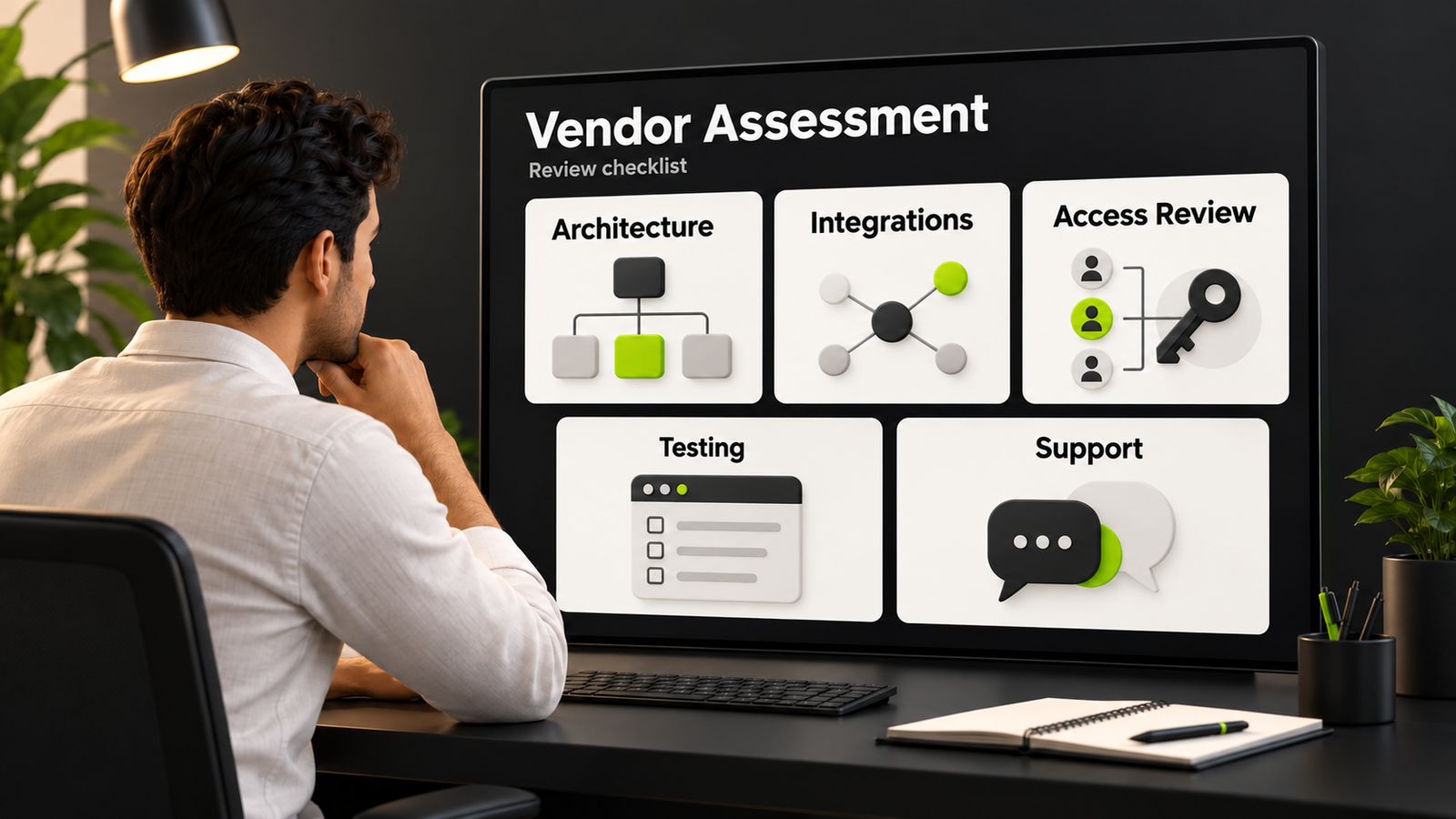
An internal team, agency, or mixed team can deliver a chatbot. Compare relevant experience, capacity, controls, and long-term ownership against the same requirements. Avoid assuming that an implementation is reliable simply because it uses a particular framework or model.
Clarify who owns architecture, integration, evaluation, security review, and maintenance. Require evidence for the proposed approach rather than relying on claims of expertise.
Ask candidates to demonstrate realistic tasks, exceptions, and handoffs. Review supported data access, operating costs, and documentation. Use our guide on how to hire the best AI chatbot development company to structure a practical comparison.
Plan a Useful Chatbot with DigiWeta
Begin with a task customers need help completing. Agree the information, supported actions, and handoff rules, then evaluate the experience before adding more channels or automation.
Discuss conversational ai chatbot development services with DigiWeta around your users, systems, and constraints. Define an initial release, acceptance criteria, and operating ownership. Tie claims about accuracy, compliance, savings, and growth to evidence rather than guaranteed outcomes.
Connect useful information and permitted workflows while keeping human support accessible. A maintainable plan should cover source updates, integration changes, evaluation, and incident handling after launch.
Contact DigiWeta to discuss your chatbot requirements, initial scope, and evaluation plan.
Frequently Asked Questions
Rule-based flows follow defined paths; AI components can handle more varied language and generate responses. Many solutions combine both. Choose based on the task, data, controls, and test results. Generative language handling does not remove the need for rules, verification, or human support.
It may identify intent and extract details such as dates or order references. Test ambiguous wording, missing information, and corrections. Ask for clarification and verify important details before acting. A likely interpretation is not proof of identity, permission, or the user’s final decision.
It connects supported conversations across more than one channel. Define identity checks, permissions, retained context, and channel-specific limits. Do not automatically expose prior history on another device or service without confirming access and the purpose of sharing it.
Use supported interfaces and permissions for the required records and actions. Define field mapping, validation, failure handling, and auditability. Verify results before reporting success, and distinguish reading information from authority to change it. Existing connectors or custom work may fit.
It estimates tone from text and may misread context, language, or expression. Treat it as an uncertain signal, not a fact about the user. Test any routing use and always provide a direct way to ask for human assistance.
Give the user clear next steps and pass the necessary, permitted context to the appropriate person or team. Confirm whether the transfer or ticket succeeded. Explain availability honestly, handle failures, and do not assume that a handoff means the underlying request has been resolved.
Review intended use, sensitive data, agreements, access controls, validation, and operations with qualified stakeholders. Separate assistance from clinical decisions or financial authorization. A hosting model, redaction tool, or custom codebase alone does not establish safety or compliance.
Consider custom work when a suitable platform cannot meet important requirements. Compare integration options, data controls, costs, maintenance, and exit arrangements. Confirm ownership and third-party licensing in the contract. Neither option automatically guarantees lower costs, unlimited flexibility, or stronger security.