

Banking customers may use chat for service information, account questions, or help finding the right process. Those tasks carry different risks. Define which ones the assistant can support and which must remain in the bank’s authenticated workflows or with trained staff.
Planning ai chatbots for banking starts with intended use, access controls, and accountable ownership. Convenience should not weaken the controls protecting customers or their accounts.
Incorrect information, missed complaints, or unauthorized disclosure can harm customers. Evaluate the assistant’s responses and escalation behavior against the actual use case. Involve security, compliance, legal, and service teams rather than assuming a general-purpose model understands every obligation or banking workflow.
Assess the specific platform or custom implementation against your requirements. A product category alone does not determine security, and a language model should not independently authorize account actions.
This guide covers service design and control considerations, not financial or legal advice. Connect the banking workflow to the broader planning decisions in our conversational commerce playbook.
To scope an ai chatbot for banks project with DigiWeta, start with your requirements.
Chapter 1: Clarify Before Taking Action
Banking language can contain amounts, dates, account references, and conditions. Test how the assistant handles ambiguity and unsupported requests. Extracting a plausible meaning is not the same as receiving authority to act.
Separate Intent and Authorization
For “Move $500 tomorrow if my deposit clears,” clarify accounts, dates, and conditions. Direct the customer through the bank’s supported review and approval process rather than executing an inferred instruction.
- Intent: Transfer query
- Details: Confirm amount, accounts, date, and conditions instead of guessing.
- Business Rules: Check supported actions. Controlled banking systems must enforce permissions and execution.
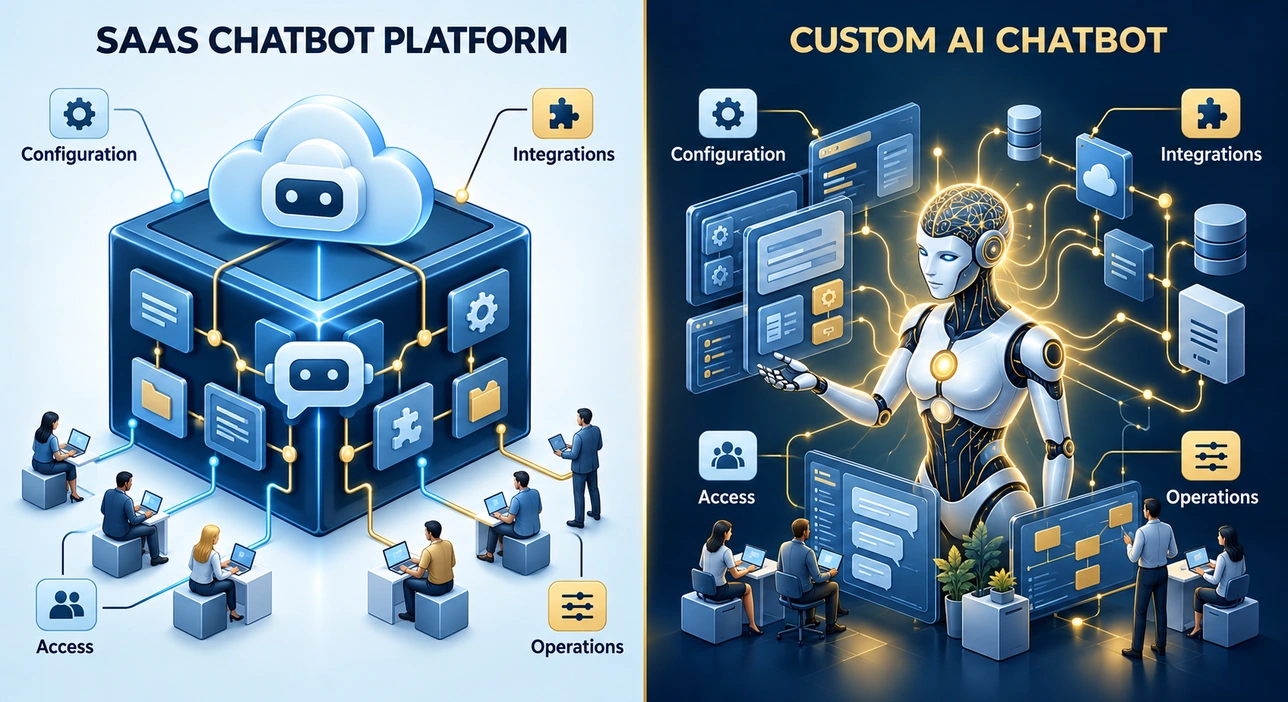
Compare how candidate solutions handle these checks and exceptions. Assess supported platform features alongside custom AI chatbot development services without assuming custom software automatically performs better.
Chapter 2: Preserve Authentication and Access Controls
Any assistant accessing account information needs the bank’s approved identity and authorization controls. Distinguish signing in from permission to view a record or carry out a particular action.
Use Approved Authentication Flows
Before disclosing private account information, verify the session and permission required for that specific request.
- The Check: Route authentication through the bank’s supported identity flow. Do not ask users to disclose passwords or security secrets in an ordinary conversation.
- The Control: Apply the bank’s risk-based requirements, including additional verification where needed. After authentication, enforce record and action permissions on the backend. Test expired sessions, account switching, and failed checks rather than treating a conversational claim of identity as proof.
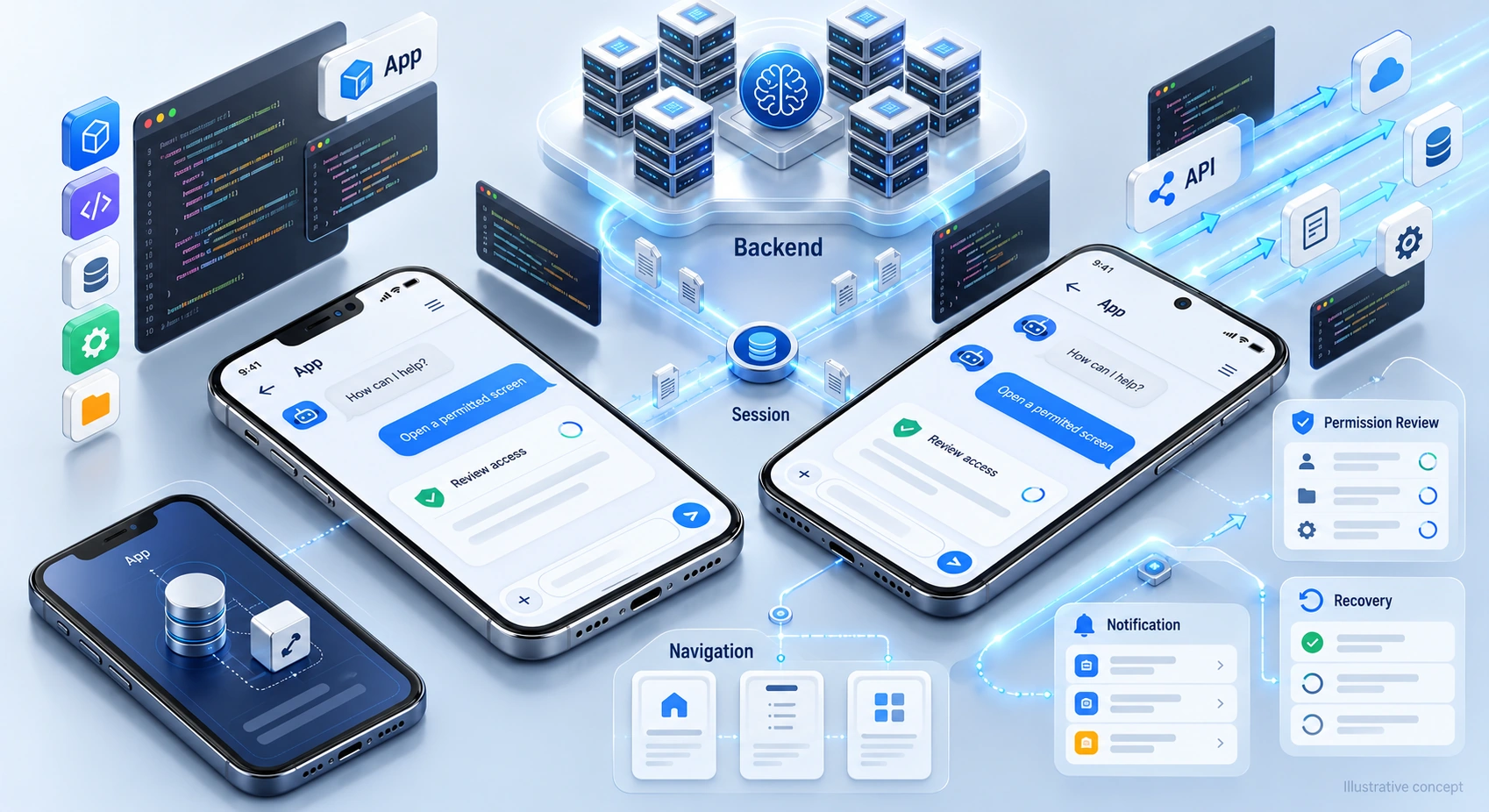
For in-app experiences, preserve these controls across navigation and session changes when integrating conversational AI into mobile apps.
Map Hosting Data Flows
Review where prompts, records, logs, and backups are processed and who can access them. Compare provider agreements, deployment choices, monitoring, and operational controls against the bank’s requirements. A private cloud is not automatically air-gapped, and shared hosting alone does not establish a violation. No deployment label guarantees security or compliance; assess the actual architecture and use.
A similarly careful assessment of data recipients and safeguards appears in our guide to architecting HIPAA-compliant healthcare chatbots.
Chapter 3: Define Supported Service Workflows
Start with specific service tasks and measurable outcomes. Include customer access to people, error recovery, and the cost of oversight when evaluating whether automation helps.
Support Fraud Reporting
Fraud concerns need approved reporting routes. Do not invent the status of a card, investigation, or disputed transaction.
- A Support Role: Guide customers to the bank’s verified alert channel. Avoid private details in unverified messages and never request security secrets.
- Card blocks, replacements, and releases must follow the bank’s approved process. A chat reply is not sufficient for every action. Check the system result before reporting completion, and preserve staff help for uncertain or disputed activity.
Explain Verified Transaction Information
An assistant may help explain records it is permitted to access, but it should not guess the purpose or legitimacy of a charge.
- The Request: For “What was this charge?”, verify access and retrieve the relevant transaction through an approved interface.
- The Explanation: Use verified transaction details and flag uncertainty. Do not infer a subscription from an ambiguous description. If the charge remains unfamiliar, offer the bank’s dispute or fraud-reporting route.
Accessible Dispute Routes
A chatbot may collect permitted details or help submit a request through an approved workflow. It must not obstruct access to people, invent dispute outcomes, or claim a case has been filed without confirmation. The bank’s process governs deadlines, investigation, notices, and any credit decision.
Chapter 4: Control Corporate Banking Access
Corporate workflows may involve several users, accounts, and approval roles. Map those responsibilities before extending chat beyond general information.
Separate information retrieval from financial action. A reporting request may require access to selected entities or periods, while payments need the bank’s established approvals and controls. A fluent instruction from one user does not establish authority over every account. Define role-based access, audit trails, and exception handling, and keep final financial authorization in supported banking workflows rather than delegating it to a language model.
For broader B2B enquiry and handoff design, review enterprise AI chatbot development services for B2B lead generation and operations.
Chapter 5: Assess the Development Partner
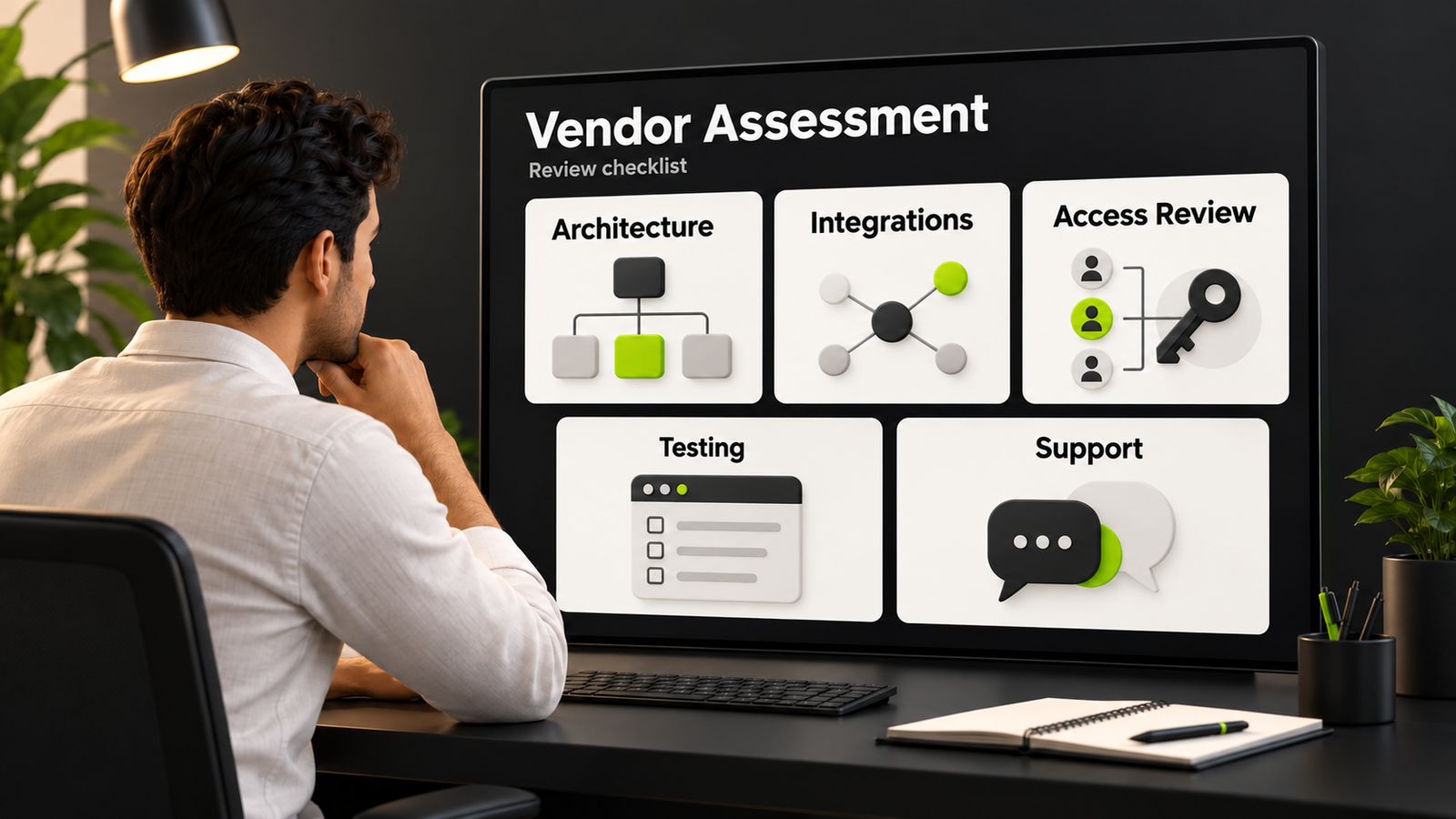
Connecting chat to banking systems requires evidence of relevant controls, testing, governance, and operating responsibilities.
Evaluate the proposed team and implementation, not nationality or marketing labels. Ask about access control tests, incident response, model changes, vendor dependencies, and handover. Include security and service review throughout delivery, and require a practical plan for monitoring failures and preserving customer support.
Have qualified specialists assess applicable obligations and evidence. Terms such as zero-trust or enterprise-grade do not establish compliance, and no agency location guarantees secure delivery.
Plan Banking Chatbot Controls with DigiWeta
Start with a limited workflow and clear boundaries. Identify permitted data, source systems, escalation, and acceptance criteria. Review risk before adding more sensitive functions.
Discuss ai chatbots for banking with DigiWeta around your intended use, existing systems, and required controls. Agree who reviews security, compliance, customer experience, and ongoing changes. Keep data access and supported actions narrowly scoped, and evaluate the implementation rather than promising deterministic answers or risk-free automation.
Ready to define the scope? Contact DigiWeta to discuss scope, controls, and review responsibilities.
Frequently Asked Questions
Depending on its approved scope, it may answer service questions, retrieve permitted information, or guide users to a supported process. Access to records and actions needs appropriate controls. It should not independently authorize transactions, invent account facts, or replace human support when it cannot meet the customer’s needs.
Assess intended use, data flows, identity and access controls, answer quality, escalation, and ongoing operation. Test failures as well as normal journeys. Have qualified security and compliance teams review the setup; a private cloud, model type, or marketing label does not guarantee safety or compliance.
Use the bank’s approved authentication and authorization processes. Apply additional checks where required by risk and policy, and enforce permissions on the backend. Do not request passwords or security secrets in ordinary chat. Test expired sessions and access failures before exposing account information.
No. It may clarify a request or direct the customer to the bank’s supported transaction flow. Amounts, accounts, permissions, approvals, and final confirmation belong in controlled banking systems, not inferred chat instructions. A language model should not authorize or execute transfers.
Guide customers to verified bank reporting routes and explain only confirmed status information. Card blocks, replacements, or releases must follow approved verification and action controls. Keep a staff route available, and do not claim an investigation or account change is complete without confirmation.
Review the specific service, configuration, data recipients, agreements, access controls, and operating model. Check them against the intended use and applicable requirements. Shared infrastructure alone does not prove noncompliance, and custom software alone does not guarantee protection. Seek qualified review.
It may help gather necessary details or submit a request through an approved process. Confirm submission and provide a human route. Do not invent decisions, block a customer from exercising rights, or imply that starting a chat automatically completes an investigation.
Compare verified benefits with delivery, operation, review, and support costs. Measure successful service outcomes, repeat contacts, escalation, and customer feedback. Keep financial projections separate from observed results; do not assume a fixed call-reduction rate or that freed capacity immediately reduces spending.