
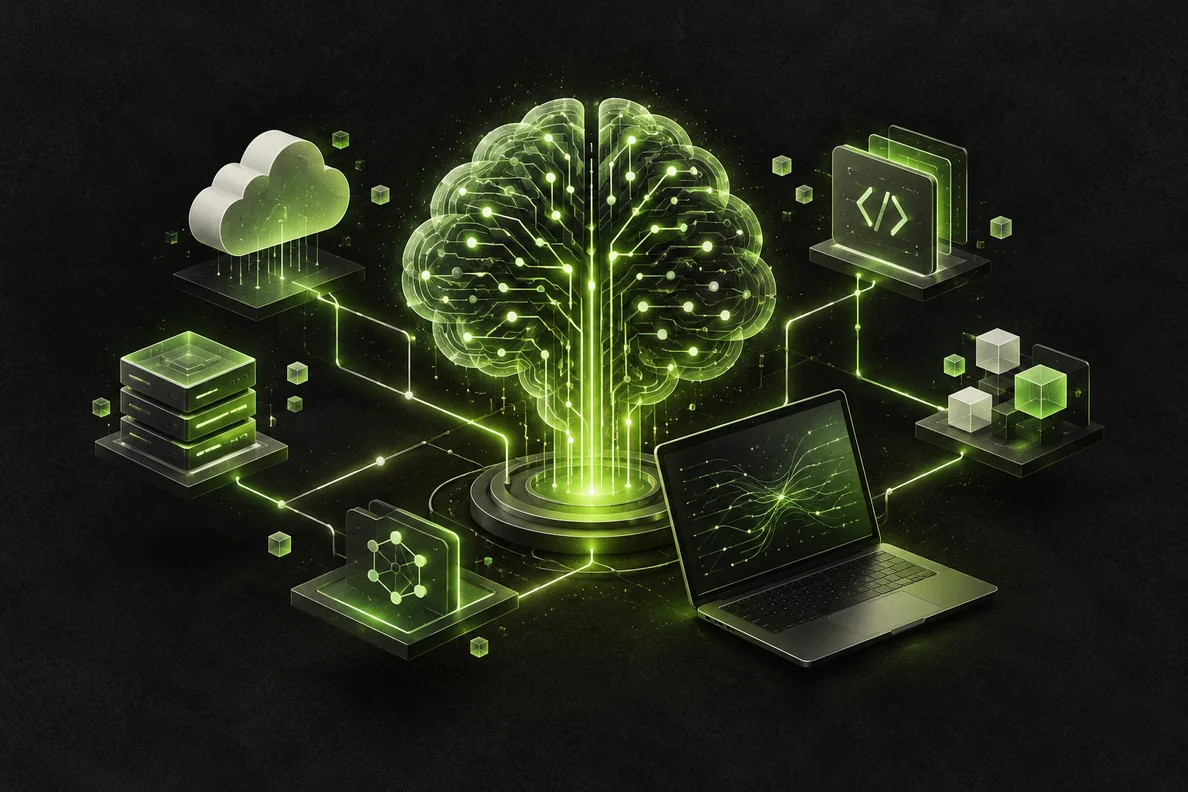
With DigiWeta’s AI application development services, we provide custom-built solutions for business processes. Discover applications which will help your teams search for information, process documents, predict demand and serve customers, with integration, testing, and ongoing improvement built into the project scope.
A good AI application is not only about a model itself. It requires having a clearly-defined purpose, reliable data, a user-friendly interface, and decision-making capabilities. Identify just one important process, define your goals and metrics, and start building based on the evidence.
What is AI Application Development?
AI application development combines models with data pipelines, business rules, interfaces, and integrations to support tasks such as prediction, classification, and content generation. Unlike fixed rules, model outputs can vary and may be wrong. Quality depends on representative evaluation, controlled actions, and monitoring rather than automatic improvement.
For agencies, AI application work should begin with a defined workflow and measurable objectives. Evaluate whether the proposed application improves the process rather than assuming automation will deliver business results.
Definition of AI Application Development
AI application development refers to creating software that uses Artificial Intelligence methods such as Machine Learning (ML) and Deep Learning (DL) to perform tasks traditionally requiring human intelligence like classification, forecasting, anomaly detection, personalization, language understanding, or computer vision.
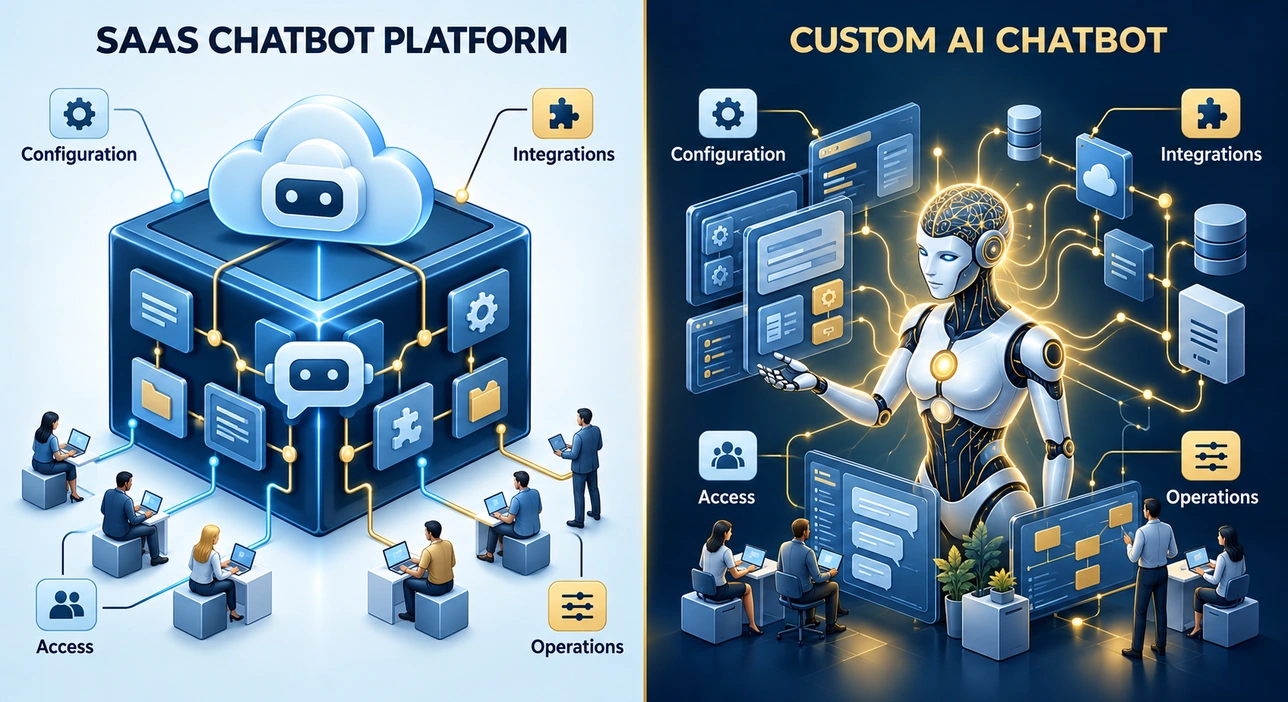
Unlike off-the-shelf tools, custom AI application development allows organizations to build solutions tailored to proprietary data, internal workflows, and specific enterprise objectives.
In practice, it usually includes:
- Business logic (what the app does)
- Data pipelines (how data is collected, cleaned, and delivered to AI components)
- AI models (ML/DL algorithms trained to perform a specific task)
- Deployment infrastructure (cloud platforms, APIs, and monitoring systems)
- Governance and AI ethics (how decisions are managed, audited, and made trustworthy)
When organizations say they want “custom AI software,” they typically mean a system that:
- integrates into existing enterprise software and workflows,
- uses proprietary data, and
- produces outcomes aligned with business automation goals.
How AI Applications Work
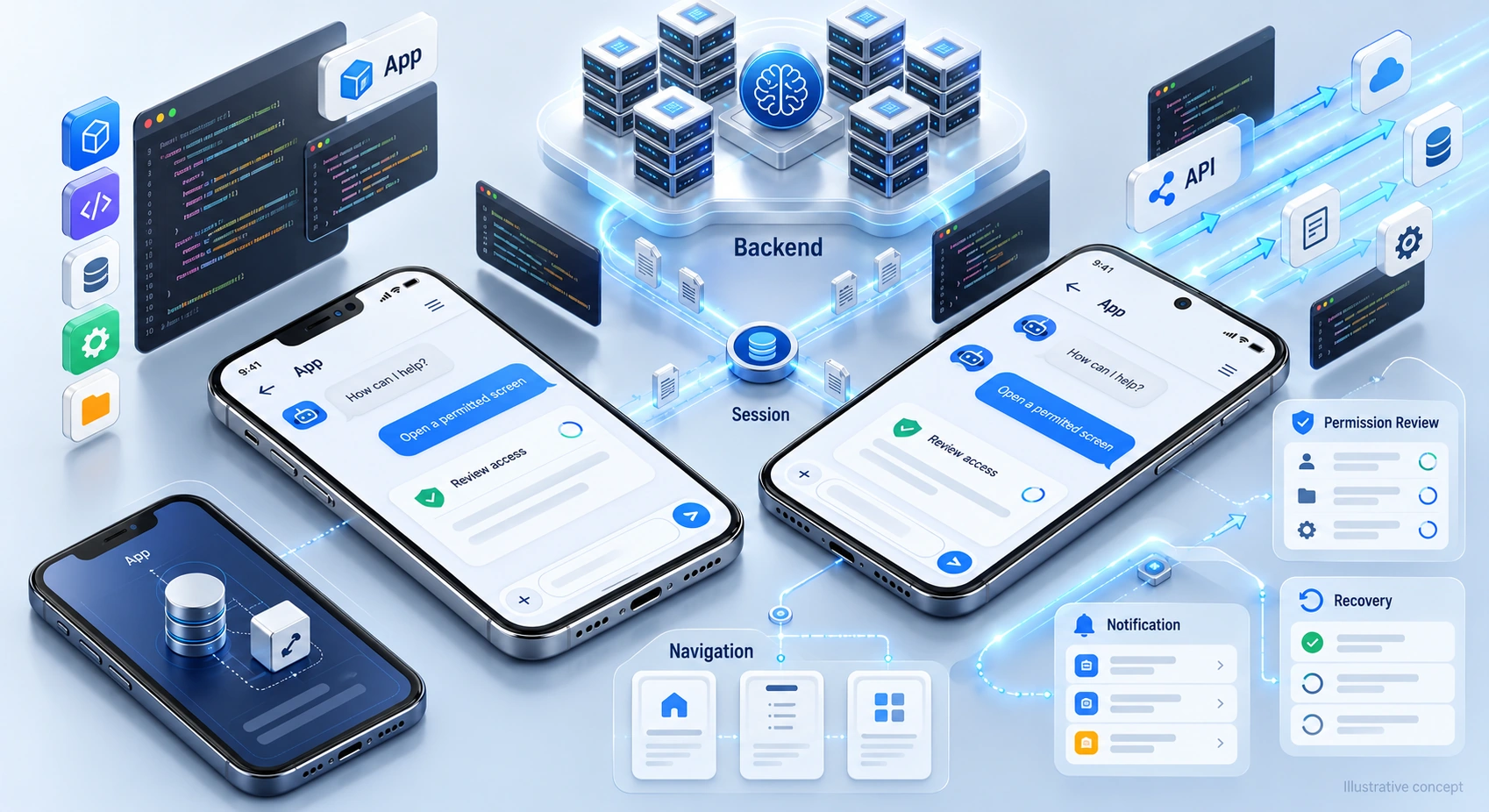
An AI application connects data, model outputs and workflow actions. Feedback can inform evaluation, but improvement requires deliberate testing and updates. The architecture should make these responsibilities clear:
- Data Ingestion
- Data is pulled from sources like CRMs, ERPs, customer interactions, IoT devices, logs, documents, or third-party APIs.
- A reliable data pipeline ensures consistency, access control, and freshness.
- Data is pulled from sources like CRMs, ERPs, customer interactions, IoT devices, logs, documents, or third-party APIs.
- Data Preparation
- Raw data is cleaned, standardized, labeled (if needed), and transformed into features AI models can learn from.
- This step often decides success or failure more than the model choice itself.
- Raw data is cleaned, standardized, labeled (if needed), and transformed into features AI models can learn from.
- Model Training or Adaptation
- Use existing models, adaptation, or custom training according to evaluated requirements.
- Tooling frequently includes Python, with frameworks like TensorFlow and PyTorch.
- Use existing models, adaptation, or custom training according to evaluated requirements.
- Inference (Decision/Prediction)
- The trained model runs on new data to produce outputs like predictions, classifications, or recommendations.
- This can happen in real-time (e.g., fraud detection) or batch mode (e.g., weekly demand forecasts).
- The trained model runs on new data to produce outputs like predictions, classifications, or recommendations.
- Integration into the Application
- AI outputs are delivered through APIs or embedded components within enterprise software.
- This is where AI becomes “usable,” not just “accurate.”
- AI outputs are delivered through APIs or embedded components within enterprise software.
- Monitoring, Feedback, and Continuous Improvement
- Performance is tracked for accuracy, drift, latency, bias, and failures.
- Evaluate model changes before release as data and business needs evolve.
- Performance is tracked for accuracy, drift, latency, bias, and failures.
Moving beyond a demonstration requires evaluation, integration and operational planning. When comparing teams offering AI Application Development services, assess their proposed responsibilities and evidence rather than assuming that a specialist label guarantees security or scalability.
Benefits of AI-Powered Applications
The application should allow for less manual labor, improved access to information, and better decisions. The value should be measured in comparison with the current process, and the cost of re-checking should be included.
Increased Efficiency and Automation
Evaluate automation where repetitive tasks create delays or errors. Compare the proposed workflow with the existing process, including exceptions, human review and operational costs.
Where AI-driven efficiency shows up most:
- Automated document processing (invoices, contracts, claims)
- Smart routing (tickets, leads, support issues)
- Predictive maintenance scheduling in industrial settings
- Workflow automation inside enterprise software platforms
- Real-time anomaly detection that eliminates manual monitoring
Discuss the client’s operational problem before proposing AI. Define which bottleneck needs attention, what evidence would demonstrate improvement and whether simpler changes could address it.
Improved Decision Making with AI Insights
AI can be evaluated for tasks involving patterns, forecasts or recommendations. Compare its outputs with an appropriate baseline and define where human judgment remains necessary. A model-generated recommendation is not automatically a better decision.
Common decision upgrades:
- Forecasting revenue, demand, churn, or operational capacity
- Identifying high-value customer segments or behaviors
- Detecting fraud, compliance risks, or unusual activity
- Optimizing pricing, inventory, and supply chain decisions
In B2B workflows, assess how a decision affects the wider process and what happens when the recommendation is wrong.
Cost Reduction and ROI Benefits
AI application development can reduce costs in multiple ways:
- Labor cost reduction through automation of repetitive work
- Lower error rates leading to fewer refunds, rework cycles, or compliance penalties
- Operational optimization that reduces waste (inventory, energy, machine downtime)
- Higher conversion and retention via personalization and smarter targeting
Evaluate potential returns against the costs and constraints of:
- high transaction volume,
- expensive mistakes,
- or measurable cost leakage.
A practical approach is to focus ROI conversations on 3 metrics:
- Time saved (hours reduced per week/month)
- Cost avoided (errors, downtime, waste, fraud)
- Revenue improved (conversion, retention, upsell)
Use measurable objectives to explain a proposed project, while making cost assumptions, uncertainties and evaluation requirements clear.
AI Application Use Cases Across Industries
Select AI application use cases around the organization’s workflow, available data and priorities. Treat industry examples as starting points for investigation, not proof that an application will create value.
Healthcare
Healthcare has high data density, high stakes, and complex operational workflows making AI incredibly valuable when applied responsibly and ethically.
High-impact AI-powered applications in healthcare:
- Medical imaging assistance (detecting anomalies in X-rays, MRIs, CT scans)
- Clinical decision support (risk scoring, early warning systems)
- Patient triage and scheduling optimization
- Claims and billing automation
- Personalized patient engagement via AI assistants
Because healthcare is heavily regulated, security, compliance, and AI ethics play a larger role than in many other industries. Successful healthcare AI solutions typically emphasize transparency, auditability, and rigorous data governance.
Finance
Finance is one of the earliest adopters of Machine Learning due to the need for risk management, fraud prevention, and personalization at scale.
Common enterprise AI solutions in finance:
- Fraud detection and anomaly monitoring in real-time transactions
- Credit scoring and underwriting optimization
- Anti-money laundering (AML) pattern detection
- Customer personalization and product recommendations
- Automated customer support for banking and insurance
Finance organizations often prioritize explainability and compliance. Even if a model is accurate, stakeholders may require clear reasoning behind decisions especially where regulatory requirements exist.
Retail & E-commerce
Retail and e-commerce projects should connect evaluation to specific business outcomes, without assuming small model improvements translate into revenue gains.
Popular AI-powered applications:
- Product recommendation engines
- Demand forecasting and inventory optimization
- Dynamic pricing models
- Customer segmentation and churn prediction
- Visual search and product discovery
- Customer support automation using AI assistants
Before proposing a retail project, examine data access, measurement quality and operational constraints. Agree how results will be assessed, including the costs of testing and implementing changes.
Manufacturing
Manufacturing uses AI to reduce downtime, optimize throughput, and detect issues earlier than humans can. It’s often closely linked to IoT and operational data pipelines.
High-value manufacturing AI application use cases:
- Predictive maintenance (forecasting equipment failures)
- Quality inspection using computer vision
- Production optimization (reducing bottlenecks)
- Supply chain forecasting
- Energy and resource optimization
These solutions typically require strong integration with legacy systems and operational technology. That’s where agencies and AI consulting services can differentiate by making AI work inside existing enterprise environments rather than forcing a complete rebuild.
AI Application Development Process – Step by Step
The AI application development cycle goes through stages of business discovery, data validation, prototyping, integration, testing, deployment, and maintenance. Each stage must be concluded with evidence for the following investment.
Requirement Analysis
Define the intended workflow, users and success criteria before selecting a model. A technically promising result is not sufficient if it does not address the business problem.
Key outputs of requirement analysis:
- The business objective (e.g., reduce churn by 10%, cut processing time by 40%)
- The AI task type (classification, forecasting, recommendation, NLP, vision)
- Success metrics (accuracy alone isn’t enough tie to business KPIs)
- Constraints (latency limits, security requirements, compliance, integrations)
- Data availability assessment (what data exists, where it lives, how clean it is)
Agree the discovery scope, responsibilities and deliverables. Use its findings to refine estimates and identify dependencies before committing to delivery.
Data Collection & Preparation
Review data quality, availability and access before model development. Identify missing information, inconsistent formats and pipeline dependencies. The required preparation work depends on the intended task and the data available.
Core activities include:
- Identifying sources (databases, enterprise software, third-party data, logs, documents)
- Building ingestion and validation pipelines
- Cleaning and transforming data
- Labeling (for supervised learning)
- Managing privacy, access control, and compliance
A strong data foundation often includes:
- Versioned datasets
- Data quality checks
- A reproducible preprocessing workflow
- Secure storage aligned to enterprise needs
For B2B projects, clarify who owns data preparation, access decisions and the ongoing operation of the supporting pipelines.
Model Development & Testing
Model development is where ML/DL expertise matters but it’s only one piece of the system. The right model depends on business requirements, data type, and operational constraints.
Common tools and frameworks:
- Python for development and experimentation
- TensorFlow and PyTorch for Deep Learning workflows
- Traditional ML libraries (often used alongside DL depending on complexity)
Testing should include more than accuracy:
- Performance across segments (bias/fairness checks)
- Robustness to data drift and missing values
- Latency and throughput tests for production readiness
- Security considerations (model extraction risks, adversarial input concerns)
Start with a simple baseline and representative test cases. Compare candidate approaches before investing in custom training; an existing model, retrieval, or conventional software may already meet the workflow requirements.
Deployment & Integration
Plan deployment around the actual operating environment. Define access controls, failure handling, performance requirements and ownership, then test the application under representative conditions before wider use.
Deployment decisions include:
- Hosting on cloud platforms or on-prem (depending on compliance)
- Serving predictions through APIs or embedded services
- Monitoring for performance, drift, and failures
- Integrating outputs into workflows (dashboards, automation triggers, alerts)
A production-ready AI application needs:
- Observability (logs, metrics, alerts)
- Model versioning and rollback strategies
- Access control and auditability
- Clear integration points for enterprise workflows
Specify integration and operational responsibilities alongside pilot objectives so the transition to ongoing use can be evaluated and planned.
Maintenance & Continuous Improvement
AI performance can change as data, prompts, models, and workflows change. Monitor task quality, failures, latency, and cost; evaluate proposed updates before releasing them.
Maintenance typically includes:
- Continuous monitoring for drift and anomalies
- Regular retraining schedules or event-driven retraining
- Updating pipelines when data sources change
- Governance and compliance audits
- Refining the user experience based on feedback
Define any ongoing services separately, including monitoring, evaluation and maintenance responsibilities. Do not assume a development engagement includes continued support.
AI vs Traditional Software Applications
AI doesn’t replace traditional software; it complements it. The key is knowing when AI adds value and when rules-based logic is still the best option.
Key Differences Between AI and Traditional Software
Traditional software:
- Follows explicit rules written by developers
- Produces predictable outputs for predictable inputs
- Works best for structured workflows with stable requirements
- Is easier to test deterministically
AI-powered applications:
- Learn patterns from data rather than relying only on rules
- Make probabilistic predictions (not always “right/wrong” in a simple way)
- Improve (or degrade) over time depending on data and monitoring
- Require data pipelines, model governance, and continuous iteration
In enterprise settings, the best solutions often combine both:
- Traditional logic handles core workflow control and business rules
- AI handles uncertainty, prediction, automation, and pattern recognition
Understanding the differences between AI vs traditional software applications helps decision-makers avoid overengineering solutions where rules-based systems are still sufficient.
When to Choose AI Over Traditional Solutions
AI is usually the right choice when:
- Rules become too complex to maintain
- The problem involves pattern recognition (vision, language, anomalies)
- You need forecasting or predictive decision-making
- The volume of work is too high for manual processing
- The environment changes frequently and static logic fails
Traditional software is better when:
- The process is stable and rules are clear
- You need deterministic behavior with zero tolerance for variance
- Data is limited or unreliable
- Compliance requires strict rule-based transparency (in some cases)
Use conventional software when exact rules suffice. Do not proceed with AI until data rights are clear, outcomes are measurable, and safeguards address the consequences of mistakes.
Challenges in AI Application Development
AI projects share many software delivery challenges and introduce additional questions about data and model behavior. Plan for integration, evaluation and operational ownership rather than treating the model as the complete application.
Data Quality & Availability Issues
Data is the fuel for AI. Poor-quality data leads to poor outcomes, even with advanced models.
Common data challenges:
- Missing values, inconsistent formats, duplicates
- Data stored in silos across tools and departments
- Low volume of labeled data for supervised learning
- Biased or unrepresentative data
- Privacy restrictions that limit usage
Mitigation strategies:
- Start with a data audit during discovery
- Build robust data pipelines with validation
- Use human-in-the-loop workflows for labeling and quality checks
- Design for data governance and secure access from day one
Make data preparation responsibilities and unresolved quality issues visible before agreeing on delivery commitments.
Integration with Existing Systems
Enterprise environments rarely allow “greenfield” builds. Most AI projects must integrate with existing enterprise software CRMs, ERPs, data warehouses, legacy databases, and operational tools.
Integration challenges include:
- Inconsistent APIs and data formats
- Security and access control constraints
- Latency requirements for real-time AI decisions
- Legacy systems that weren’t built for AI
The solution is strong architecture:
- Clear API boundaries
- Event-driven or batch pipelines where appropriate
- Scalable cloud platforms (or hybrid architectures if needed)
- Reliable monitoring and observability
This is also where a company like DigiWeta can naturally position value helping organizations deploy AI inside real enterprise workflows, not just as a disconnected proof-of-concept.
Security & Compliance Concerns
AI introduces new security and compliance considerations:
- Sensitive data exposure in training datasets
- Access control for models and outputs
- Risks of model inversion or extraction attacks
- Regulatory concerns (industry-specific)
- Bias and fairness concerns tied to AI ethics
Best practices include:
- Encrypting data at rest and in transit
- Role-based access control and audit logs
- Governance frameworks for model approvals
- Regular security testing and compliance reviews
- Transparent reporting around AI performance and limitations
Discuss relevant risks early so stakeholders can assess requirements, responsibilities and unresolved questions.
How to Choose the Right AI Application Development Partner
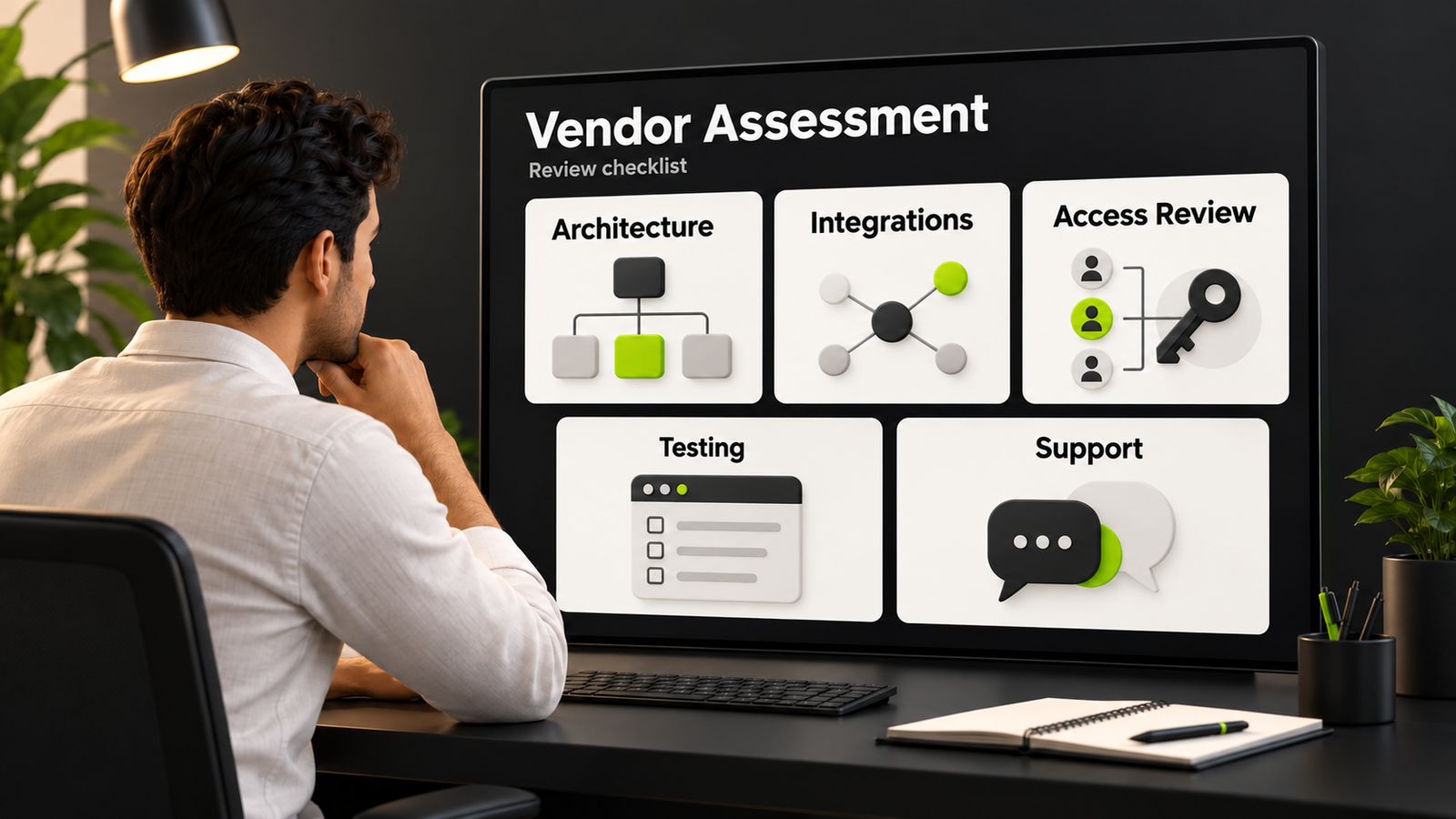
Choose an AI application development partner by assessing business understanding, relevant engineering, data access, security, evaluation, and support. Ask shortlisted vendors the same questions and compare evidence from production work, not polished demonstrations or headline prices.
Evaluating AI Development Companies
When evaluating AI development partners, look beyond portfolio screenshots. Focus on evidence of real production delivery:
What strong AI development companies demonstrate:
- Clear AI app development process (discovery → data → model → deployment → monitoring)
- Experience integrating with enterprise software ecosystems
- Knowledge of cloud platforms and scalable deployment
- Ability to design and maintain data pipelines
- Understanding of AI ethics, compliance, and security
- Case studies with measurable ROI metrics
Agree acceptance criteria, incident ownership, maintenance responsibilities, and how the application will transfer to another provider.
Questions to Ask Before Hiring
Ask questions that reveal execution maturity:
Data & feasibility
- What data do we need, and how will you assess readiness?
- How do you handle missing or low-quality data?
- What’s your approach to data pipelines and governance?
Model development
- How do you choose between ML vs Deep Learning?
- Will you use TensorFlow or PyTorch and why?
- How do you test models beyond accuracy?
Deployment
- How will the AI integrate with our existing systems?
- How do you handle monitoring, drift detection, and retraining?
- What security controls are included?
Delivery
- What does the project roadmap look like?
- What dependencies do you need from our team?
- What do you need for long-term success after launch?
A trustworthy partner answers these clearly, without hiding behind vague promises.
Cost Considerations
Budget for discovery, data preparation, integration, evaluation, deployment, and ongoing operations. Include model usage, human review, monitoring, and maintenance rather than comparing development quotes alone.
Key cost drivers include:
- Data engineering effort (often the largest hidden cost)
- Complexity of integrations with enterprise systems
- Real-time vs batch processing requirements
- Compliance and security requirements
- Maintenance and continuous improvement plans
Confirm source-code access, data ownership, third-party licensing, documentation, and transition support in the agreement before committing to an AI development partner.
Cost & Timeline of AI Application Development
AI application development costs and timelines depend on workflow scope, data readiness, integrations, evaluation requirements, and deployment constraints. Estimate delivery after discovery, separating development from operating costs. A limited prototype and a production application have different acceptance criteria, dependencies, and support needs.
Factors Affecting Cost
Here are the most common factors that affect the cost of AI application development:
- Use case complexity
- Simple classification with clean data is cheaper than multi-modal deep learning solutions.
- Data readiness
- If data pipelines exist and data is clean, costs drop.
- If data is scattered, inconsistent, or unlabeled, costs rise.
- Model requirements
- Some use cases need explainability and governance.
- Others need real-time inference with tight latency constraints.
- Integration depth
- Standalone AI tools are cheaper than embedded enterprise AI solutions integrated with ERP/CRM workflows.
- Security and compliance
- Heavily regulated industries add audit, governance, and security layers.
- Maintenance expectations
- Ongoing monitoring, retraining, and optimization adds recurring costs but protects long-term ROI.
As a rule, production-grade custom AI software is rarely just a “one-time build.” Accurately estimating AI application development cost requires evaluating data complexity, integration depth, security requirements, and ongoing maintenance needs rather than focusing only on initial build expenses.
Typical Timeline for AI App Development
Estimate each stage against its dependencies and acceptance criteria:
- Requirement analysis: scoped discovery
- Data collection & preparation: depends on access, quality, permissions, and required labeling
- Model development & testing: evidence-led iterations
- Deployment & integration: readiness review
- Maintenance & improvement: ongoing evaluation
Confirm milestone estimates only after checking data access, stakeholder availability, integrations, and acceptance criteria. A prototype tests feasibility; production delivery additionally requires security, failure handling, operational ownership, and monitoring. There is no universal launch timeline for AI applications.
ROI Estimation and Budget Planning
ROI planning should be tied to measurable outcomes from the beginning. A simple ROI estimation framework:
- Calculate current cost
- Manual hours spent
- Cost per error
- Lost revenue due to slow decision-making or poor targeting
- Estimate improvement
- Automation percentage
- Error reduction rate
- Conversion/retention uplift
- Translate into dollars
- Hours saved × cost/hour
- Error reductions × average cost per incident
- Revenue lift × average customer value
- Compare against total cost
Include:
- Development + deployment
- Cloud infrastructure
- Maintenance and monitoring
- Ongoing AI consulting services if required
Explain the relationship between proposed spending and the outcomes to be measured. Document assumptions and uncertainty; a clear business case supports review but does not guarantee quicker approval.
Final Thoughts
AI application development is not about chasing trends it’s about building intelligent, data-driven systems that improve how businesses operate. The strongest AI-powered applications combine robust data pipelines, well-tested models, secure deployment, and a clear plan for continuous improvement.
Agencies considering AI services should assess their delivery capabilities and support responsibilities. Build proposals around client requirements and demonstrated evidence rather than assuming demand will produce higher-value contracts or ongoing retainers.
Whether delivering an application or working with a partner, define a repeatable process for requirements, evaluation and operational handover. Prioritize use cases against measurable objectives, and revisit the proposed scope as evidence develops. Competitive value must be demonstrated rather than assumed.
Frequently Asked Questions
AI application development is most valuable for businesses that handle large volumes of data, repetitive workflows, or complex decision-making. Enterprises in healthcare, finance, retail, manufacturing, and SaaS often benefit the most because AI-powered applications can automate operations, improve forecasting accuracy, and enhance customer experiences at scale.
Timing depends on workflow scope, data access, integrations, evaluation, and deployment requirements. A narrow prototype is different from a production application. Confirm milestone estimates after discovery and dependency checks, with time allocated for testing, approvals, and operational handover rather than a universal delivery promise.
No. While Machine Learning and Deep Learning are core components, AI application development also includes data pipelines, system architecture, cloud deployment, security controls, monitoring, and integration with existing enterprise software. The model is only one part of a larger production system.
ROI is usually calculated by measuring time savings, cost reductions, error reduction, or revenue improvements enabled by AI automation or predictive insights. Successful projects define ROI metrics early, such as reduced processing hours, lower operational costs, or improved conversion and retention rates.
Yes. Most enterprise AI solutions are designed to integrate with CRMs, ERPs, data warehouses, and other legacy systems using APIs and data pipelines. Proper integration ensures AI insights are embedded directly into business workflows rather than operating as standalone tools.
The most common risks include poor data quality, unclear business objectives, weak system integration, and lack of ongoing monitoring. Addressing governance, security, and AI ethics early in the process significantly reduces long-term operational and compliance risks.