
Mobile AI features need clear response-time expectations. Measure how people experience the workflow rather than relying on a universal loading-time threshold or an unsupported abandonment statistic.
Image analysis and text generation can introduce processing delays, but the impact depends on the model, workload and application. Show meaningful progress, provide recovery options and test the feature under realistic conditions. A slow result is a design and engineering problem to investigate, not proof that the product will fail.
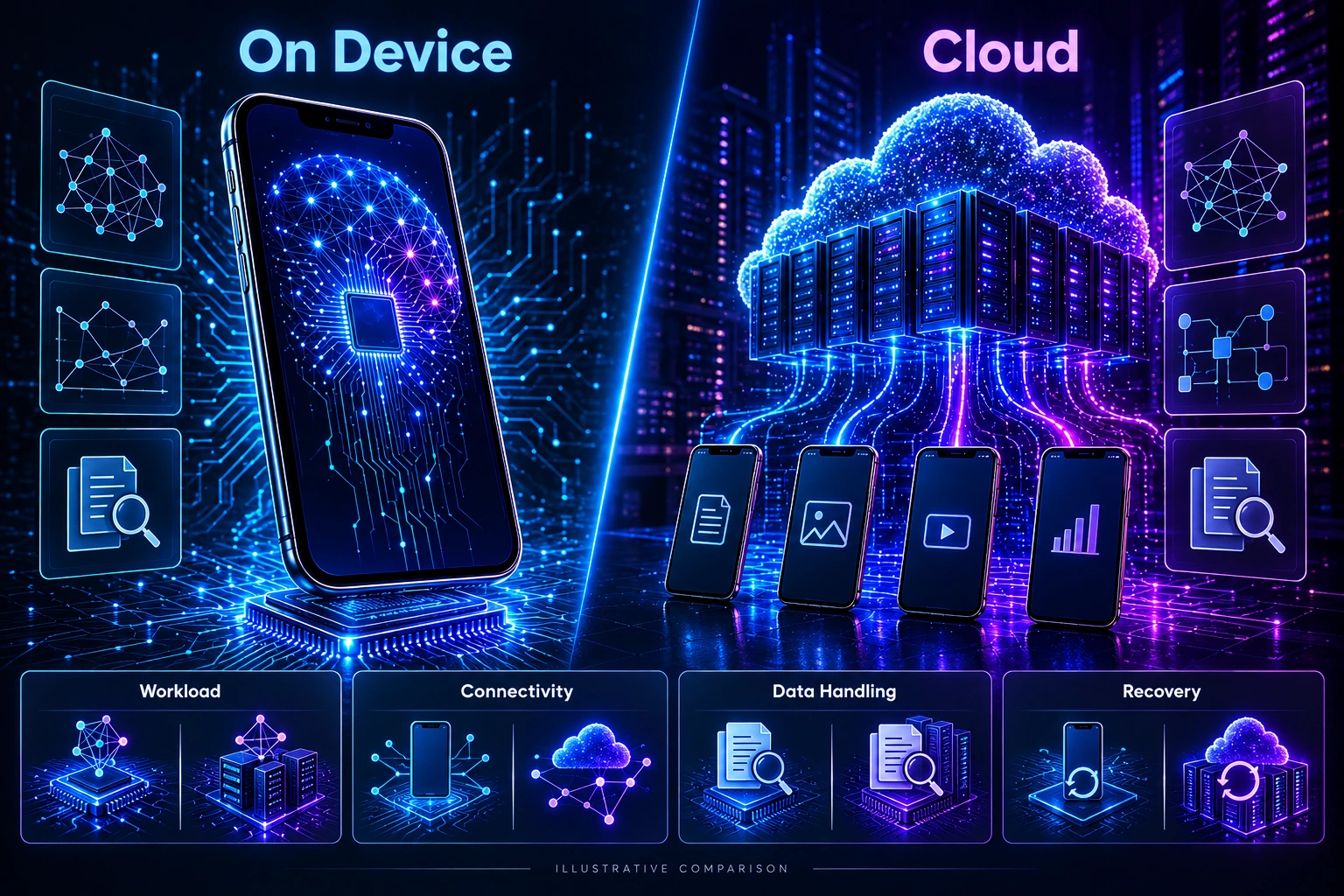
One architectural choice is where inference runs: on remote infrastructure, on the user’s device, or across both. Compare these options against your quality, connectivity, privacy and operating requirements. The right choice follows the intended workflow and measured constraints rather than a general preference for cloud or edge processing.
This guide compares deployment considerations for local and remote inference. Evaluate these trade-offs alongside the broader work of deploying AI applications, including testing and operational support.
DigiWeta’s ai application development services include discussing deployment requirements and trade-offs. Define the target devices, workloads and acceptance criteria before selecting a cloud, edge or hybrid approach.
Chapter 1: Understanding Cloud API Architecture
With remote inference, an application sends a request to a service that runs the model outside the user’s device. The response then returns to the application for presentation or further processing.
How Cloud Inference Works
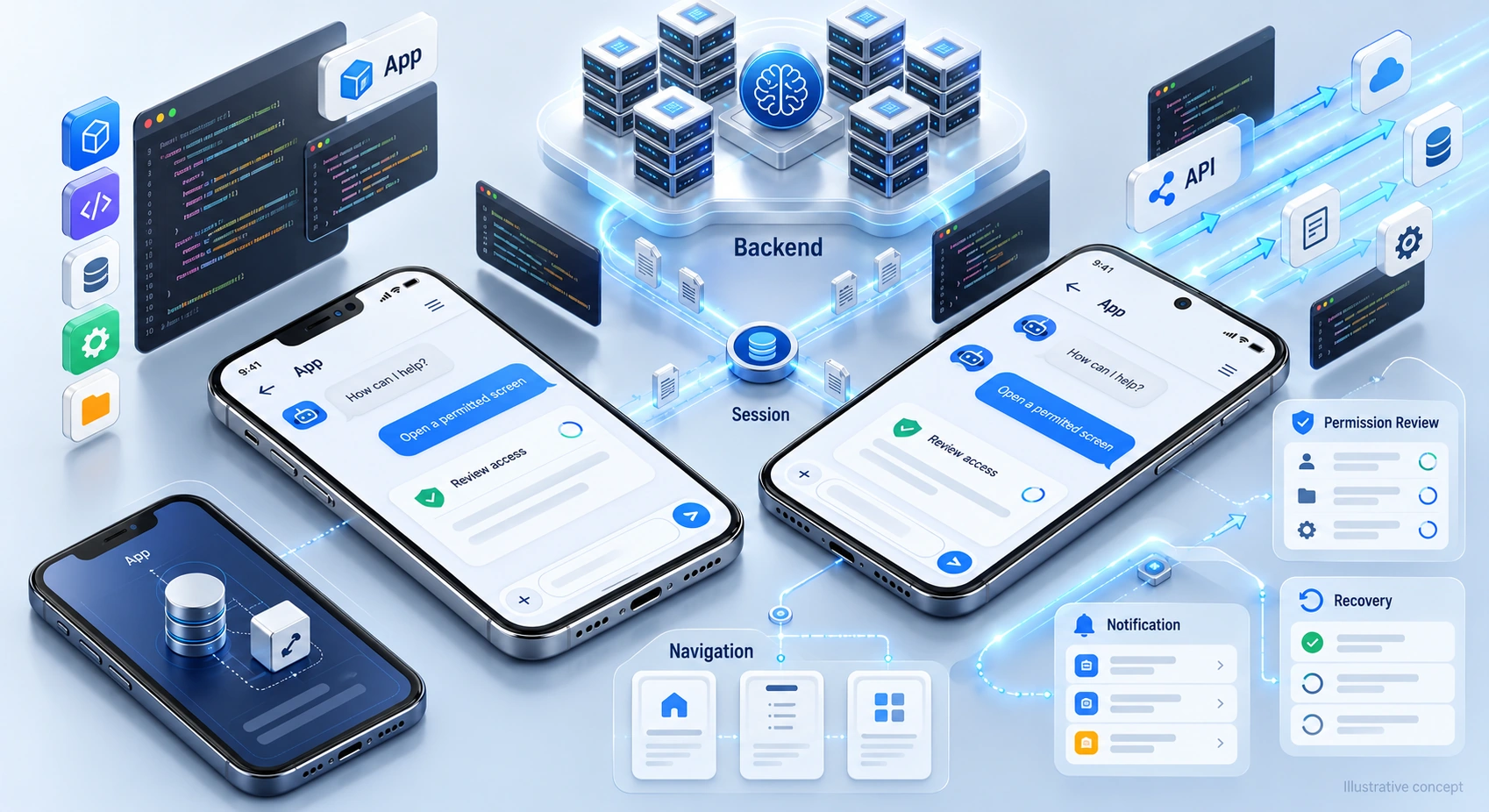
For an image-analysis feature, the application may prepare an image and send it to a backend service. The service processes the request and returns an output in an agreed format. The complete response time includes more than model execution: request preparation, network transfer and service availability also matter. Design appropriate access controls, error handling and review steps around that exchange.
The Engineering Advantages of Cloud AI
- Scalable Compute Resources: Remote infrastructure can support workloads beyond a target device’s capacity. Available resources still have limits, costs and operational requirements.
- Centralized Model Updates: A remote model can be updated separately from the mobile application when the interface remains compatible. Updates still need evaluation, version management and rollback planning; an unchanged client does not make every release risk-free.
- Smaller App Bundle Size: Keeping model files off the device may reduce installation requirements. The application still needs suitable handling for remote-service dependencies and unavailable connections.
Planning for Network Latency
Remote inference depends on a connection between the application and the service. Variable signal quality, congestion and service load can affect the experience. Provide useful states for delays or failures instead of assuming every request will succeed. Consider these dependencies when defining your AI app architecture, including whether some tasks should remain available locally.
Chapter 2: The Rise of Edge AI (On-Device Inference)
On-device inference processes inputs using resources on the user’s device. It can avoid the network trip for that operation, but still takes time and depends on hardware, model size and application design.
Hardware Support for Local Inference
Hardware capabilities vary across supported devices. Some provide specialized resources for machine learning workloads, while others rely more heavily on general-purpose processing. Test the actual application and model on representative hardware rather than inferring performance from a device label.
Hardware acceleration may improve efficiency for supported operations. It does not eliminate battery consumption, heat or the need to measure application performance.
Mobile ML Frameworks (CoreML and MLKit)
Local deployment requires a compatible model and runtime. Optimization may be useful, but conversion and compression choices need evaluation on target devices.
- For iOS: Select supported tools and test the model within the intended Apple application environment.
- For Android / Cross-Platform: Choose a compatible runtime and verify operations, supported devices and integration requirements rather than assuming identical behavior across platforms.
Chapter 3: Evaluating On-Device Use Cases
Consider local inference when connectivity, responsiveness or data-handling requirements make it appropriate for the intended task.
Real-Time Computer Vision (Fitness & Health)
Continuous camera processing can place demands on both connectivity and compute. When building an AI fitness app, compare local and remote approaches against measured requirements instead of declaring one universally impossible. Evaluate camera quality, supported devices and output reliability. Movement estimates should not be presented as medical or safety judgments without the relevant validation.
The Offline Mode Requirement
A field application may need useful behavior in areas with limited connectivity. Local inference can support selected offline functions if the required model and inputs are available. Make those boundaries explicit, including features that still need downloads, remote data or subsequent synchronization.
Chapter 4: Data Handling and Privacy Considerations
Processing location affects data handling, but neither local nor remote inference establishes privacy, security or regulatory compliance by itself.
A remote workflow sends information beyond the device. Review what is transmitted, where it is processed, who can access it and how it is retained. These questions require specific operational and contractual answers, not assumptions about the architecture.
Applications handling sensitive health information need an appropriate review of data flows and applicable obligations. Do not infer that all cloud processing is prohibited or that a particular contract makes every implementation compliant. Architecture, configuration and governance must be assessed for the actual use case.
Local inference may reduce the information sent to remote services, but other application components can still transmit or retain data. For AI healthcare mobile apps and secure diagnostics, review the entire workflow, including logging, storage, synchronization and access controls. Processing locally does not establish diagnostic reliability or remove legal responsibilities.
Chapter 5: The Limitations of Edge Computing
Local processing introduces resource and compatibility constraints. Compare them with remote-service dependencies rather than assuming edge deployment is always faster, safer or simpler.
Model Size and Installation
Model files can add to download and storage requirements. Measure the actual size of your chosen model and explain it to users. Decide whether it belongs in the initial installation or a later download, and provide clear behavior when storage or connectivity is insufficient.
Engineering Options: Optimization may reduce model resource requirements, but can change output quality. Evaluate the result before release. Separately downloaded components need progress, failure and update handling; they are not a substitute for testing installation and runtime behavior.
Device Fragmentation
Supported devices can differ in memory, processing resources and runtime compatibility. Establish a realistic device matrix and test it. Consider alternative behavior or a smaller feature scope where the preferred model cannot meet the application’s requirements.
Chapter 6: Planning a Hybrid AI Architecture
A hybrid design combines local and remote processing where that serves the workflow. Define routing rules, data boundaries and fallback behavior explicitly rather than treating hybrid deployment as a universal best practice.
How Hybrid AI Routing Works
Consider a journaling feature that offers optional text organization and summaries.
- The Edge Task: A local component could organize or classify text for a defined purpose. Evaluate usefulness and limitations; a text label should not imply a diagnosis or reliable mood assessment.
- The Cloud Task: A user may choose to request a longer summary from a remote service. Explain what information will be transmitted and provide appropriate review controls. The resulting summary remains generated text, not a psychiatric assessment or a guaranteed interpretation of the journal.
Hybrid deployment can balance different constraints, but adds routing and maintenance work. Test the complete workflow and its failure states rather than promising consistently instantaneous results.
Architect Your Mobile AI Infrastructure with DigiWeta
Inference location influences performance, data flows and operating costs. Treat it as a product and engineering decision with measurable criteria, not a shortcut to retention or compliance.
DigiWeta’s machine learning app development discussions begin with the intended workflow and deployment requirements. Compare local and remote options, document constraints and agree on evaluation criteria before committing to an implementation.
Define the application’s supported devices, data-handling requirements and operating expectations. The selected infrastructure should follow that scope rather than a blanket performance or compliance promise.
Discuss your deployment requirements with DigiWeta and plan a measured approach to mobile AI.
Frequently Asked Questions
Cloud inference runs on remote infrastructure accessed by the application. Edge inference runs locally on the device. Each has resource, connectivity and operational trade-offs. Local execution avoids a network request for that operation, but does not mean zero processing time.
Delays can arise from request preparation, network transfer, service load, model execution and response handling. Measure the complete workflow before identifying a cause. Design clear progress, timeout and recovery states so users understand what is happening.
Core ML is Apple’s framework for integrating machine learning models into apps. TensorFlow Lite is now called LiteRT, Google’s on-device runtime. Model compatibility and performance still need testing on target devices.
Some AI features can run offline when their models, inputs and required components are available locally. Other features may still require a connection. Explain those limits and test the application without network access.
Local processing may reduce remote data transfers, but it does not guarantee privacy or compliance. Review the full application, including logs, storage, permissions and synchronization. Applicable obligations depend on the use case and require appropriate review.
Local inference consumes device resources. Hardware acceleration may help, but battery use and thermal behavior depend on the model, workload and device. Measure representative usage rather than assuming specialized hardware eliminates these effects.
Local deployment is limited by device resources, supported operations and installation requirements. Remote services can suit workloads that do not fit those constraints, while introducing their own connectivity, cost and data-handling considerations. Evaluate both against the application’s requirements.
A hybrid design allocates selected tasks to local or remote components. Routing should account for the task, connectivity and data policies, with clear failure and fallback behavior. Combining the approaches does not automatically ensure fast, accurate or reliable results.