

Healthcare AI projects should begin with a defined workflow, intended users and a clear account of potential harm. A patient portal, administrative assistant and clinical decision-support tool have different requirements. Start with the problem to solve rather than assuming every healthcare application needs AI.
Errors in healthcare software can have serious consequences. Before developing AI features, identify how incorrect, missing or delayed outputs could affect users. Define review responsibilities, escalation routes and limits on what the application may do without professional oversight.
Healthcare applications may process sensitive records and support consequential decisions. Their architecture needs appropriate data handling, access controls, testing and operational oversight. Applicable legal and regulatory requirements depend on the intended use, organization and jurisdiction; a technical design alone does not establish compliance.
This guide outlines planning considerations for healthcare AI, including data integration, model evaluation, human review and deployment choices. For a broader delivery framework, see the discussion of building secure AI apps. Specific clinical uses require their own assessment and validation.
Discuss the scope of artificial intelligence app development services with DigiWeta, including data access, review responsibilities and integration requirements. Do not treat a vendor engagement as a compliance guarantee.
Chapter 1: The Engineering Behind Predictive Diagnostics
Predictive features should be evaluated against a specific clinical question and intended setting. Define the available data, users and acceptable limitations before deciding whether a model is suitable for a healthcare workflow.
Image Classification for Radiology and Dermatology
Medical-image analysis is one possible AI use case, requiring assessment for its intended clinical setting.
- The Architecture: Model selection should follow the imaging task, available data and evaluation requirements rather than a preferred architecture.
- The Workflow: An imaging application might collect an image for professional review, run a validated analysis and display relevant limitations alongside the result. Image quality, patient population and workflow all matter. A generated score is not, by itself, a diagnosis or evidence that a tool is suitable for patient care.
Time-Series Forecasting for Vitals
Some proposed applications analyze measurements over time. Teams must assess data quality, sampling gaps and the meaning of any output.
- The Architecture: Select and evaluate a model against the intended task using appropriate data. Define how missing readings, unreliable sensors and uncertain predictions are handled. Do not promise that a consumer measurement or automated alert can reliably predict a medical event without evidence for that use.
Chapter 2: EHR Integration and NLP Parsing
Record integration should follow the application’s purpose. Identify which information is needed, who may access it and whether the system is permitted to read, update or export records.
The Interoperability Challenge (FHIR)
FHIR provides a framework for exchanging healthcare information, but it is not itself a security protocol. Integration still requires attention to authorization, data mapping, system-specific behavior and error handling. Confirm what each connected system supports and test changes without assuming that a shared format prevents disruption.
Natural Language Processing (NLP) for Clinical Notes
Clinical notes may contain useful unstructured information. For hospital enterprise ai app development solutions, define the review and data-handling workflow before introducing transcription or extraction features.
- The Workflow: A documentation assistant could prepare a transcript or draft structured information for an authorized professional to review. Preserve context and make corrections possible. Do not assume extracted diagnoses, medications or other details are accurate, or write them into a clinical record without the required validation and approval.
Chapter 3: Cloud Infrastructure vs Mobile Limitations
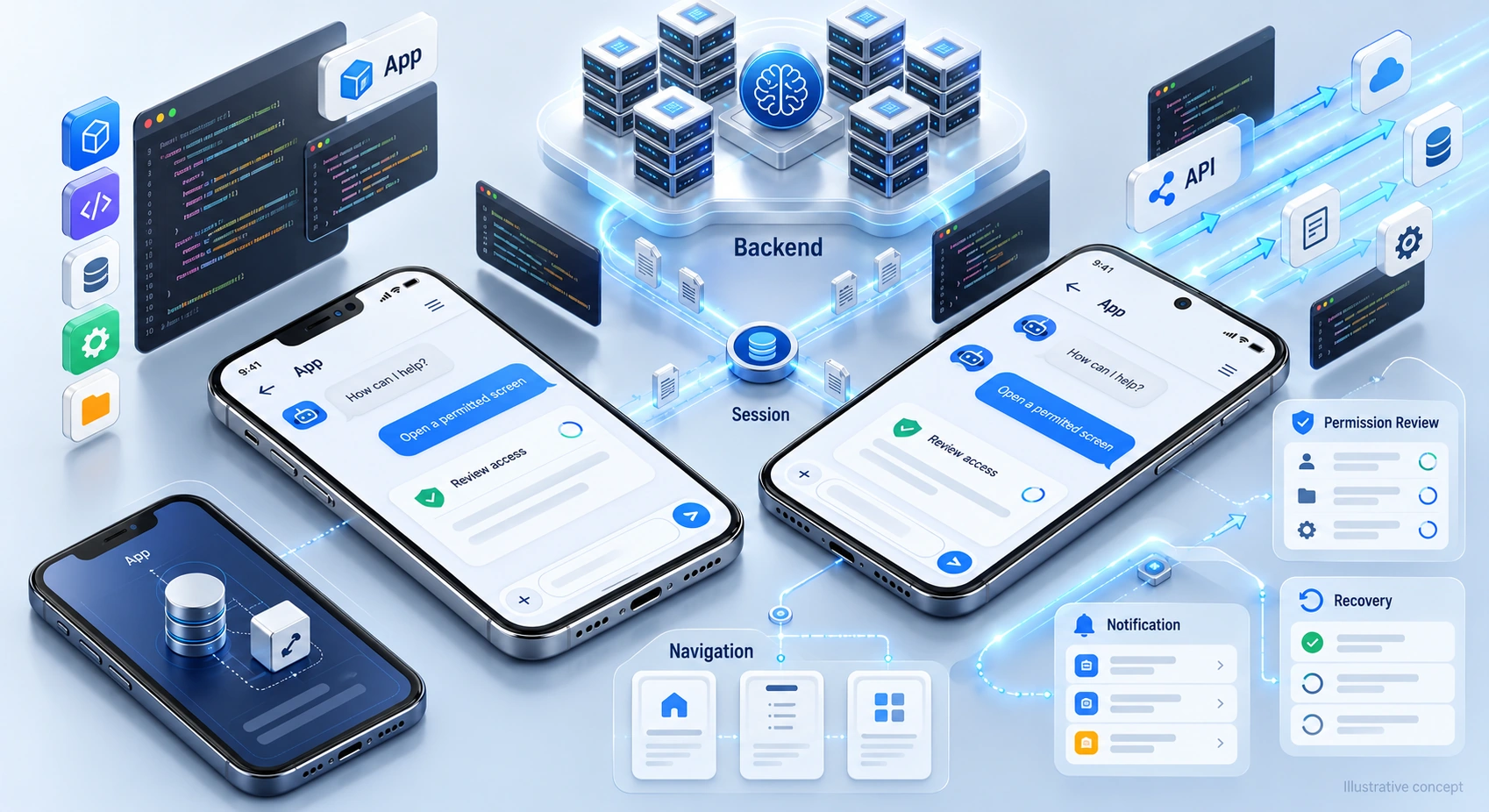
Deployment planning should consider the model’s resource needs, response-time requirements, available devices and the consequences of an unavailable service.
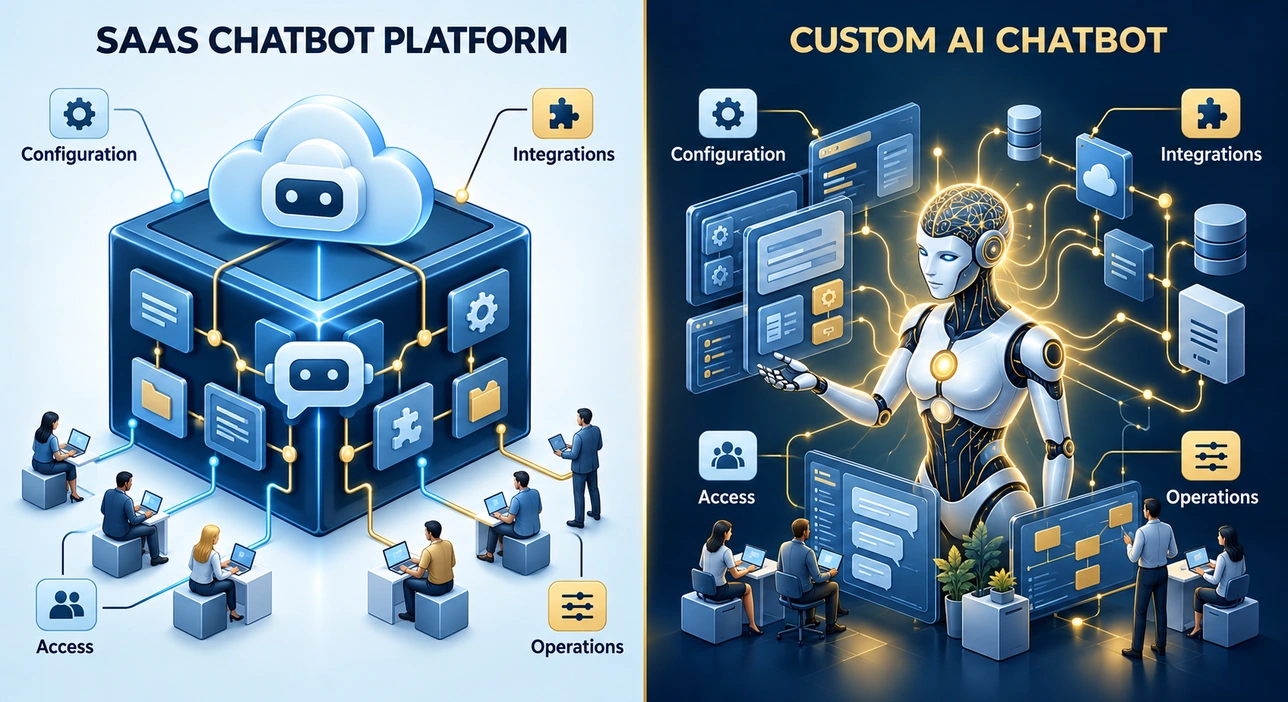
Neither cloud nor on-device processing is appropriate for every healthcare task. Compare resource requirements, connectivity, data handling and operational support before choosing a deployment pattern. Test the proposed configuration under realistic conditions.
Secure Cloud APIs for Data Processing
For cloud processing, review the service configuration, access arrangements, data flows and contractual responsibilities. A provider name or hosting location alone does not establish a compliant application.
Networked workflows need plans for delays, interruptions and data protection. Compare Cloud APIs vs Edge computing against the application’s requirements, including what happens when a request fails or a result cannot be delivered. Avoid treating deployment choice as a guarantee of security or clinical performance.
Chapter 4: Planning Privacy and Security Requirements
Assess which privacy and security obligations apply before handling patient information. Document responsibilities and obtain qualified review where needed. Avoid blanket claims that a particular architecture or encryption setting makes an entire healthcare product compliant.
Before sending patient information to an external AI service, review the permitted use, applicable agreements, access, retention and provider terms. Consumer and enterprise offerings can differ. Do not assume that any service is automatically permitted or prohibited for every healthcare use.
Data Masking and Risk
Decide which information is necessary for processing and evaluate appropriate controls before sharing patient data.
- The Workflow: A system may attempt to remove or replace identifiers before processing, but automated detection can miss information. Review the method, residual identification risk and intended use. Removing a name or substituting a token does not, by itself, establish that the information is adequately de-identified.
Virtual Private Clouds (VPC) and BAA Agreements
Cloud arrangements require review of applicable obligations and the parties’ responsibilities. Where required, a business associate agreement is one part of that arrangement, not proof of zero retention or complete compliance. Examine service terms and configuration separately. A private network or self-hosted model also needs access controls, monitoring and operational review; neither guarantees that information never leaves a system.
Chapter 5: Telemedicine and Reviewed Intake Workflows
Intake and scheduling tools should distinguish administrative assistance from clinical assessment. Define the questions the system may handle and when an authorized healthcare professional must take over.
The Reviewed Intake Workflow
Conversational features should operate within a defined scope, with clear limitations and escalation arrangements.
- Symptom Collection: Collect only information needed for the defined intake workflow and explain its use.
- Clinical Decision Support: Referencing approved material can support a workflow, but retrieval does not guarantee correct interpretation. Clinical outputs require appropriate evaluation and professional oversight.
- Actionable Routing: Routing rules should be established and reviewed by appropriately qualified people. Define the system’s limits and procedures for uncertain or unsupported requests. Do not present automated keyword matching or generated advice as a reliable substitute for clinical assessment or emergency services.
Chapter 6: The Importance of a Secure Development Partner
Healthcare software planning needs coordinated expertise in the intended workflow, data integration, security, testing and operational support.
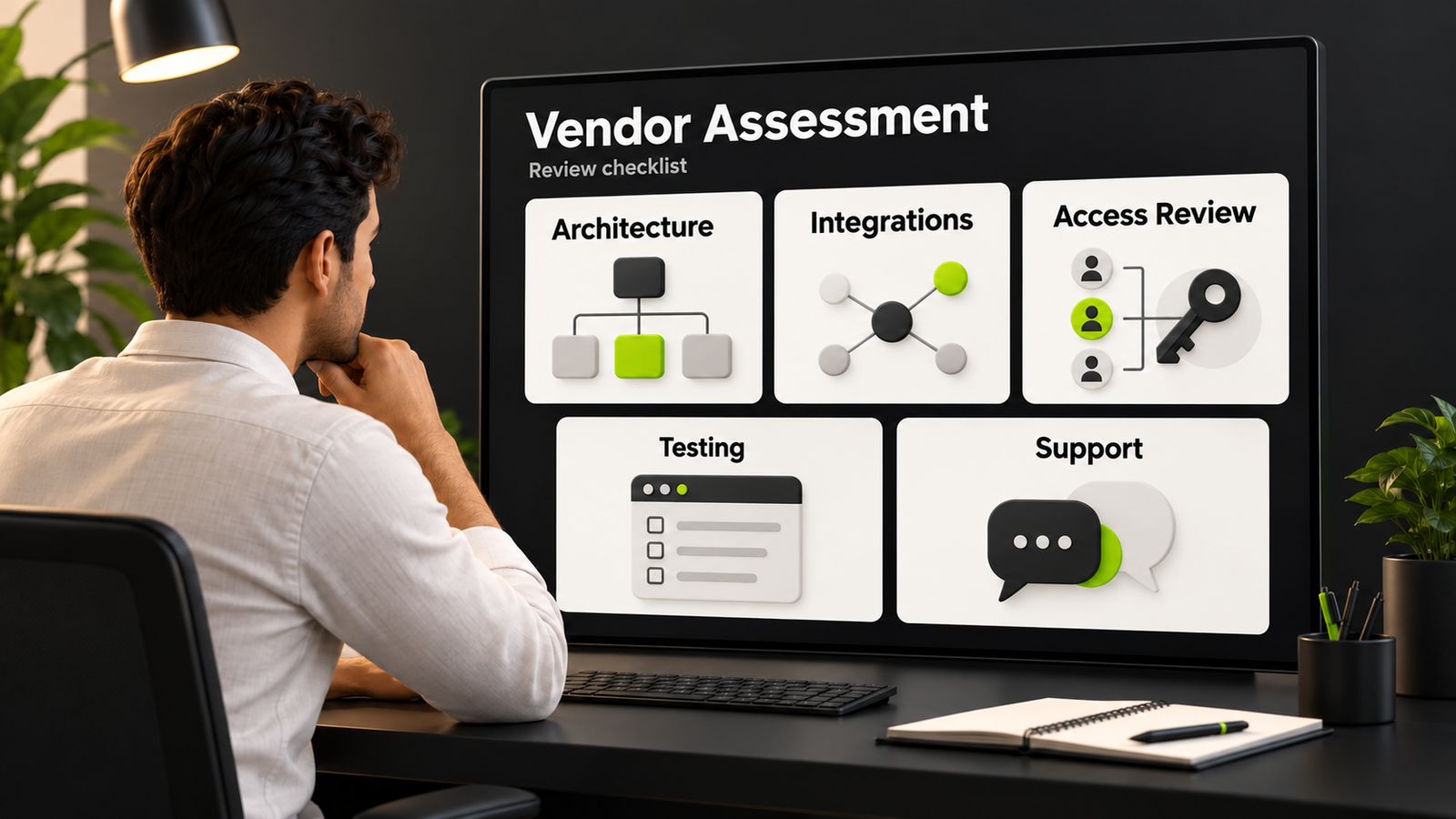
Assess a development team against the project’s actual requirements and supporting evidence. Ask who owns clinical review, technical validation, security decisions and ongoing support. Neither an agency label nor a polished demonstration establishes that those responsibilities are covered.
When considering partnering with an AI app development company in the USA, examine the actual team, contracts, data arrangements and relevant experience. Location alone does not establish regulatory compliance, intellectual-property protection or the suitability of a vendor for a clinical product.
Architect Your Medical AI with DigiWeta
A healthcare AI project needs a defined purpose, evidence-based evaluation and clear responsibilities for patient information. Plan technical delivery alongside the required clinical and organizational review.
Discuss your ai healthcare app development requirements with DigiWeta, including intended users, record integrations, data handling and review workflows. Establish the project scope and evidence needed before making claims about diagnostic performance, compliance or operational readiness.
Contact DigiWeta to discuss your healthcare application’s scope, integration needs and review requirements.
Frequently Asked Questions
It is an application intended to use models to analyze information relevant to a clinical question. Its usefulness and limitations must be evaluated for the intended setting. A prediction or risk score is not automatically a diagnosis or a substitute for professional assessment.
Integration depends on the hospital system and permitted workflow. FHIR can support information exchange, but does not itself supply security or guarantee compatibility. Teams must address authorization, mapping, validation and error handling for each connection.
Review the service’s intended use, agreements, data handling and configuration before sending patient information. Requirements depend on the parties and use case. Neither the word “public” nor an enterprise label establishes compliance; obtain appropriate review rather than assuming blanket permission or prohibition.
Masking replaces or hides selected information during processing or display. Its effectiveness depends on the method and context. Automated removal can miss identifiers, and masking is not automatically equivalent to legally sufficient de-identification. Evaluate the residual risk before relying on it.
Safety cannot be inferred from using a chatbot or retrieval system. Define the intended role, test relevant failure modes and establish professional oversight and escalation. Do not advertise deterministic or universally correct triage advice without evidence supporting the specific use.
The choice depends on the task, model, device capabilities, connectivity and data-handling requirements. Compare cloud, local or combined deployment against those needs. No deployment pattern automatically supplies clinical accuracy, availability or regulatory compliance.
AI can be considered for transcription or drafting assistance, but generated notes may omit or misstate information. Authorized professionals should review the output and required approvals before it becomes part of a patient record. Automation does not remove responsibility for accuracy.
Evaluate relevant capabilities rather than assuming every specialized agency is qualified. Ask for evidence of suitable integration, security, testing and delivery practices, with clear ownership of clinical review and ongoing support. The project’s intended use determines which expertise is needed.