

An AI roadmap needs a delivery plan as well as a business goal. Decide which capabilities already exist in your team and where additional experience or capacity would help.
The practical question is who will build, evaluate, and maintain the application, and how responsibility will be shared after launch.
AI application work builds on software engineering while adding challenges around data, model behavior, and evaluation. The right skills depend on the project. Not every workflow needs model training, and a successful prototype does not establish readiness for production.
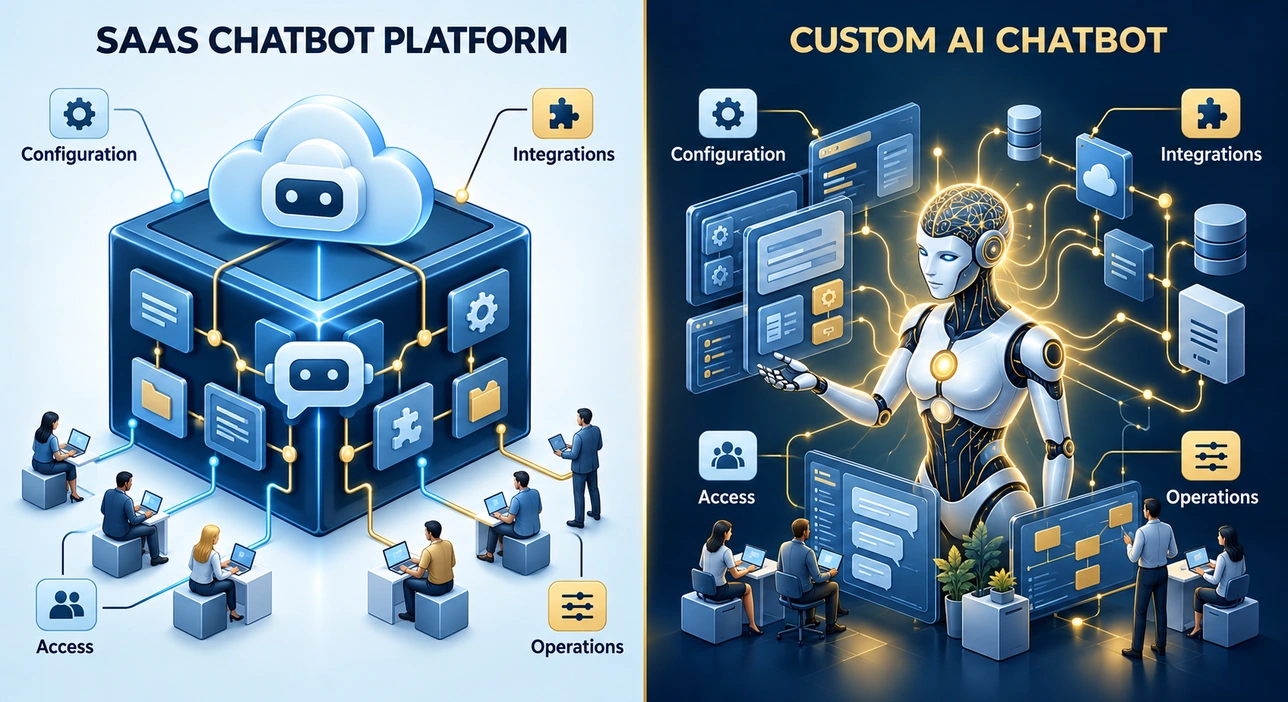
Compare an internal team, an agency, and a mixed approach against the same requirements. Consider existing skills, delivery capacity, data access, review effort, and operating ownership. That gives you a clearer basis for identifying the best generative ai development company for your specific requirements.
This guide explains how to compare staffing costs, delivery risk, security, and handover without relying on fixed recruitment timelines or agency guarantees. Use it alongside your plans for generative ai software development before making a hiring commitment.
Chapter 1: Define the Required Skills
Start with the workflow, systems, and risks. Decide whether retrieval, model adaptation, integration, or a combination is needed. Assess current skills and available time before creating new roles.
Use current candidates and supplier proposals to assess availability rather than assuming a universal talent shortage.
Build on Existing Engineering Skills
Software developers bring useful integration, testing, security, and operations skills. Identify gaps in evaluation, retrieval, or model serving. Do not assume existing staff cannot learn AI work or that a prototype proves production readiness.
Match the role to the required responsibilities. Our guide explains which developer skills to look for and how to assess them through practical work, including:
- Model serving and resource planning.
- Adaptation methods for tasks that justify tuning.
- Controlled multi-step application workflows.
- Retrieval quality, updates, and access rules.
Plan for Actual Availability
Estimate recruitment, onboarding, data access, and review time using the actual plan. An agency may add capacity sooner, but its team still needs availability and project context. An internal team may already understand the systems. Show timing assumptions and dependencies explicitly rather than promising immediate delivery or a guaranteed delay.
Chapter 2: Compare Full Internal Delivery Costs
Include recruitment, onboarding, management, tools, evaluation, and operation as well as salaries. Compare equivalent responsibilities in internal estimates and supplier proposals.
Roles and Ownership
Map the roles needed for the scope rather than assuming a fixed team size. Some people may cover several areas; others may need specialist support or reviewers. Useful responsibilities include:
- Architecture: plan components, interfaces, and controls.
- Data engineering: prepare sources, permissions, and update workflows.
- Operations: deploy, monitor, maintain, and handle incidents.
- Integration: connect approved business systems and user interfaces.
Use realistic compensation and hiring assumptions for the relevant market and role. Include benefits, tools, management, and specialist review where applicable. A generic salary claim is not a project budget.
Plan Beyond the First Release
After launch, work may include new requirements, evaluation, security updates, integrations, and source maintenance. Estimate the expected roadmap and decide which skills should remain available. Neither a full-time team nor a retainer is automatically wasteful; the right arrangement depends on ongoing demand and ownership.
Compare that work with the scope and exclusions in agency pricing. For a breakdown of budget categories, review our custom AI development cost comparison using consistent assumptions.
Chapter 3: Where External Delivery Can Help
An external team may add relevant experience or capacity for a defined initiative. It can be useful when internal staff need to remain focused elsewhere, but the business still needs an accountable owner and time for decisions and review.
Treat an agency as a delivery option to evaluate, not a guaranteed shortcut.
Check Start and Delivery Plans
Confirm who is assigned, when they are available, and what inputs they need. Review discovery, access, integration dependencies, and acceptance criteria. Existing components may help, but they still need to fit your requirements. Do not assume signing a contract means a complete team can deliver immediately.
Review Maintainability
Ask how the proposed design handles model changes, dependency updates, testing, and handover. Relevant experience can help avoid some mistakes, but no supplier can future-proof every decision. Prefer understandable interfaces, documented assumptions, and a practical change process over a long list of frameworks or a promise that upgrades will require no effort.
Chapter 4: Manage External Delivery Risks
Outsourcing introduces questions about access, coordination, ownership, and continuity. Evaluate the proposed implementation and team rather than relying on an agency label. Agree how work is reviewed and how unresolved issues are handled before treating the proposal as a low-risk plan.
Assign responsibility for security, data, testing, and support. Unclear ownership can create gaps even when individual developers are capable.
Review Data Access and Providers
Map what information the supplier and its tools receive. Review provider terms, permissions, retention, and incident procedures. Hosted APIs and self-hosted models each need assessment; neither an external service nor an agency’s location alone establishes whether the arrangement is suitable.
Ask for evidence supporting the controls and deployment choices. Confirm access limits, source permissions, and operational review. A private cloud or redaction tool does not guarantee protection. Review the relevant security risks of bad outsourcing and data leaks.
Agree How the Teams Collaborate
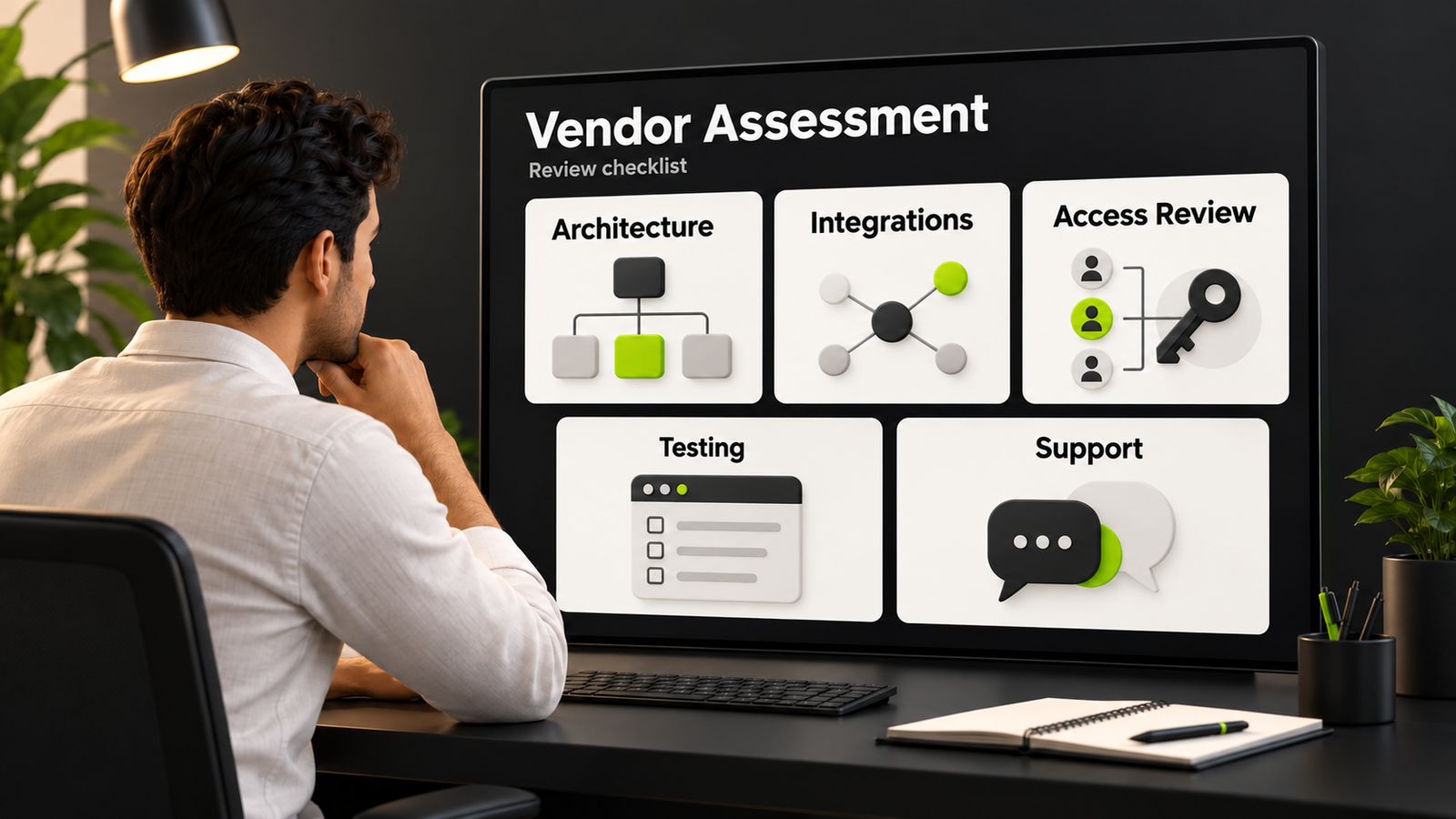
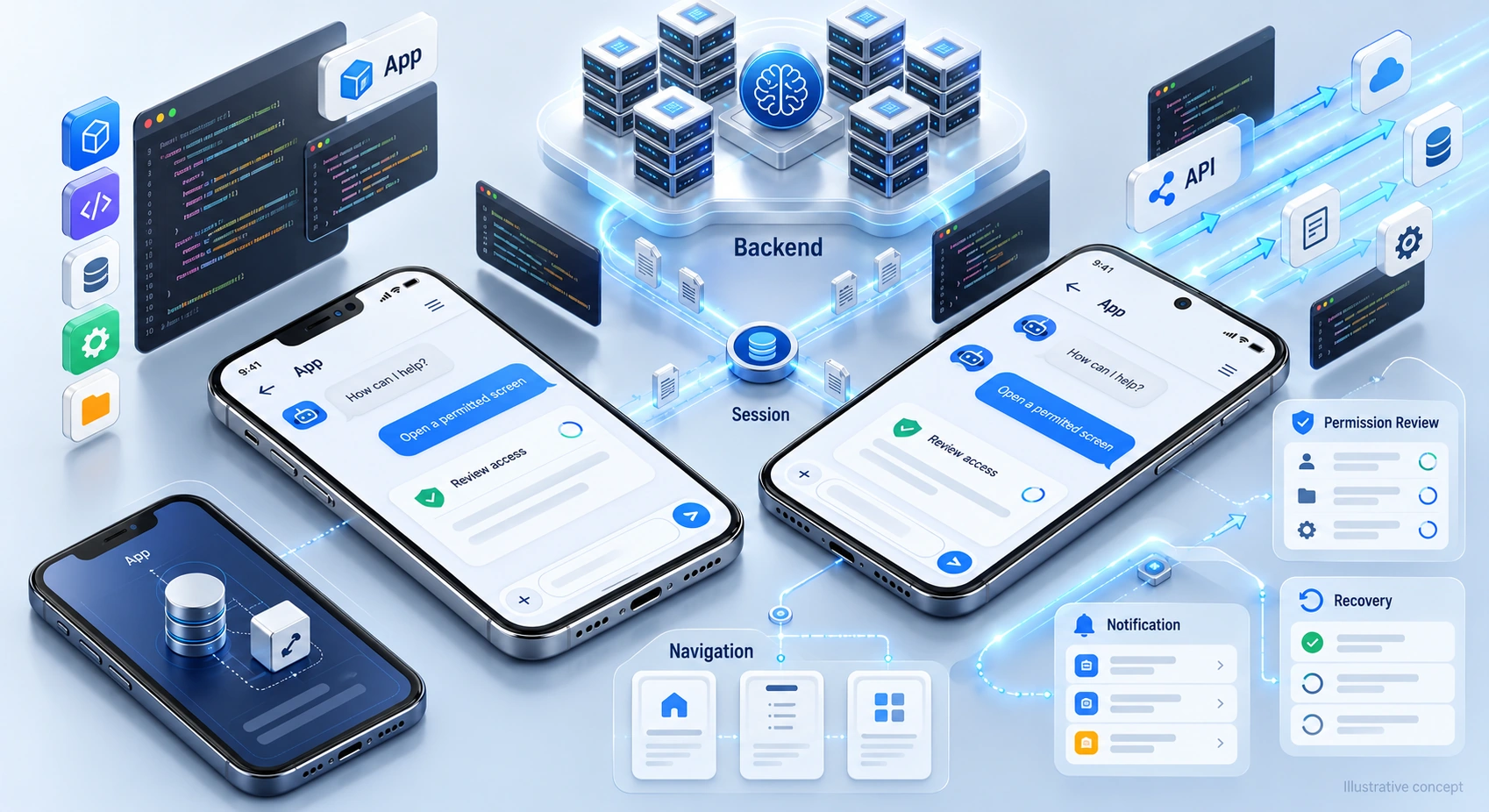
Define the boundary between internal and external work. Assign owners for product decisions, data, integrations, evaluation, deployment, and support. Agree documentation, repository access, review cadence, and handover requirements. Test whether internal staff can understand and operate the delivered service instead of accepting a black box. For related workflow considerations, read about building AI capabilities into existing software teams.
Chapter 5: Ask Evidence-Based Vetting Questions
Compare suppliers with consistent questions and realistic examples. Ask how the design handles uncertainty, access, cost, and updates, then request evidence rather than treating confidence as proof:
- “How will you test unsupported or incorrect model answers?”
- Weak response: “A better prompt guarantees accurate answers.”
- Stronger response: “We define representative tests, approved evidence, fallbacks, and review.” Ask for results and failure examples. Retrieval and output checks may help, but they do not eliminate every error.
- “How will you choose between hosted and self-hosted models?”
- Weak response: “One model or hosting approach is always best.”
- Stronger response: “We compare quality, data handling, cost, and operating responsibilities for the task.” Ask what assumptions would change the recommendation and which controls need validation.
- “How will you estimate and monitor request costs?”
- Weak response: “We send everything because the model has enough context capacity.”
- Stronger response: “We measure representative requests and test context, routing, and caching against quality.” Require usage assumptions and a monitoring plan.
- “How are source changes and deletions handled?”
- Weak response: “Updates are automatic, so we do not need to test.”
- Stronger response: “We track indexing, permissions, and failures.” Ask to see updates and deletions reflected correctly in the application.
Discuss Your Delivery Plan with DigiWeta
Choose the model that fits your scope, resources, and long-term responsibilities. A clear brief and evidence-based comparison are more useful than assumptions that internal teams are always slow or agencies always cost less.
Discuss your requirements with DigiWeta as a generative ai development company. Review the proposed team, relevant experience, scope, and evaluation responsibilities before committing to delivery.
Plan integration and handover alongside the initial build. Agree what internal staff will own, which support is included, and how changes are reviewed. Keep expected benefits separate from results that still need to be demonstrated.
Ready to compare delivery options? Contact DigiWeta to discuss scope, capacity, and operating ownership.
Frequently Asked Questions
No. Compare the same scope, quality targets, and support responsibilities. Include hiring, onboarding, management, internal review, tooling, and maintenance. Agency pricing may also have exclusions or recurring charges. Use actual plans and proposals rather than a universal salary or savings claim.
Use the specific roles, candidate availability, interview process, and access requirements. Include onboarding and project context. For an agency, verify assigned staff and start dates. Neither route guarantees immediate delivery or a fixed delay.
Assess the required data, evaluation, integration, security, and operations work. Request evidence and practical explanations. An AI agency label does not prove competence, and established software skills remain valuable.
Define permitted access, recipients, tools, retention, and incident responsibilities. Review the implementation with qualified stakeholders and test relevant boundaries. Hosted services and private deployments both need controls; no supplier can responsibly guarantee zero data leakage.
Ask for comparable work, a proposed architecture, realistic tests, failure handling, and clear operating responsibilities. Inspect how access, updates, costs, and handover are addressed. Framework names or model choices alone do not prove the team can deliver your specific requirements.
Assign ownership across product, data, integration, evaluation, deployment, and support. Agree interfaces, documentation, access, reviews, and handover. Check that internal staff can understand and operate the service rather than assuming an API resolves collaboration.
Define monitoring, source updates, dependency changes, evaluations, incidents, and support expectations. Clarify included work, exclusions, response terms, and handover. Maintenance may sit with an agency, internal staff, or both, but responsibilities should be explicit.
It may help when a project needs skills or capacity your team lacks, or when a defined delivery scope fits external support. Assess data sensitivity, coordination, review effort, and ongoing ownership. Industry alone does not determine whether outsourcing is the best option.