

Generative AI software development combines models with the data, interfaces, and controls needed for a useful application. The starting point is a business task, not a prediction about artificial general intelligence. Define who will use the system, what it should produce, and which decisions or actions must remain with people or controlled services.
Existing software engineering remains important. APIs, testing, access control, deployment, and maintenance still shape reliability, while model uncertainty and data quality add further considerations. Hosted services, existing tools, and custom components can each fit. Choose the approach that satisfies the requirements rather than assuming proprietary development is always necessary.
This guide connects the main planning decisions: components, retrieval or adaptation, delivery stages, security, use cases, cost, and ownership. It provides a framework for evaluating a project, not a promise of a particular return, deployment timeline, or error-free outcome.
To discuss your workflow and constraints with DigiWeta, explore custom generative ai development services. Start with a focused scope, measurable acceptance criteria, and clear operating responsibilities.
Chapter 1: Choose Components for the Task
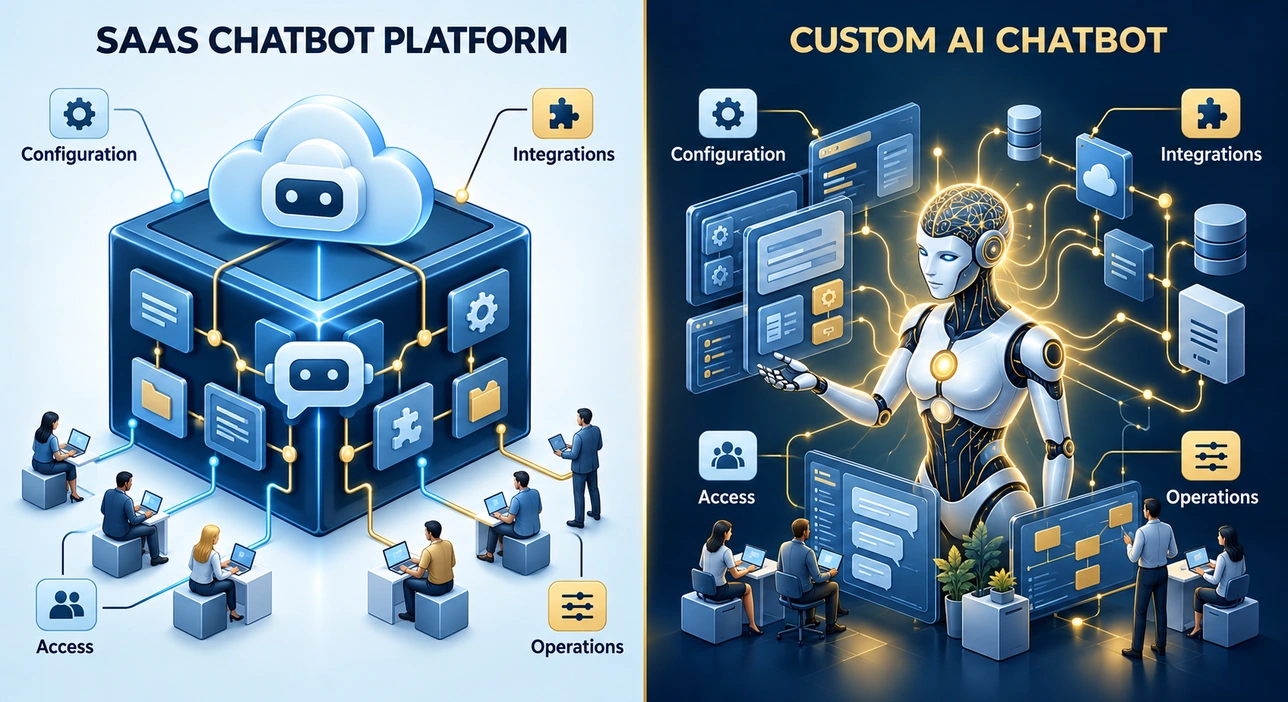
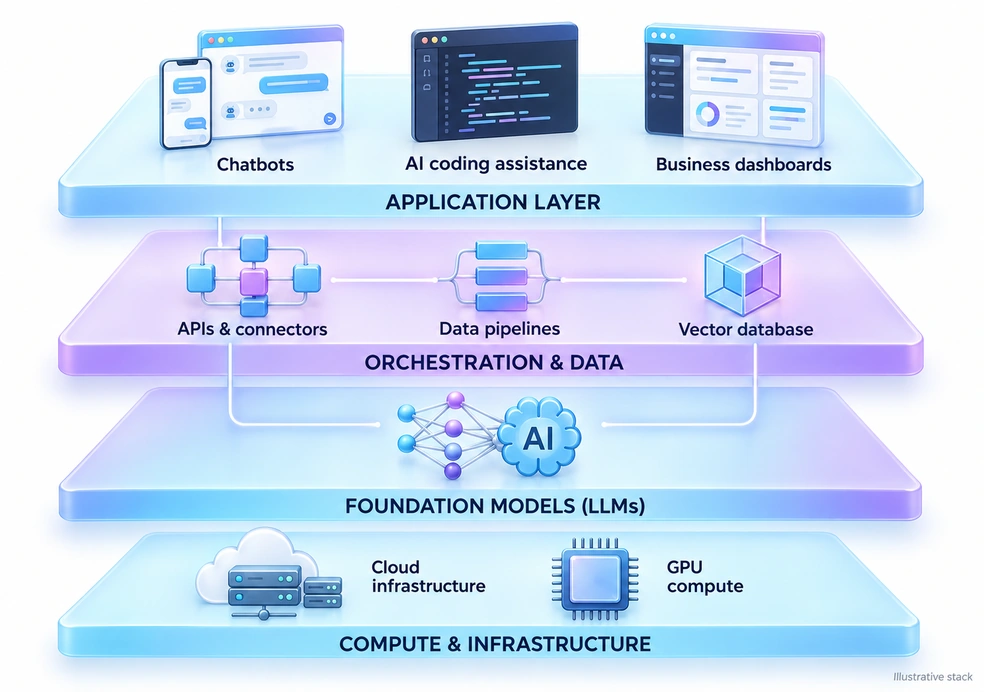
An AI application may combine a model service, business data, workflow logic, and a user interface. Not every project needs the same technology stack. Map each component to a requirement and test its contribution before adding complexity.
Consider these responsibilities when planning:
Compute and Hosting
Resource needs depend on the model, serving method, and workload. Hosted APIs may reduce infrastructure duties; self-hosting needs a tested configuration and operational ownership.
- Service Options: Compare current services, capacity, data terms, support, and costs against the workload.
- Hosting Boundaries: Define where data may be processed and verify the complete implementation. Hosting location alone does not guarantee isolation.
Model Selection
Choose models using representative tasks, quality metrics, limitations, and operating constraints. Consider available modalities, context needs, licensing, data handling, and maintenance. Access to weights and a hosted API offer different responsibilities; neither label establishes the best option. Recheck assumptions when versions or requirements change. For a fuller comparison, review open-source vs proprietary models.
Data and Workflow Logic
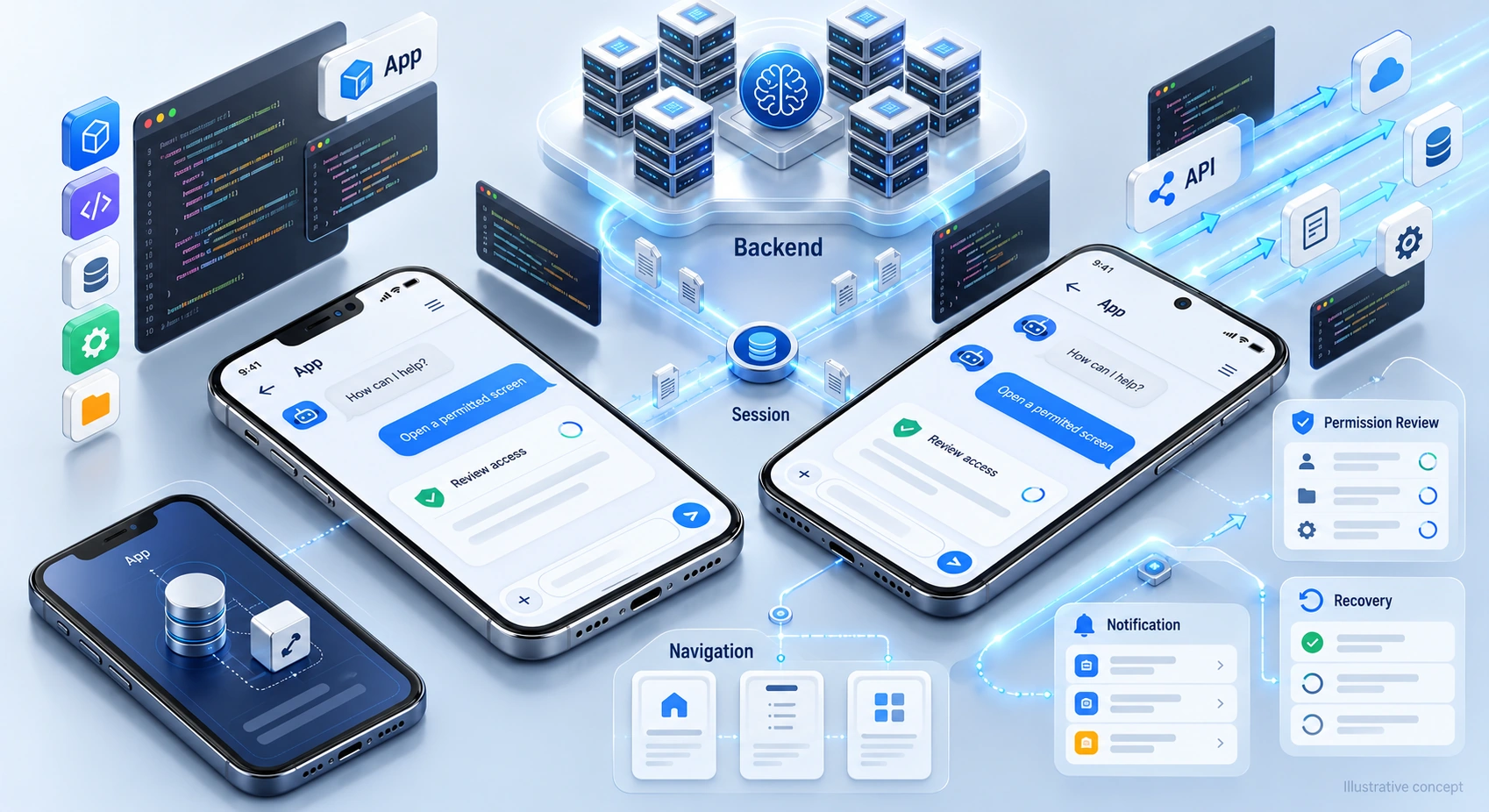
Connect model output to the app through explicit access, validation, state handling, and permitted workflows.
- Frameworks: Libraries may organize work, but direct code can fit. Evaluate maintenance and controls rather than requiring a brand.
- Storage Options: Select storage for records, context, and retrieval. Vector search may use dedicated stores or database extensions; keyword or hybrid methods may also fit.
User Experience
Explain what the assistant can do, how long tasks may take, and when it needs clarification or human help. Make failure and pending states visible instead of allowing generated text to imply that an unconfirmed action is complete.
Chapter 2: Design Around Information and Actions
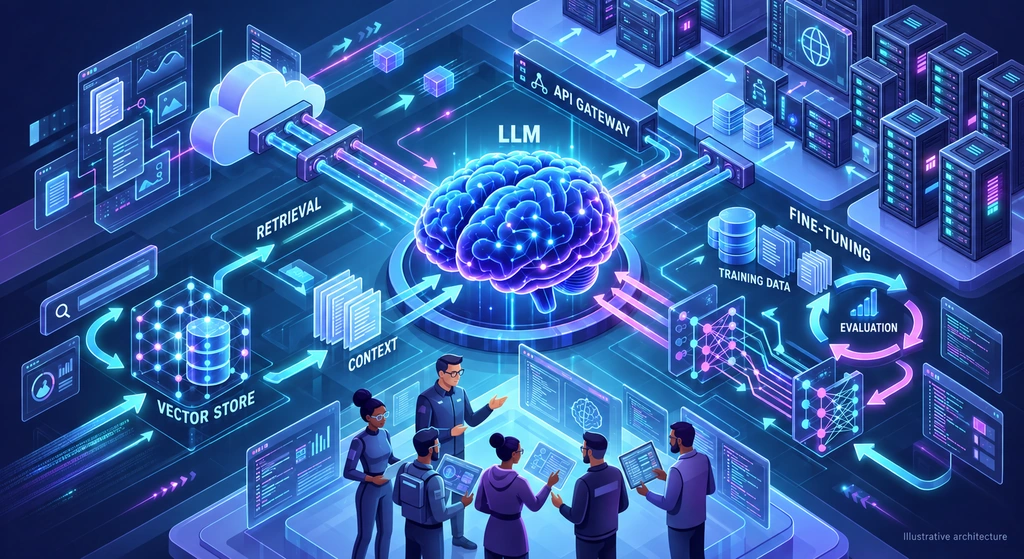
Define the authoritative sources, required permissions, and supported actions before choosing an architecture. Set quality and service targets and test the design with realistic cases, including missing data and system failures.
Compare Retrieval and Model Adaptation
A model does not automatically have access to your current internal information. It may also need guidance about task behavior or output format. Treat access to evidence and behavior adaptation as separate design problems.
Supply only the information and permissions needed for the task.
Two approaches may help, depending on the requirement:
- Retrieval-Augmented Generation: RAG provides selected source information during a request without requiring a model-training update for each source change.
- How it helps: Search approved material, apply access controls, and provide relevant evidence with the question. Check whether the results support the answer, and define a fallback when sources are missing, conflicting, or out of date.
- Key Limit: Retrieval does not eliminate errors or guarantee freshness.
- Model Adaptation: Fine-tuning uses examples to adapt selected model parameters or components. Compare the expected behavioral improvement with data preparation, training, evaluation, and deployment effort.
- How it helps: Target a behavior with suitable examples, then test unseen cases.
- Key Limit: Tuning may improve a task or format but does not guarantee factual recall or valid output. Continue to validate results and monitor regressions.
Compare simpler baselines and the needs of your actual workflow. Retrieval and tuning can be combined, but added complexity should have a measured benefit. Explore the distinction in our guide to RAG vs. Fine-Tuning.
Plan for Measured Demand
Test request duration, concurrency, limits, and recovery before committing to capacity. Gateways, queues, caching, or fallback models may help particular workloads, but none is mandatory in every design. Set appropriate tenant controls and verify that retries or fallbacks do not duplicate actions or move data outside permitted boundaries.
For request handling and operational trade-offs, review our scalable LLM architecture.

Chapter 3: Build Evaluation into Delivery
Add tests for model behavior, sources, and uncertainty to established integration and application checks. Both code and data affect results; sound software practices still matter.
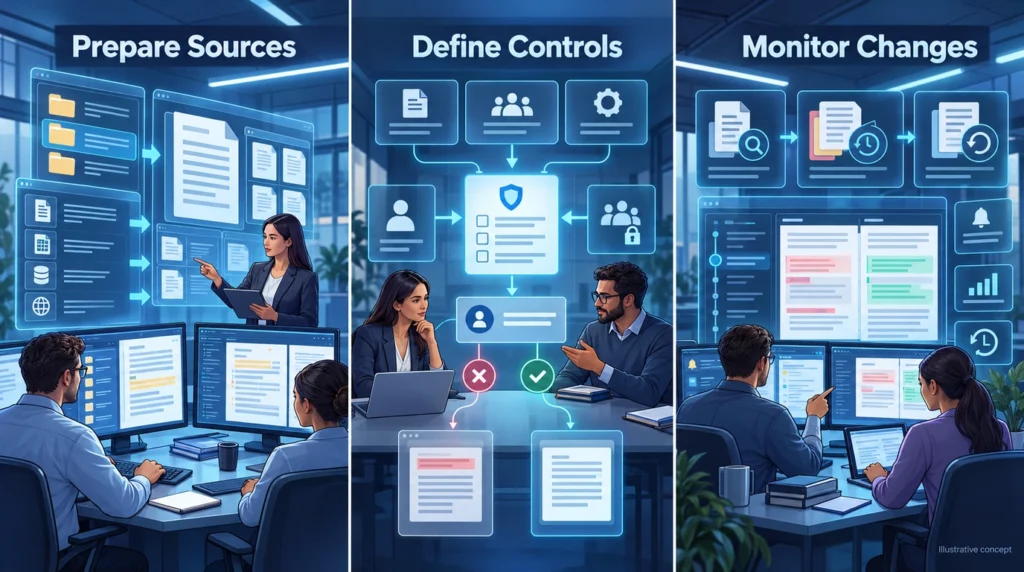
Stage 1: Prepare Appropriate Sources
Identify authoritative, current, permitted sources. Missing records, contradictions, and poor extraction can undermine results even when the model is capable.
- Data Intake: Prepare permitted sources with traceable updates and error handling.
- Retrieval Units: Choose how to split and index documents based on actual queries and source structure. Test retrieval rather than assuming one chunking method always works.
Stage 2: Define Behavior and Controls
Use instructions to describe the task and limits, but enforce permissions and consequential actions in trusted logic. Test ambiguity, conflicting evidence, and adversarial input. A prompt alone is not a security boundary.
Stage 3: Monitor and Review Changes
Models, services, data, and application dependencies may change. Define an evaluation set, release checks, monitoring, and rollback criteria. Inspect failures and user feedback, and keep source updates and access changes under review. Automated scoring can help, but its limitations and disagreement with human review should be understood.

Chapter 4: Map Security and Governance Needs
Identify sensitive data, permitted recipients, and supported operations before deployment. Assign responsibility for security, privacy, and incident handling.
Map what reaches models, search indexes, logs, tools, and support systems. Check the exact service terms and settings instead of assuming every API or consumer product handles information alike. Training use, retention, and access are different questions. Use qualified review to determine applicable obligations and validate the actual implementation.
Use Layered Safeguards
Select controls for the risks and verify their operation, including:
- Hosting and Network Boundaries: Private infrastructure may change data flows, but it is not automatically air-gapped. Review external dependencies and support access.
- Data Minimization: Avoid unnecessary sensitive information. Test masking or redaction and document what may remain exposed.
- Identity and Source Permissions: Enforce relevant access in trusted systems before retrieval and disclosure. Test cross-user boundaries, stale permissions, and caches rather than relying on a role stated in a prompt.
- Untrusted Input Controls: Documents and tool outputs may contain hostile instructions. Limit capabilities, validate actions, and apply appropriate approvals. Filters and model checks are only part of the defense.
Compliance depends on the intended use and applicable requirements, not a single tool. Involve qualified stakeholders and use the controls discussed in our guide to preventing proprietary data leaks in your review.
Chapter 5: Choose a Useful Initial Workflow
Start with a repeatable problem, an accountable owner, and a measurable baseline. Consider data readiness, adoption, failure costs, and review effort. A technically impressive demo is not necessarily the most useful project.
Evaluate possible applications against their specific purpose and risk:
Healthcare and Financial Workflows
Administrative assistance, document organization, and drafting may be useful within defined controls. Clinical assessment, investment recommendations, financial authorization, and other consequential decisions need appropriate governance and professional review. Generated text and source citations do not establish safety or suitability. Examine the intended use and limits before deployment. For examples of planning considerations, review solutions for finance and healthcare with qualified domain review.
Customer Support Assistance
A support assistant can answer approved questions or guide permitted workflows, with visible limits and an accessible route to people. Evaluate resolution, repeated contacts, and handoffs rather than counting every automated response as success. Retrieval and output checks can help, but do not guarantee accuracy. Read more about reducing chatbot hallucinations while maintaining useful escalation and service controls.
Software Engineering Assistance
AI may help draft code, tests, reviews, or documentation within a controlled workflow. Limit repository and execution access, review changes, and measure accepted delivery rather than generated output alone. Passing tests does not prove every requirement is met, and tool access does not authorize remote publishing or deployment. Explore generative AI for software development teams with clear review and release boundaries.
Chapter 6: Estimate Costs and Measured Benefits
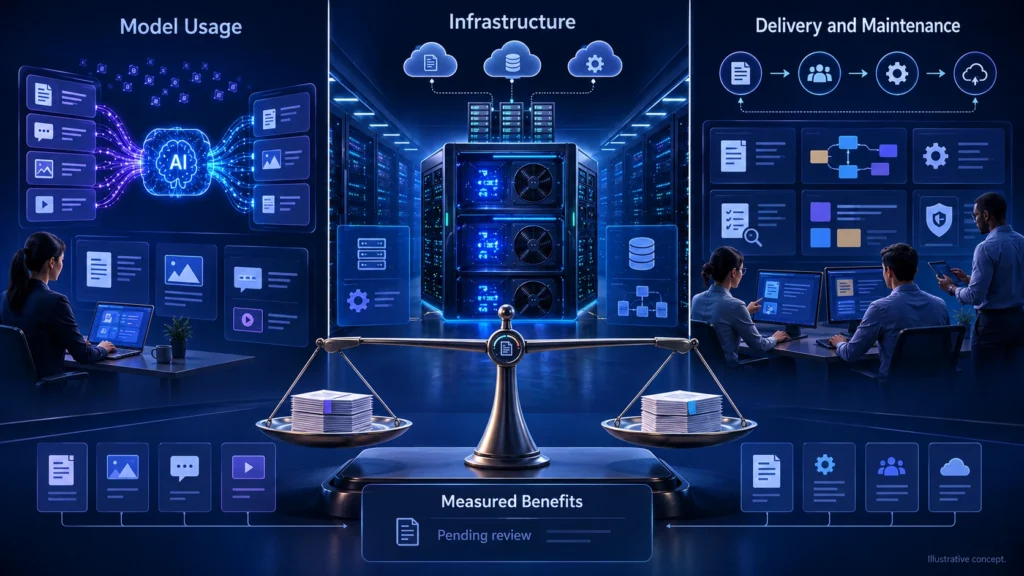
Include delivery and recurring operations in the budget. Workload, data preparation, evaluation, security review, and maintenance may affect cost as much as the model itself. Avoid estimates based only on a demonstration.
Compare options over the same period and quality targets. Common cost categories include:
- Model usage may include input, output, context, retries, and other billed work. Apply current rates to measured requests, not a universal word ratio or monthly estimate.
- Infrastructure Costs: For self-hosted components, include capacity, utilization, storage, networking, and operations. Benchmark the proposed setup before committing resources.
- Delivery and Maintenance: Budget for integrations, source updates, tests, monitoring, incidents, and support. Assign ownership for the work after launch.
Keep assumptions visible and update forecasts with pilot evidence. For a breakdown of budgeting factors, review custom generative AI development cost for your workload.
Chapter 7: Match Delivery Skills and Ownership
Assess existing skills and capacity before adding roles. AI applications need software engineering as well as relevant data, evaluation, or model expertise. The exact mix depends on what is being built; not every project requires a research team or custom training.
Internal Delivery
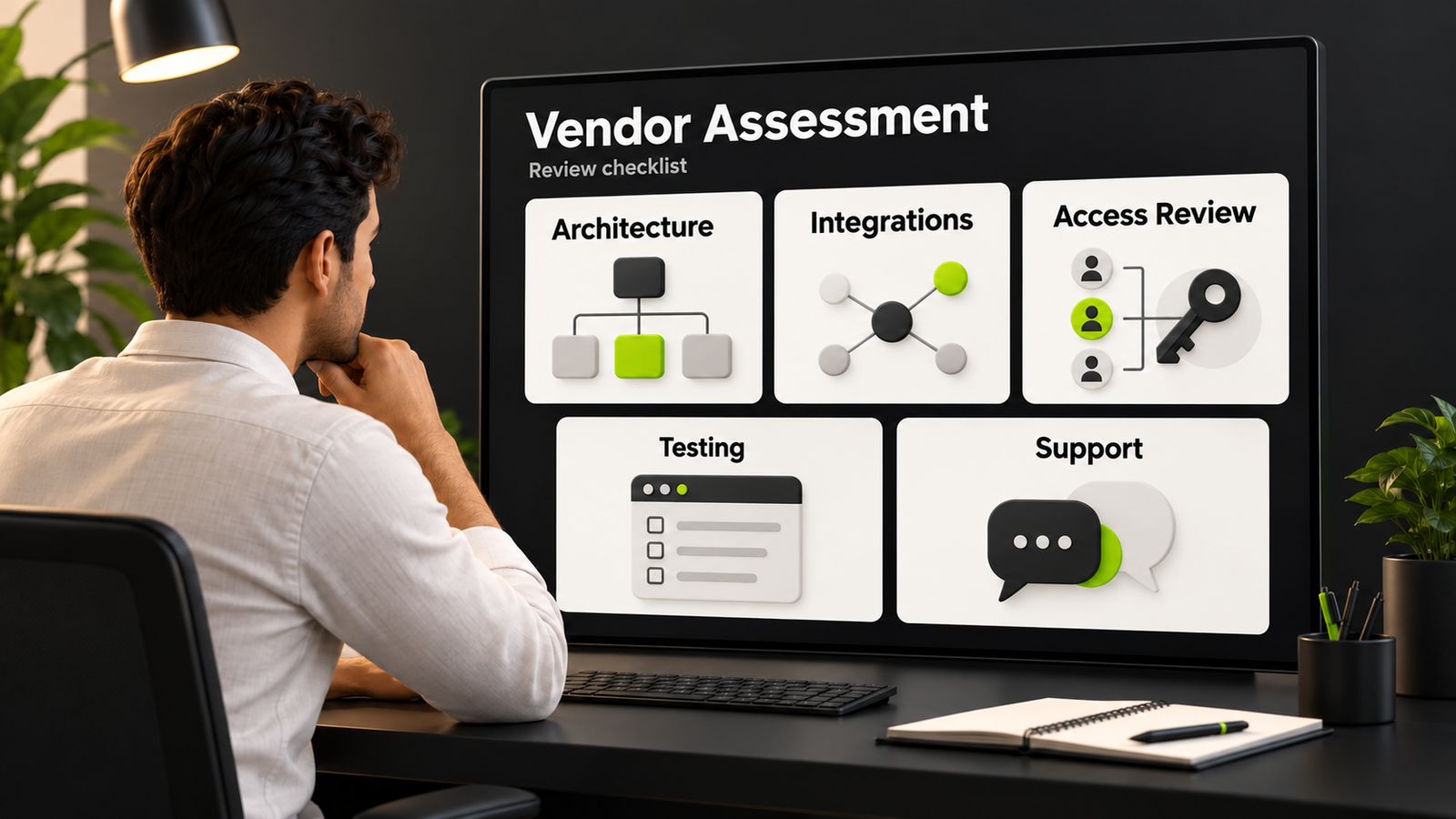
Define responsibilities for the initial release and ongoing operation. Identify gaps and test candidates on relevant work. Review the skills to look for when hiring a generative AI developer rather than requiring the same frameworks or credentials for every role.
External Delivery
An agency or mixed team may add useful experience or capacity, but its availability and responsibilities need verification. Compare equivalent scope, internal review effort, costs, support, and handover. Neither route guarantees immediate delivery or lower cost. For a practical comparison, review hiring a generative AI development company alongside an internal delivery plan.
Conclusion: Define a Testable Scope
Generative AI software should be evaluated by the task it supports and the evidence it produces. Choose a limited first release, define its boundaries, and test it with the people and systems involved.
Use the results to decide whether to expand, revise, or stop. Keep operating costs, source quality, access controls, and human review visible as the system changes. Adoption does not guarantee competitive advantage without useful outcomes.
Discuss generative AI application requirements with DigiWeta around your workflow, data, and constraints. Agree the initial scope, evaluation criteria, and ownership instead of relying on promises of risk-free delivery or error-free output.
Ready to define the first release? Contact DigiWeta to discuss your requirements and evaluation plan.
Frequently Asked Questions
The application must handle uncertain outputs, source quality, model limits, and evaluation alongside familiar software concerns such as access, integration, testing, and operations. Components vary by task; a vector database or model-training pipeline is not mandatory for every project.
Scope, data preparation, integrations, evaluation, controls, workload, and support affect the estimate. Separate initial delivery from ongoing operation and use current service rates or hosting quotes. No generic price range guarantees accuracy, compliance, or a particular return.
Map recipients and data flows, minimize information, enforce permissions, review provider terms, and test relevant controls. Include logs, tools, caches, and ongoing operations. Private hosting or masking alone does not establish compliance; involve qualified reviewers for the actual use case.
RAG supplies retrieved source material during a request so the model can use relevant information. Search may use vector, keyword, or hybrid methods. Check access, freshness, relevance, and final answers. Retrieval can help ground responses but does not eliminate unsupported output.
Use approved sources, representative evaluations, suitable output checks, and explicit behavior for uncertainty. Review failures and preserve human escalation. RAG, prompts, or low generation settings do not mathematically guarantee truthful answers; match oversight to the consequences of error.
Test quality, latency, data handling, licensing, resource needs, and operating costs for the same workload. Review exact service terms and deployment boundaries. Neither API access nor available model weights automatically determine the safest, cheapest, or most suitable option.
Match skills to scope: integration, data, evaluation, security, and operations, with model expertise where relevant. Assess practical responsibilities rather than requiring the same libraries or qualifications for every project.
Compare existing skills, capacity, scope, review effort, costs, and operating ownership. Check actual availability and evidence in supplier proposals. Include support and handover. An internal team, agency, or mixed model can fit; no option is universally faster or cheaper.