

Define the work before hiring a generative AI developer. Model training, hosted API integration, and enterprise support need different skills. Use the project requirements to shape the role and interview.
Strong software engineering remains essential. An experienced developer may already bring useful skills in APIs, data, testing, and operations, while needing additional experience with model evaluation or retrieval. Assess the specific gap rather than assuming every application requires a researcher or that a quick demo proves production readiness.
A generative AI developer should understand model uncertainty and the controls around it. The depth of mathematics, training, and infrastructure knowledge required depends on what the person will build and operate.
This guide helps turn a technology wishlist into a practical assessment of data work, evaluation, integrations, and delivery judgment. Connect the role to your broader generative ai software development expertise and actual project scope.
If you are considering external delivery, compare a generative ai development company such as DigiWeta against your project’s skills, capacity, and ownership needs.
Chapter 1: Match Foundations to the Role
Training or research may require strong mathematics and deep-learning knowledge. Application roles may emphasize data, evaluation, APIs, and reliable delivery. Ask candidates to explain decisions relevant to your project.
Use practical exercises aligned with the role. Review reasoning, testing, and trade-offs rather than relying only on framework names or puzzle questions.
Programming and Model Tooling
Set language requirements around your stack and responsibilities. Python is common in model work, while applications may use other languages. Require PyTorch or TensorFlow training experience when the role needs it.
- Interview Check: For a model-hosting role, ask how the candidate investigates memory limits and performance. For an API-based role, test request handling, retries, timeouts, and evaluation. Do not make GPU expertise a universal pass-or-fail condition.
Model Limits
Ask candidates to explain how the chosen model uses context, where it may fail, and how those limits affect the application. Expect deeper architectural knowledge for training roles, but also assess whether the person can translate limitations into useful product controls and tests.
Chapter 2: Assess Retrieval and Data Engineering
A business assistant often needs information beyond the model’s training. Ask how the developer would connect approved sources, keep them current, and enforce access. Retrieval-augmented generation is one option, not a guarantee that every question will receive a correct answer.
Evaluate Retrieval Quality
A demo is a starting point. Production retrieval needs source updates, permissions, evaluation, and failure handling at the expected scale.
- Interview Check: Ask for a demonstration of RAG implementation skills using your documents. Compare chunking and search against a test set. Fixed-size or semantic splitting may each fit; judge retrieval results rather than declaring one method universally correct.
Search Infrastructure
Vector search can use dedicated products or existing database extensions, such as pgvector for PostgreSQL. Compare retrieval quality, access controls, operational effort, and cost before selecting a system.
- Interview Check: Ask how embeddings are generated, updated, and tested. Examine filtered search, missing sources, and hard-to-find documents. Look for measurement rather than promises of instant results.
Chapter 3: Separate Hosting from Fine-Tuning
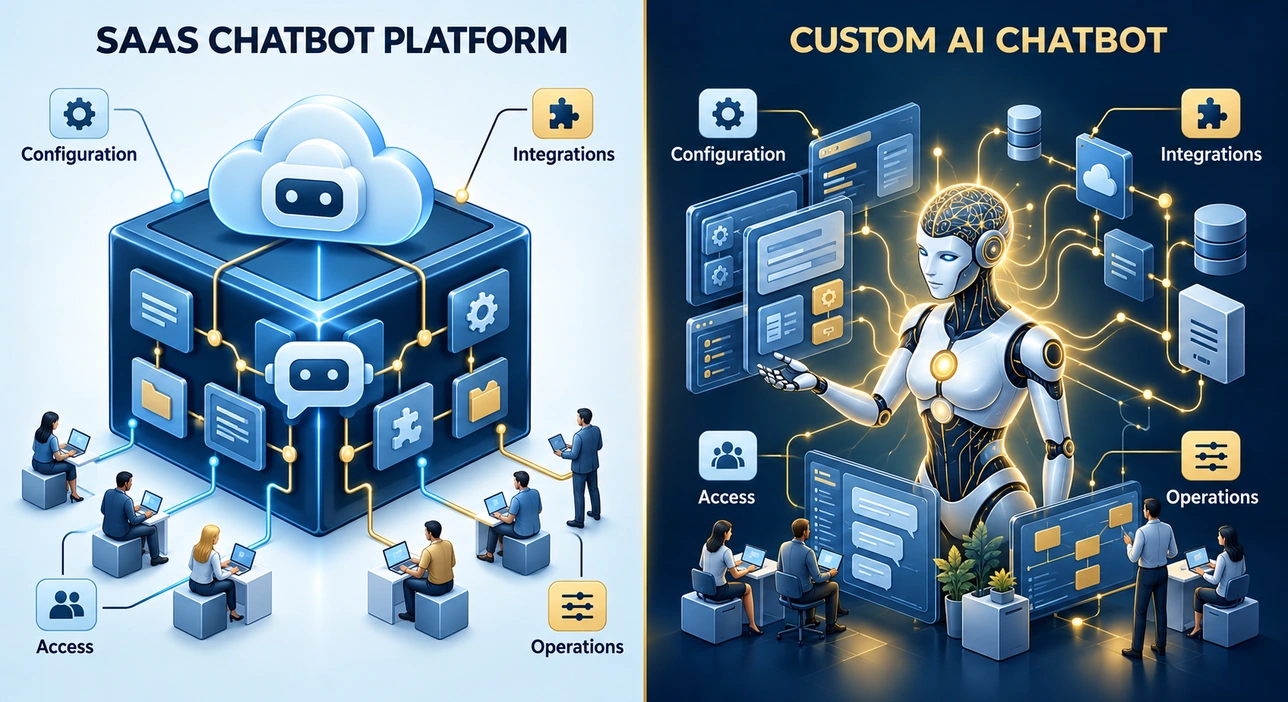
Hosting and tuning are separate choices. A model can be hosted without adaptation, and hosted services may offer tuning. Compare data needs, terms, evaluation, infrastructure, and maintenance before choosing.
Require tuning expertise only when it is relevant to the planned work.
Adaptation and Quantization
Parameter-efficient fine-tuning adapts selected parameters instead of updating every weight. It still needs suitable data, evaluation, and operations planning. Ask why tuning is justified compared with prompting, retrieval, or another model.
- Interview Check: Ask for evidence of open source model tuning where relevant, including evaluation and deployment trade-offs.
- Deploy Review: Give a realistic model, workload, and hardware constraint. Ask for a capacity estimate and test plan covering memory, throughput, concurrency, and quality. Quantization may help, but naming it is not enough to prove the configuration will work.
Chapter 4: Evaluate Application Orchestration
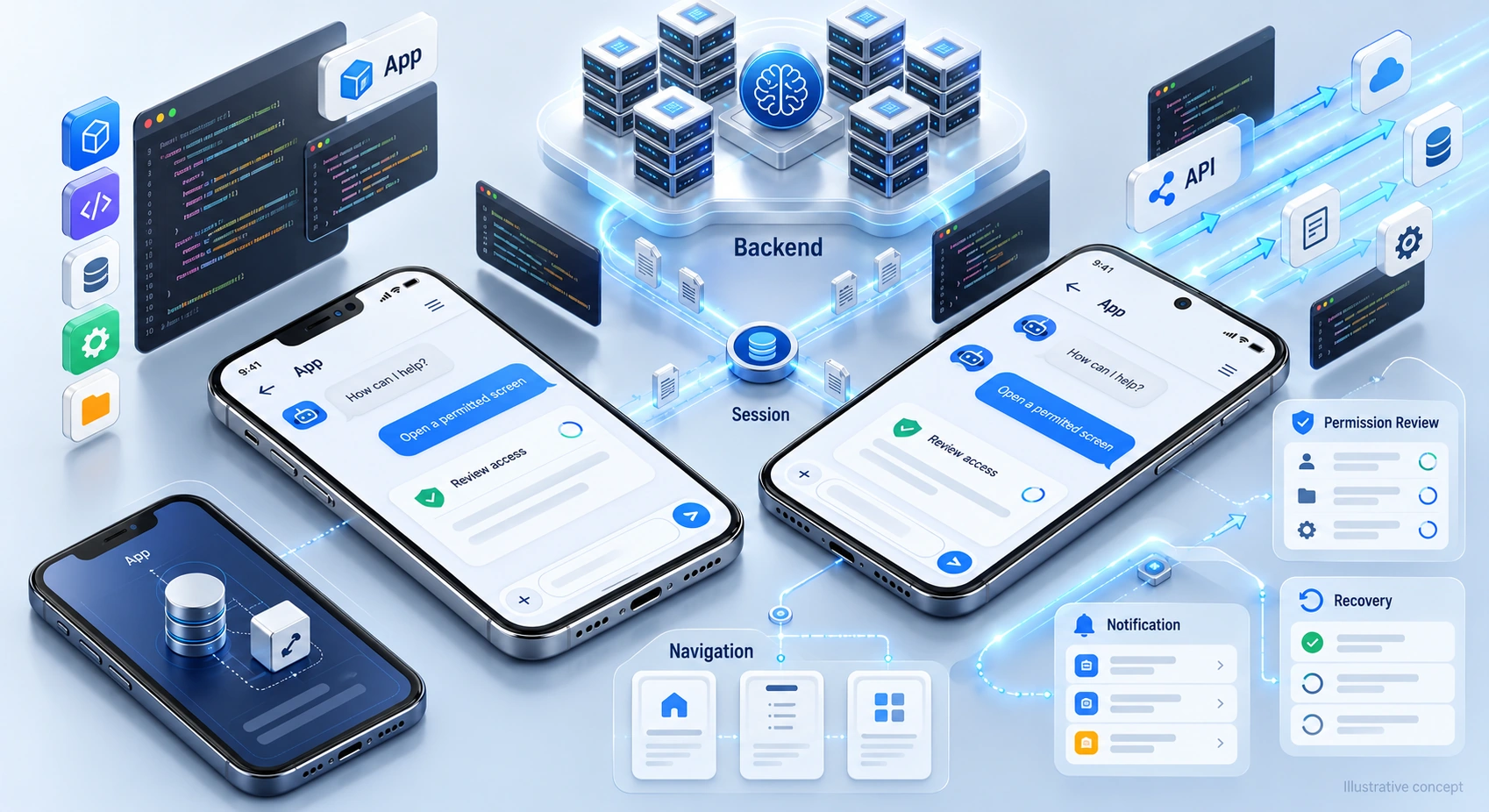
Frameworks can simplify integration, but direct APIs can also support production systems when the surrounding engineering is sound. Ask how the candidate manages state, retries, errors, tool permissions, and observability. The goal is a maintainable application, not mandatory use of a particular library.
Framework Judgment
LangChain offers model and tool abstractions and workflow support. Treat it as relevant experience where your stack uses it, not a universal requirement for AI development.
- Interview Check: Ask the candidate to explain a multi-step workflow, its failure states, and how it is tested. If tools are involved, inspect permissions, input validation, approval points, and stopping conditions. Prefer a clear reason for each component over a demonstration with unnecessary complexity.
Maintain the Data Pipeline
Tools such as LlamaIndex can support data workflows, but source lifecycle and access controls remain design responsibilities.
- Interview Check: Ask what happens when a document changes or is deleted. Review indexing, stale results, retries, permissions, and monitoring. The candidate should explain how updates are tested and how failures become visible without blocking the main application.
Chapter 5: Bound Agent Workflows
Agents can select tools or steps toward a goal, but autonomy must fit the task and risk. Define permitted operations, review points, and stopping conditions. A fixed workflow may be simpler than an agent.
For engineering assistants, test how the developer separates untrusted input, generated changes, and authorized execution before allowing any access to shared systems.
- Interview Check: Ask how code execution is isolated, credentials are protected, and changes are reviewed. For teams evaluating these software tools, inspect environment isolation, permissions, logs, and recovery behavior.
Chapter 6: Check Operations and Security
Operations include monitoring, updates, dependency changes, evaluations, and incidents. Data and usage changes can affect behavior. Ask how the developer detects regressions and decides whether to roll back or restrict a feature.
- Prompt Injection Checks: Ask how untrusted documents and tool outputs are prevented from authorizing actions. Review least privilege, data boundaries, validation, and testing. A content filter or second model is not a complete security boundary.
- Usage Management: Ask for a cost estimate based on realistic requests. Evaluate context selection, model choice, caching, and retry behavior against quality and privacy. Require observed results rather than assuming a named optimization always saves money.
Chapter 7: Compare Team and Agency Options
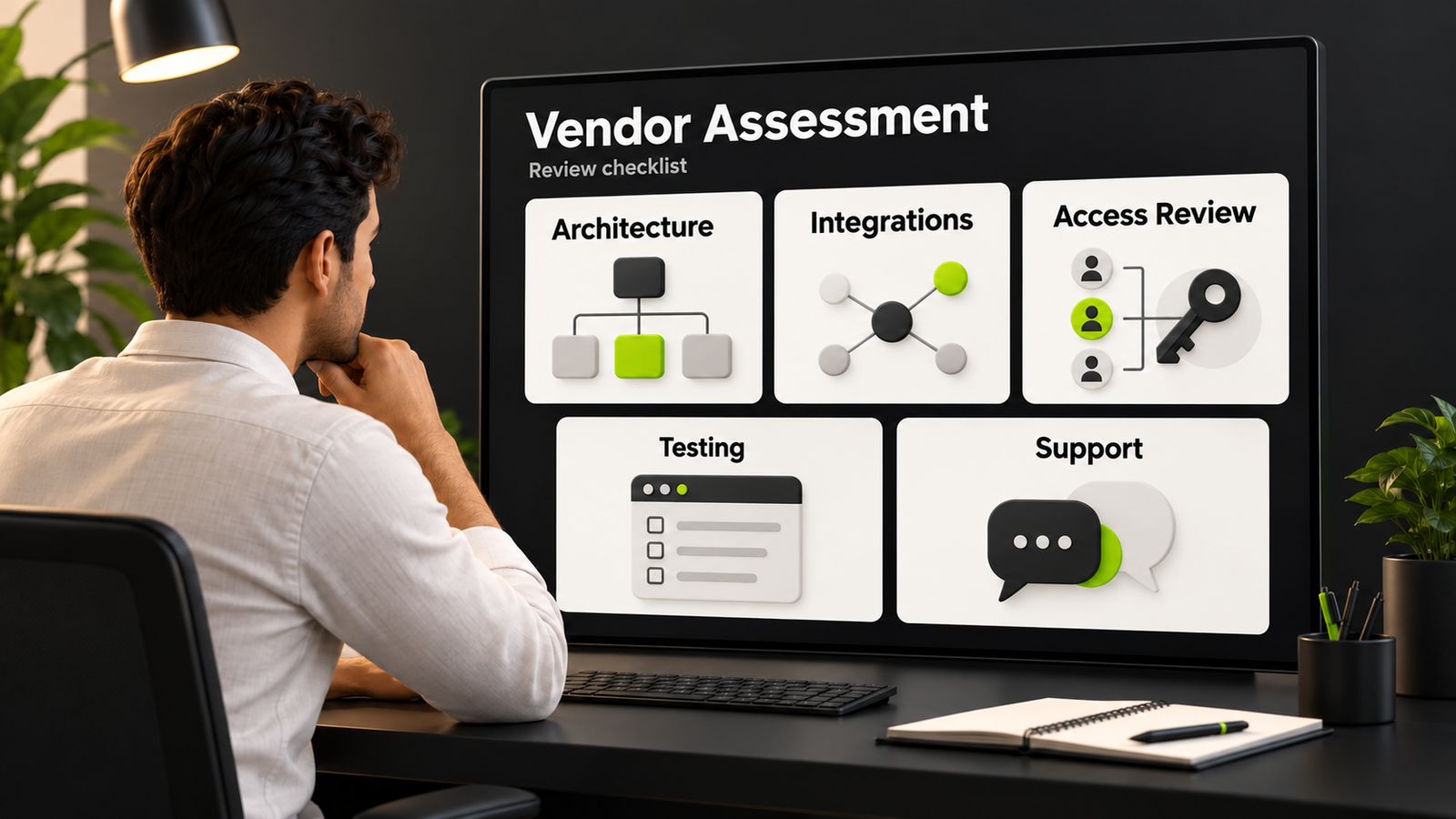
Map needed disciplines and existing skills. A prototype may need a different team from a service with sensitive data and many integrations. Avoid expecting one person to own every specialty.
Estimate the cost of the actual staffing plan, including recruitment, onboarding, management, evaluation, and maintenance. Compare agency proposals against the same scope and responsibilities. Salary ranges and timelines vary; unsupported global averages are a poor substitute for current proposals and available resources.
Use the required skills and operating responsibilities to compare Outsourcing vs Hiring without assuming either option is always faster or cheaper. Confirm who will do the work and how knowledge is retained.
Discuss AI Delivery Needs with DigiWeta
A clear brief makes hiring and supplier assessment more useful. Describe the workflow, current stack, data, and constraints before deciding which skills to add. Include evaluation and support ownership in the plan.
Discuss generative AI development with DigiWeta around the specific capabilities your project needs. Ask about the proposed team, relevant work, integration approach, and testing responsibilities. Agree availability and scope before treating a proposal as a delivery commitment.
Ready to define the role or project? Contact DigiWeta to discuss your requirements and the skills needed for delivery.
Frequently Asked Questions
Match the requirement to your stack and responsibilities. Python is common for model work, but applications may use TypeScript or other languages. Assess testing, integration, data handling, and operational judgment alongside syntax. Do not assume one language alone demonstrates AI expertise.
It adds challenges around uncertain outputs, data quality, evaluation, and model behavior. APIs, access controls, testing, and operations still matter. The required research or mathematical depth depends on whether the role trains models, serves them, or builds applications using existing services.
No. It provides useful abstractions and integrations, but other frameworks or direct APIs may fit. Ask why the candidate chose an approach and how it handles state, errors, permissions, and testing. Framework knowledge should serve the project rather than act as a universal hiring filter.
Ask about source preparation, search quality, access filtering, updates, and evaluation. Vector search is one approach; keyword or hybrid methods may also fit. Assess the implementation against real questions and operating needs rather than requiring one database brand or assuming RAG guarantees accuracy.
It adapts selected parameters or added components rather than updating every model weight. LoRA is one example. The developer should explain data requirements, evaluation, resource needs, and deployment. It can reduce adaptation overhead, but suitability and results depend on the task and setup.
Look for monitoring, evaluation, updates, access controls, incident handling, and cost management. Model-serving skills depend on the architecture. Ask how changes are tested, regressions detected, and stable versions restored rather than assuming every project needs automatic GPU scaling.
Use a realistic scenario involving untrusted input, private data, or tools. Ask about permissions, isolation, validation, logging, and failure handling. Look for layered controls and explicit limitations; a model filter, private cloud, or retention label alone is not proof of security.
Match the approach to scope, risk, and existing capacity. A small project may suit one developer with access to reviewers; a broader service may need several disciplines. Compare actual availability, responsibilities, handover, and costs instead of assuming an agency automatically provides faster or cheaper delivery.