

Enterprise AI projects begin with a business need, not a mandate to automate everything. Leaders must decide which workflows require new capabilities and whether existing products can meet their operational requirements.
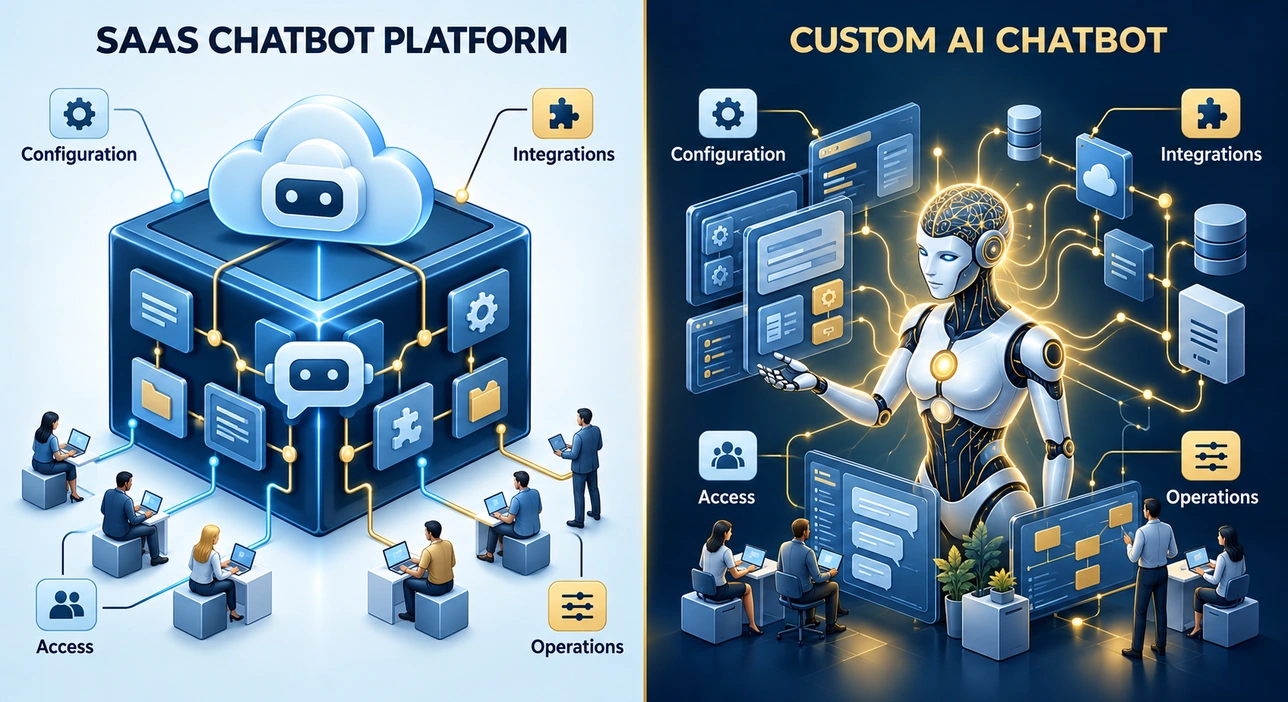
One early choice is whether to configure a ready-made AI product or commission custom software. The right approach depends on fit, constraints and long-term operating responsibilities.
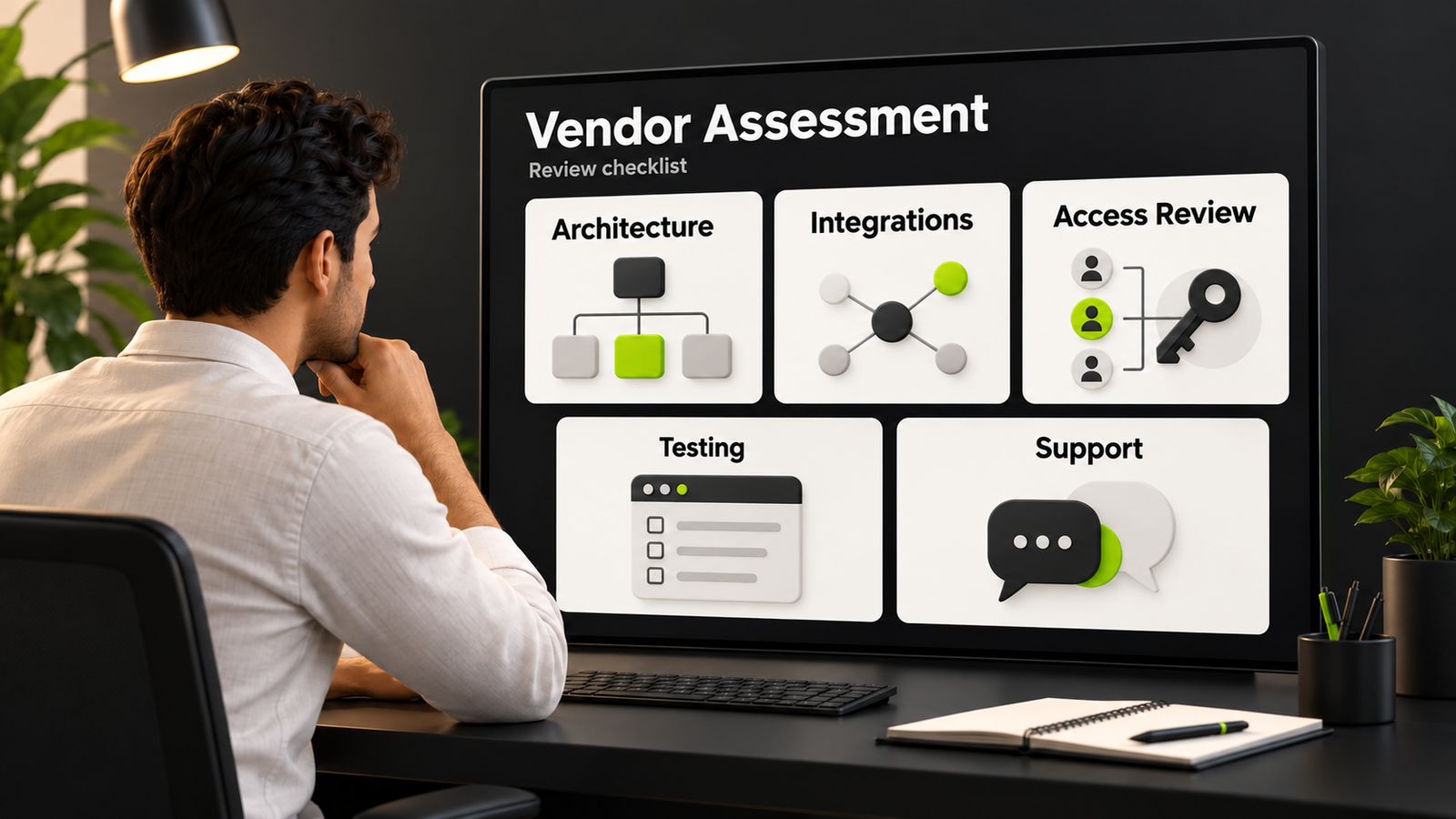
A white-label product may reduce initial development work, while a custom build offers different options for tailoring the application. Neither approach automatically guarantees lower costs, stronger privacy or better performance. Compare the actual product, contract and implementation rather than relying on the category label.
Evaluate ai custom application development where existing products cannot adequately support the required workflow.
This guide compares product fit, ownership, integration and operating costs. Treat those decisions as part of the AI application development lifecycle, with clear evidence and documented responsibilities before committing to an approach.
Discuss your application requirements with DigiWeta, an ai application development company. Define the workflow, data constraints and integration needs before agreeing on delivery scope or operating responsibilities.
Chapter 1: Assessing White-Label AI Products
A white-label AI application is a product supplied by another organization that permits customer-facing rebranding. Available customization, hosting arrangements and ownership rights vary. Review what the vendor actually provides, which components can change and which responsibilities remain with your team.
The Immediate Appeal
- Speed to Market: Existing products may reduce build work, subject to configuration and integration requirements.
- Low CapEx: Licensing may replace some initial development work, but setup, integration and ongoing fees still require a budget.
Customization Limits and Vendor Dependence
A shared product serves several customers, so its roadmap may not match every organization’s needs. Determine which requirements can be configured and which would need separate development.
- Rigid Architecture: Check whether the product supports the required data formats, retrieval approach and workflow rules. Do not assume a vendor can—or cannot—adapt its platform without examining the supported options.
- Vendor Lock-In: Review export formats, integrations, contractual rights and transition support. Dependence on proprietary components can make replacement difficult, but the extent depends on the design and agreement rather than white-label branding alone.
Compare usage tiers, limits and operating costs under realistic scenarios. The guide to how to monetize AI application development solutions can inform this analysis, but owning an application does not automatically make its operation cheaper.
Chapter 2: Planning Custom AI Development
Custom AI development tailors an application to defined business requirements. The work may combine existing models and services with new software, data processing and integrations rather than building every component from scratch.
Clarify Intellectual Property Ownership
Ownership and licensing need explicit treatment in the contract. Distinguish custom code, pre-existing components, third-party models, data and deployment materials. Do not assume that commissioning software transfers every right or guarantees an increase in business value. When evaluating an AI app development company in the USA, review the proposed agreement and obtain appropriate advice on ownership, usage rights and transition arrangements.
Bespoke Machine Learning Models
Start with the information the application must use and the decisions it must support. Depending on the task, teams may evaluate retrieval, existing models, fine-tuning or conventional software. Integration with internal systems requires suitable access and testing. A custom project should establish measurable acceptance criteria rather than promise that any model can reliably handle every proprietary data source.
Chapter 3: Enterprise Data Security and Sovereignty
Data handling requirements affect both custom and white-label choices. Evaluate deployment, permissions, provider terms and operating procedures rather than assuming one approach is inherently secure.
Review Tenant Isolation and Data Handling
Ask how the supplier separates customer data, controls access, retains information and uses subprocessors. A product’s branding does not establish whether its architecture is shared or dedicated. Review the documented configuration and applicable terms, including any use of prompts or outputs for model improvement. Identify unresolved requirements before sending sensitive information to the service.
Define Security Requirements
Custom projects can define deployment and access requirements explicitly.
- Virtual Private Clouds (VPC): Consider private deployment that meets project needs. Verify all data flows, external services and operational access; a private network alone does not establish that information never leaves it.
- Dynamic Data Masking: Assess where sensitive information should be removed or restricted before processing. Such controls require testing and appropriate oversight; they do not independently certify compliance with a named framework.
Chapter 4: Integrating with Legacy Enterprise Systems
Enterprise applications often need information from systems with different interfaces, formats and access rules. Inventory those dependencies before selecting a product or defining custom development work.
Check Existing Integration Options
Determine which connectors and APIs the product supports, what access they require and whether their behavior meets the workflow. An older system is not automatically incompatible. Where an existing connector is insufficient, assess supported extension options, data exchange methods and the responsibilities for maintaining them.
Custom Middleware and API Gateways
Custom middleware may connect systems with different interfaces or data formats. Define permissions, validation, failure handling and ownership before implementation. Test the integration against actual workflows and representative data. Connecting systems does not itself guarantee accurate predictions or uninterrupted operations.
Chapter 5: The Total Cost of Ownership (CapEx vs. OpEx)
Compare total cost over a period relevant to your organization. Include setup, integration, usage, support, maintenance and eventual transition—not just the initial purchase.
- The White-Label Cost Curve (OpEx Heavy): Model licensing and usage charges under realistic demand scenarios. Include configuration, integration, support, data export and potential transition costs. Check which services the subscription includes and how charges change as usage grows. Do not assume that recurring fees will necessarily exceed a custom build.
- The Custom Build Cost Curve (CapEx Heavy): Budget for design and development alongside hosting, model usage, maintenance, evaluation, security work and support. A custom application gives the team design choices but still needs ongoing investment. Compare those responsibilities with the services included in a vendor’s offer.
Evaluate how much control each option provides over the interface and workflow. The guide to UX/UI design for generative AI apps explains considerations such as clear feedback and review controls; confirm that the selected product or delivery scope supports the interaction patterns you need.
Chapter 6: Choosing a Delivery Approach
A custom project needs clearly assigned engineering, product and operating responsibilities. Compare internal delivery, external partners and mixed teams against available skills, capacity and project requirements.
An agency may contribute skills or delivery capacity, but staffing, price and ownership terms must be agreed rather than assumed. Review what to expect when hiring an artificial intelligence app development agency to prepare questions about milestones, access, acceptance testing and the transition to ongoing support.
Plan Your Application with DigiWeta
Choose an approach that fits the workflow and the organization’s ability to operate it. Compare realistic alternatives, including where a configured product may already be sufficient.
At DigiWeta, we build technological moats. We are a premier ai application development company specializing in bespoke enterprise ecosystems. We do not sell white-label templates. We architect, train, and deploy custom machine learning models, secure data pipelines, and highly scalable mobile/web applications that you own 100%.
Discuss the application’s intended use, existing systems and data constraints. Establish the evaluation process and acceptance criteria before deciding which AI capabilities belong in the project.
Discuss your requirements with DigiWeta and evaluate an appropriate custom AI application scope.
Frequently Asked Questions
It is a product supplied by another organization that allows rebranding. The extent of customization, hosting and ownership depends on the product and contract. Review those terms rather than assuming that branding changes transfer source-code or model rights.
Custom development may suit workflows requiring integrations or controls that available products cannot support. Ownership, data handling and maintenance still need explicit agreements. It does not automatically eliminate vendor dependence or establish compliance.
Security depends on the product’s architecture, configuration and operating practices. Review access controls, customer-data separation, retention and provider terms. Neither white-label nor custom software is automatically safe or unsafe because of its delivery model.
Vendor dependence arises when switching requires significant changes to data, workflows, integrations or contractual arrangements. Assess export options, replacement costs and transition assistance before committing. Ownership of custom code can help, but does not remove every dependency.
Review the available interfaces and connectors before deciding. Some products support existing systems directly; others need additional integration work. Custom middleware may address gaps, but access, validation, failure handling and maintenance must be planned and tested.
There is no universal cheaper option. Compare licensing, development, integration, model usage, hosting, support and maintenance under realistic demand assumptions. Include transition costs and the period over which the organization expects to use the application.
Customization varies by product. Check which layouts, workflows, output views and controls can change, and whether extensions are supported. Compare those options with user requirements before assuming either a standard interface or custom build is necessary.
No single staffing model is required. Internal teams, external partners or a combination may deliver the work. Define responsibilities, access, acceptance criteria, ownership terms and ongoing support before choosing an arrangement.